Personalized Medical Care & Dedicated International Patient Concierge


Medical Guide
Breathing and Appearance in One Nose Operation: The Answer
Yes, when it is clinically appropriate — and that qualifier is the answer. Here is what decides it, and what the published record does and does not say.
Schedule a ConsultationBreathing and Appearance in One Nose Operation: The Answer
Medically reviewed by Dr. Hong Sung Taek, Chief Director, Merry Plastic Surgery
Yes — when it is clinically appropriate.
That is the published answer, and the qualifier is not a hedge. It is the substance.
Merry Plastic Surgery's approved claims for functional rhinoplasty state that functional and cosmetic concerns may be addressed during the same treatment plan when clinically appropriate. The published overview says the same from the other side: depending on the patient's needs, functional correction may be performed alone or combined with aesthetic rhinoplasty.
So the answer is not "yes, if you want both." It is "yes, if your anatomy and the surgical plan allow it" — and the difference between those two sentences is the whole article.
Why they belong together anatomically
A nose is one structure doing two jobs.
The septum divides the airway and supports the bridge. Cartilage shapes the tip and holds the airway open at its narrowest point. Bone determines width and, with the septum, whether the nose sits straight.
Change any of it and you have changed both jobs, whether or not you intended to.
This is why the published approach for primary rhinoplasty includes consideration of nasal breathing during aesthetic planning among its approved claims — not as an added service, but because a plan that ignores function is planning one half of an interacting structure.
And it runs the other way too. The published reasons patients seek functional rhinoplasty include ongoing breathing problems after a previous cosmetic rhinoplasty and a desire to improve both nasal function and appearance in a single procedure.
What the combined plan can include
The published surgical steps for functional rhinoplasty list components rather than a fixed operation:
Septal correction if needed. Nasal valve reinforcement if needed. Turbinate reduction if indicated. External nasal correction when appropriate.
Four conditional components. The approved claims name the same set: septoplasty, turbinate reduction, nasal valve reinforcement, and external nasal correction.
That last one is the aesthetic half, and it sits in the same list as the functional ones. The combination is not two operations scheduled together; it is one plan whose components are selected by what the assessment found.
The National Library of Medicine's overviews of nose injuries and disorders and breathing problems cover the functional side, and sinusitis an adjacent condition.
What "clinically appropriate" is deciding
The published sequence puts assessment before planning, and the assessment is specific.
Step 1 — Consultation. Review of breathing symptoms, discussion of previous trauma or surgery, assessment of cosmetic concerns and goals. Both halves, in the first conversation.
Step 2 — Diagnostic evaluation. 3D CT imaging and Full HD nasal endoscopy, with evaluation of the septum, turbinates, nasal valve area and sinus anatomy.
Step 3 — Surgical planning. The structural cause behind the symptoms is pinned down, and a plan is then built for that patient — covering both the functional and the aesthetic correction where the record says it is appropriate to do so.
So "clinically appropriate" is a judgment made after imaging, about whether the structural findings and the aesthetic goals can be served by one coherent plan.
Cases where the answer might be no are not published as a list, but the published exclusion criteria for functional rhinoplasty give the shape: patients without an identifiable structural cause of breathing difficulty, patients with active nasal or sinus infections, individuals with unrealistic expectations, and those whose general health may make surgery inappropriate — with final candidacy always determined by the treating surgeon.
Three things worth knowing before you ask
Say both things at the first appointment. If you want your breathing fixed and you also dislike your nose, say so at the start. A plan built around one goal is not straightforwardly extended to the other later, because the structural decisions differ.
Do not rank them for the surgeon. Patients sometimes present the functional complaint as the "real" reason and the aesthetic one as an afterthought, or the reverse. Both are legitimate, both are published as reasons patients seek this operation, and the plan is better for having both stated plainly.
Expect the assessment to find things you did not report. Imaging that identifies a deviated septum in someone who came in about the shape of their bridge is a common and useful outcome, and it changes the conversation.
The insurance point, stated carefully
One published claim is relevant here and is easy to over-read: insurance reimbursement may be available when a qualifying nasal disease is formally diagnosed and meets applicable criteria.
Read the conditions. A formal diagnosis, of a qualifying condition, meeting applicable criteria. That is a statement about a process, not a prediction about your case, and the criteria in question are those of whatever system would be paying.
For a patient traveling from the United States, the practical version is simpler: treat any combined procedure as self-funded unless your own insurer tells you otherwise in writing, in advance. The National Library of Medicine's overview of health insurance covers the general ground, and talking with your doctor covers raising it usefully.
What the published record does not say
Four gaps, and they matter more for a combined procedure than for a simple one.
No published duration or visit requirement for functional rhinoplasty. A combined operation is longer than either half, and the figure has to be requested.
No published recovery timeline for it either.
No published anesthesia detail, and no published benefits statement beyond the results-timeline description.
No published statement on how combining affects recovery. It is reasonable to expect a combined operation to carry the longer of the two recoveries rather than the shorter, but the record does not say so and neither will this article.
Ask for all four directly. Appointments land inside a week running 9:30 a.m. to 6:30 p.m. on weekdays and 9:30 a.m. to 4:00 p.m. on Saturdays, with Sundays and public holidays closed — the clinic's contact page is the route, and its about page carries the clinic's own account of how it works.
The published risks for functional rhinoplasty apply to the combined plan as well: swelling, bruising, temporary nasal congestion, internal healing variability, residual breathing symptoms, differences between expected and actual aesthetic outcomes, and the possibility of additional treatment. Both of those bolded items are the combined operation's specific exposure — one for each half of what it is trying to do. Surgery and after surgery cover the general picture.
The Bottom Line
- Yes, when clinically appropriate — the published claim states that functional and cosmetic concerns may be addressed in the same treatment plan.
- That qualifier is decided after imaging: 3D CT and Full HD nasal endoscopy, then identification of the structural cause, then planning.
- The published operation is a set of conditional components — septal correction, valve reinforcement, turbinate reduction and external correction — selected by what the assessment finds.
- State both goals at the first appointment. A plan built around one is not simply extended to the other.
- Duration, recovery, anesthesia and the effect of combining are not published, and insurance reimbursement is stated only as conditional on a formal qualifying diagnosis.
Frequently Asked Questions
Can breathing and appearance be corrected in one operation?
The published claim says functional and cosmetic concerns may be addressed during the same treatment plan when clinically appropriate, and that functional correction may be performed alone or combined with aesthetic rhinoplasty.
What does "clinically appropriate" mean?
A judgment made after diagnostic evaluation about whether the structural findings and the aesthetic goals can be served by one coherent surgical plan.
What does the assessment involve?
Consultation covering breathing symptoms, previous trauma or surgery and aesthetic goals; then 3D CT imaging and Full HD nasal endoscopy; then identification of the specific structural cause.
What can the combined operation include?
Septal correction, nasal valve reinforcement, turbinate reduction and external nasal correction — each performed if the assessment indicates it.
Should I mention the cosmetic part if I came about breathing?
Yes, at the first appointment. The published consultation assesses cosmetic concerns and goals alongside breathing symptoms.
How long does a combined procedure take?
Duration and visit requirements are not published for functional rhinoplasty, so that figure must be requested directly.
Could insurance cover part of it?
The record states reimbursement may be available when a qualifying nasal disease is formally diagnosed and meets applicable criteria — a conditional process statement rather than a prediction.
What are the risks specific to combining?
The published risk list includes both residual breathing symptoms and differences between expected and actual aesthetic outcomes — one exposure for each half of the plan.
This article is for general informational purposes and does not constitute individualized medical advice. It is not a self-diagnosis tool. Surgical results vary with anatomy, tissue condition and individual healing, and whether a procedure is appropriate for you can only be determined through an in-person consultation and examination by a qualified plastic surgeon.
More Articles
Continue reading our clinical guides.
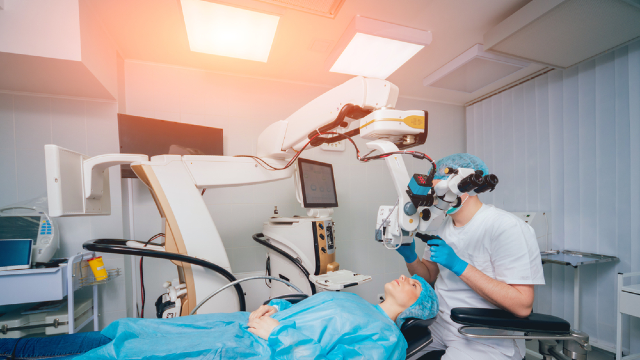
Operating Room Standards: What You Can Ask and Verify
You will never inspect a sterilization room. What you can do is ask questions whose answers reveal whether a facility thinks about this systematically.
Learn More

Staying in Korea After Rhinoplasty: Why No Number Exists
The clinic publishes no fixed figure, and that is not an omission. A nose heals on a timetable long enough that any single number would be misleading.
Learn More

Bringing Someone With You: What a Companion Actually Does
Decide this by listing the hours a companion would actually cover, rather than by how you feel about going alone. Most are ordinary, and a few are not.
Learn More