Personalized Medical Care & Dedicated International Patient Concierge

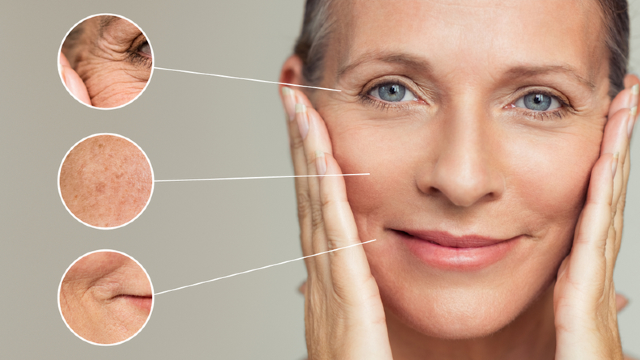
Medical Guide
Facial Aging: Three Changes That Arrive at the Same Time
Tissue descends, volume disappears, and skin stops retracting. Separate processes with separate remedies, which is why one treatment never covers them all.
Schedule a ConsultationFacial Aging: Three Changes That Arrive at the Same Time
Medically reviewed by Dr. Hong Sung Taek, Chief Director, Merry Plastic Surgery
People arrive at a consultation with one sentence — "I look tired," or "my face has dropped" — and underneath it there are usually three separate things happening at once.
Tissue has descended. Structures sit lower than they did.
Volume has gone. There is less tissue in places there used to be more.
Skin has stopped retracting. Elasticity has declined, so skin no longer takes up the slack when what is underneath moves.
They coincide, they compound each other, and they are not the same problem. Which is exactly why a clinic's menu has several categories on it rather than one, and why "what would fix my face?" has no single answer.
Descent
Beneath your skin sits a layer of fibrous tissue that carries much of the face's structural support. In surgical terms it is the SMAS, and it matters here because it is what the face's shape is hung on.
Retaining ligaments anchor that layer to the underlying bone at specific points. Over time both the anchoring and the layer itself change, and tissue that was held in one position settles into a lower one.
You see it as nasolabial folds deepening — a fold is not a line in the skin so much as the edge of tissue that has come to rest above it. You see it as jowls, tissue arriving at a jawline it used to sit above. You see it as brow descent, which crowds the space between brow and eye.
This is why the published surgical approaches at Merry Plastic Surgery are described the way they are. The full facelift addresses the structural source of sagging rather than treating the skin surface alone, releasing retaining ligaments and lifting and securing the SMAS. The mini facelift does the same over a smaller territory. Pulling the skin above descended tissue is a different action with a different result.
Volume loss
The second process is subtraction, and it is less intuitive because nothing has moved.
Facial fat is not one mass. It sits in compartments, at different depths, and they do not all change at the same rate or in the same direction. Some deflate. The bone underneath changes shape too, over longer timescales.
The visible consequences: hollow temples, flattened cheeks, under-eye hollowing, a thin or gaunt appearance, and — the counterintuitive one — sharper, more angular features where softness has gone.
That last one explains a complaint that otherwise makes no sense: people who feel they look harder, or more severe, without having gained a single line.
Merry's published fat grafting description addresses exactly this population: patients with a thin or gaunt face, sunken or hollow areas, or prominent or angular facial structures they would like to soften. And the published treatment areas read as a map of where volume goes first — temples, under-eye area, side cheeks, around the mouth, forehead, front cheekbone, nasolabial fold and chin.
Nothing can be lifted into existence. This is the sentence that resolves most confusion between the first two processes. The clinic's own surgical anti-aging record states it plainly: facial fat grafting addresses volume loss that lifting alone may not correct.
Skin laxity
The third process is the envelope.
Skin has elastic properties that decline with time, and with sun exposure, and with other factors. The practical consequence is that skin which once retracted to fit what was underneath no longer does — so it accommodates descent instead of resisting it, and shows a change that a younger envelope would have absorbed.
The National Library of Medicine's overview of skin aging covers the process, and sun exposure covers the largest external contributor. Skin conditions and skin pigmentation disorders cover the surface changes — texture, tone and pigment — that travel alongside and are a fourth thing again.
Laxity is why the same amount of descent produces different appearances in different people, and why skin condition appears in nearly every published assessment at this clinic. The neck surgery consultation weighs skin thickness and elasticity; the facelift consultations weigh skin condition and tissue laxity; the energy-based treatment consultation weighs degree of laxity.
Why they compound
The three do not simply add up. They multiply.
Descent plus laxity. Tissue moving down inside an envelope that no longer resists shows more movement than the same descent inside a taut one.
Volume loss plus descent. Less tissue means less internal support for what remains, and a deflated structure settles more readily than a full one.
Volume loss plus laxity. An envelope that has stopped retracting, containing less than it used to, has slack it cannot take up.
This is the reason facial aging appears to accelerate — a widely reported subjective experience with a straightforward structural explanation. Three gradual processes interacting produce a change that is not gradual in appearance.
It also explains why a single intervention rarely satisfies someone who has all three. Lifting a face that has lost volume produces a tighter version of a deflated face. Adding volume to a face that has descended produces a fuller version of a dropped one.
How a treatment menu maps onto this
Merry Plastic Surgery's published categories line up against the three processes in a way that is worth seeing laid out, because it makes the menu legible rather than arbitrary.
For descent. Surgical lifting — the mini facelift and full facelift at the SMAS layer, the endoscopic forehead lift for the upper face, and the neck lift and mini neck lift for the lower face and neck. The published neck record names deeper tissue descent as one of the four things it assesses for.
For volume loss. Facial fat grafting, using the patient's own tissue; and dermal filler, described as filling deep wrinkles or hollowed areas and adding volume where it has been lost.
For skin quality and early laxity. Energy-based treatments — Ultherapy PRIME and Density — described as improving skin firmness, elasticity and facial definition through controlled energy delivery and the body's collagen response. Thread lifting sits partly here and partly in descent, combining a mechanical lift with a collagen response as the thread dissolves. Skin boosters and pigmentation treatment address the surface.
For motion-related lines. Botox, which temporarily reduces the activity of the muscle injected and softens lines the muscle creases — a fourth mechanism that is not any of the three above.
One face can have all of them. Which is why the published consultations assess several things at once, and why the answer to "which procedure do I need?" is frequently a combination or a sequence.
What this means for a consultation
Three things follow, and they change how a visit goes.
Describe the change, not the remedy. "My cheeks have flattened and my jawline has blurred" is a description that can be mapped to processes. "I want a thread lift" is a request that may or may not match what is found.
Bring old photographs. For volume loss in particular they are genuinely diagnostic, because the question is what has gone rather than what is there. Five to ten years back is the useful range. For descent, photographs help less than examination does.
Expect a combination answer, or a sequence. If three processes are present, a plan that addresses one of them will change one third of what you are seeing. That is not a failure of the treatment; it is an accurate prediction nobody made.
You can put your own description to the clinic before you arrive through its contact page, and the clinic's own account of how it approaches this sits on its about page.
And one thing to notice about honest published language: every relevant record at this clinic states that natural aging continues. The facelift records say the procedure cannot permanently stop facial changes. The neck lift record says it cannot stop natural aging. These are ongoing processes, and an intervention changes the starting position rather than the direction.
What is outside all three
For completeness, because these get folded into "facial aging" and are separate problems with separate answers.
Pigment. Sun damage, melasma and post-inflammatory change alter color rather than structure — skin pigmentation disorders covers the territory.
Texture and surface. Pores, fine surface lines and roughness are skin-quality questions.
Motion lines. Creases produced by repeated muscle contraction, which is the mechanism Botox addresses.
Hair. Hairline position and density change with time and affect how a face reads — hair loss covers it, and hairline position appears in the published assessment for the forehead lift for exactly that reason.
What you can influence
Not everything here is out of your hands, and the published records repeatedly name factors that are.
Sun exposure appears in the neck lift's list of influences on longevity, alongside weight fluctuations, lifestyle and genetics. The energy-based aftercare guidance names sun protection explicitly.
Weight stability matters for anyone considering fat grafting, since grafted tissue behaves as fat; and the Merry ZERO record notes that removed fat cells do not regenerate in the same way, but remaining fat cells may enlarge with weight gain. Weight control and nutrition cover the general ground.
Smoking appears in the clinic's published pre-procedure disclosure list for jawline and neck surgery, among conditions that may affect healing — quitting smoking covers it.
None of these reverse the three processes. They affect their pace, and they affect how long any result lasts.
The Bottom Line
- Facial aging is three processes at once: tissue descent, volume loss, and declining skin elasticity — separate changes with separate remedies.
- Nothing can be lifted into existence. Descent and volume loss look similar from outside and respond to opposite interventions.
- They compound rather than add, which is why the change appears to accelerate and why single-treatment plans often disappoint.
- A clinic's menu maps onto the three: lifting for descent, grafting and filler for volume, energy and thread treatments for skin quality and early laxity, with Botox addressing motion lines as a fourth mechanism.
- Every relevant published record here states that natural aging continues — an intervention changes the starting position, not the direction.
Frequently Asked Questions
What are the three processes?
Tissue descent, loss of facial volume, and declining skin elasticity. They occur together and compound each other, but they are separate changes.
Why do I look more angular rather than more lined?
That is a volume-loss pattern. Where softness has gone, remaining structure reads as sharper — a common complaint from people who have not gained lines.
Can lifting fix hollowing?
No. Lifting repositions tissue that is present. The published record says fat grafting addresses volume loss that lifting alone may not correct.
Why does aging seem to speed up?
Because three gradual processes interacting produce a change that is not gradual in appearance. Descent inside a slack envelope with less internal support shows more than any one of those alone.
Which treatments address which process?
Surgical lifting for descent; fat grafting and filler for volume; energy-based and thread treatments for skin quality and early laxity; Botox for lines made by muscle movement.
Should I bring old photographs?
Yes, particularly for volume loss, where the diagnostic question is what has gone. Five to ten years back is the useful range.
Can any of this be stopped?
No. Every relevant published record states that natural aging continues after treatment, so an intervention changes the starting position rather than the process.
What affects how long a result lasts?
The published records name sun exposure, weight fluctuations, lifestyle and genetics, along with skin elasticity, healing and postoperative care.
This article is for general informational purposes and does not constitute individualized medical advice. It is not a self-diagnosis tool. Results vary with anatomy, tissue condition and individual healing, and whether a procedure is appropriate for you can only be determined through an in-person consultation and examination by a qualified plastic surgeon.
More Articles
Continue reading our clinical guides.
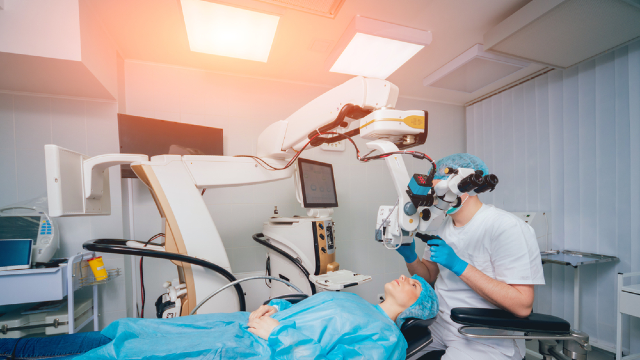
Operating Room Standards: What You Can Ask and Verify
You will never inspect a sterilization room. What you can do is ask questions whose answers reveal whether a facility thinks about this systematically.
Learn More
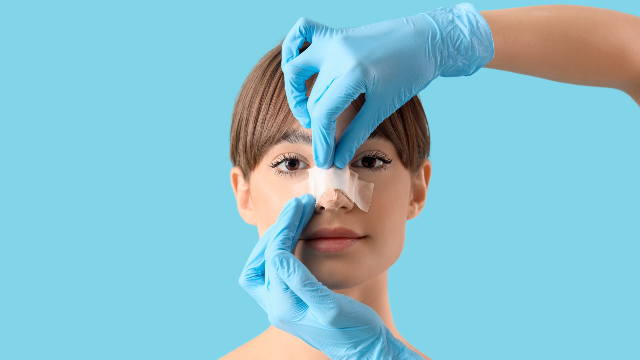
Staying in Korea After Rhinoplasty: Why No Number Exists
The clinic publishes no fixed figure, and that is not an omission. A nose heals on a timetable long enough that any single number would be misleading.
Learn More

Bringing Someone With You: What a Companion Actually Does
Decide this by listing the hours a companion would actually cover, rather than by how you feel about going alone. Most are ordinary, and a few are not.
Learn More