Personalized Medical Care & Dedicated International Patient Concierge


Medical Guide
Jowls, Bands and a Vanishing Jawline: What Is Happening
A jawline is a border between two surfaces, and a border goes when either side changes. Four different tissues can do it, and they look alike from outside.
Schedule a ConsultationJowls, Bands and a Vanishing Jawline: What Is Happening
Medically reviewed by Dr. Hong Sung Taek, Chief Director, Merry Plastic Surgery
A jawline is not a thing. It is a border — the visible edge where the plane of the face meets the plane of the neck.
Borders are unusually fragile as features go, because they depend on both sides staying where they are. Add tissue above the line and the border blurs. Add tissue below it and the border blurs. Let either surface slacken and the angle between them opens, and the border blurs again.
That is why this particular complaint has so many different causes, and why two people describing exactly the same change can need entirely different things done about it.
The chin-to-neck angle, which is the real subject
Look at a profile you consider well-defined and what you are seeing is a fairly sharp angle between the underside of the chin and the front of the neck.
That angle is what the published assessment at Merry Plastic Surgery measures directly. The consultation for jawline and neck surgery evaluates lower-face and submental fat distribution, skin thickness and elasticity, platysma muscle position and laxity, neck bands, jowls, jawline definition, and the chin-to-neck angle.
Add the neck lift consultation and two more appear: chin projection and the relationship between the face and neck.
Chin projection is the one that catches people out. An angle is made by two lines, and the position of the chin sets where one of them starts. A chin that sits further back produces a softer angle in a person who has not aged at all. Somebody arriving at forty convinced their neck has aged may be seeing anatomy that was always theirs, now more noticeable as the surrounding tissue has changed.
That is worth knowing because it is a finding that changes the plan rather than a disappointment.
Jowls: tissue arriving where it was not
A jowl is tissue that has descended past the jawline and come to rest below it.
The mechanism is the same descent described anywhere in the face: the fibrous support layer beneath the skin, anchored by retaining ligaments, settles into a lower position over time. At the jawline this has a particularly visible consequence, because the descended tissue crosses a border and lands on the other side of it.
Two things follow that are worth understanding.
A jowl is not extra tissue. It is existing tissue in a new location. That is why the published surgical approaches talk about lifting and repositioning rather than removal — the neck lift record names deeper-tissue repositioning among its actions.
Jowls interrupt a line rather than thicken it. The edge stops being straight. Which is why the visual effect is out of proportion to the amount of tissue involved: a small deviation in a border is highly visible.
The published record names early jowls and early or established jowling among the findings its assessment looks for, and lists jowls separately from jawline definition — because a jawline can lose definition without a jowl being present.
Neck bands: a muscle that stops being a sheet
The platysma is a broad, thin sheet of muscle running up the front of the neck. You can see it work if you tense your neck in a mirror.
Being a sheet, it has edges. With time the sheet loses tension and its edges can separate and become distinct, showing as vertical bands running up the front of the neck — most obvious when speaking or tensing, and in some people present at rest.
Two consequences, and the second is less obvious.
Visible bands. The cosmetic complaint people arrive with.
Lost support. A slack sheet supports less. Some of what reads as loose neck skin is a neck whose muscular floor has stopped holding it, which is why treating the skin alone can underdeliver.
This is precisely the distinction the published treatment logic turns on. Merry ZERO is described as combining double-chin fat removal with platysma muscle ligation and fixation — considered when fat is combined with platysma muscle laxity. The neck lift may involve platysma tightening or repositioning, and the published claims say it may reduce the visibility of vertical neck bands.
If bands are your complaint, that is the word to use. It points at a specific tissue.
Submental fat: the one that is not about aging
Fat beneath the chin behaves differently from everything else in this article, and it is the reason the double chin is such a persistent source of frustration.
It is not necessarily an aging change. Many people have submental fullness in their twenties. It can be constitutional, and it frequently does not respond proportionately to weight loss — people who lose weight elsewhere and find this area unchanged are describing a common experience rather than a failure.
The published record's treatment of this is precise. Lower Face Liposuction may be considered when localized fat is the primary concern and skin elasticity is relatively good. Merry ZERO is for fat combined with platysma muscle laxity, and may involve micro-cannula liposuction, direct removal of deeper fat beneath the platysma when indicated, ligation and fixation.
Note what that second description implies: there is fat above the platysma and fat beneath it, and they are reached differently. A treatment addressing only the superficial layer leaves the deeper one in place — which is one explanation for an underwhelming result someone might otherwise attribute to bad luck.
The record also notes that removed fat cells do not regenerate in the same way, but remaining fat cells may enlarge with weight gain, so the procedure does not permanently prevent future double-chin concerns. Weight control, obesity and nutrition cover the general ground.
Skin: the envelope that stops retracting
The fourth tissue, and the one that determines how visible the other three are.
Skin elasticity declines with time and with sun exposure. A neck whose skin retracts takes up slack created by descent or by fat removal; a neck whose skin has stopped retracting does not, and shows everything underneath.
The National Library of Medicine's overviews of skin aging and sun exposure cover the mechanism. The neck is worth a specific mention on the second: it receives sun without the attention the face gets, and it shows the result.
This is also why the published condition for liposuction — skin elasticity relatively good — is a real gate rather than boilerplate. Removing volume from beneath skin that cannot retract leaves the same envelope over less content.
Four tissues, and why the plan follows them
Here is the sentence the whole published category rests on: the treatment plan is selected according to whether fat, muscle, skin, or deeper tissue position is primarily responsible for the concern.
And the menu maps onto it exactly.
Fat alone, good skin → Lower Face Liposuction.
Fat plus platysma laxity → Merry ZERO, which adds muscle ligation and fixation to fat removal.
Mild to moderate or localized laxity → Mini Neck Lift.
Advanced laxity, loose skin, bands, jowls, or a combination → comprehensive Neck Lift, which may involve platysma work, skin redraping, appropriate skin removal and localized fat reduction.
For a patient, the practical value of knowing this is not to self-diagnose. It is to recognize what the examination is doing and to ask the right question, which is: which of the four is primarily responsible in my case?
For Merry ZERO the published assessment may use 3D-CT and ultrasound to examine the area and understand fat distribution and platysma condition — which is the imaging answer to a question that cannot be settled from outside. The National Library of Medicine's overview of ultrasound covers that modality.
What none of it does
Three limits, stated in the published records rather than inferred.
It does not stop aging. A neck lift cannot stop natural aging; skin elasticity, tissue position and contours continue to change.
It does not promise a shape. The record states that no specific jawline shape or permanent prevention of future aging is assured, and that results vary with skin elasticity, muscle condition, tissue laxity, fat distribution, anatomy, surgical scope, healing, weight fluctuations, lifestyle, genetics and sun exposure.
It does not change chin projection. Repositioning and contouring soft tissue is not the same as altering underlying structure. If your angle is soft because of where your chin sits, that is a different conversation — and the published filler record does name the chin and prejowl area among its treatment areas.
What to look at before you go
A profile photograph, taken by someone else. This complaint lives in profile and nobody photographs themselves that way. Get one at eye level, with your head neutral — not lifted, which hides everything.
A short video of yourself talking. Bands are frequently more visible in motion than at rest, and a still image can miss them entirely.
An honest note on weight. Current, stable or changing, and what happened to this area during any past weight loss.
Your sun history for the neck specifically, which is usually different from your face.
A written list of your medications and supplements, copied from the labels, since blood thinners, over-the-counter medicines and dietary supplements all matter here and drug safety explains why. Nothing prescribed comes off the list without the prescriber saying so.
Send the questions ahead through the clinic's contact page; the clinic's own account of its approach is published on its about page. The clinic keeps a six-day week: from 9:30 a.m., until 6:30 p.m. Monday to Friday and until 4:00 p.m. on Saturday, and no Sunday or public-holiday appointments.
The Bottom Line
- A jawline is a border between two surfaces, which is why it can be lost from either side and why a small change is so visible.
- Four tissues produce the same complaint — fat, the platysma muscle, skin, and deeper tissue position — and the published plan follows whichever is primarily responsible.
- Jowls are existing tissue in a new place, not extra tissue, which is why the surgical answer is repositioning rather than removal.
- Neck bands are the edges of a slackening muscle sheet, and that sheet also provides support — so some apparent skin looseness is muscular.
- Submental fat is often not an aging change at all, sits both above and beneath the platysma, and does not necessarily respond to weight loss.
Frequently Asked Questions
Why does a jawline lose definition?
Because it is a border between the face and the neck, and it blurs if tissue descends onto it, fat accumulates beneath it, muscle support slackens, or skin stops retracting.
What exactly is a jowl?
Tissue that has descended past the jawline and settled below it. It is existing tissue in a new position rather than additional tissue.
What causes vertical neck bands?
The platysma, a broad sheet of muscle in the front of the neck, whose edges can separate and become visible as it loses tension.
Why has my double chin not responded to weight loss?
Submental fat is often constitutional rather than an aging change, and it sits both above and beneath the platysma muscle. It does not always respond proportionately to weight loss.
What is chin projection and why does it matter?
The forward position of the chin. It sets one side of the chin-to-neck angle, so a chin that sits further back produces a softer angle regardless of aging.
How does the clinic tell the causes apart?
By assessing fat distribution, skin thickness and elasticity, platysma position and laxity, bands, jowls, jawline definition, chin-to-neck angle and chin projection — with 3D-CT and ultrasound for Merry ZERO.
Which treatment addresses which cause?
Liposuction for fat with good skin elasticity; Merry ZERO for fat with platysma laxity; a mini neck lift for localized laxity; a comprehensive neck lift for advanced or combined concerns.
Can surgery stop my neck aging further?
No. The published record states that the procedure cannot stop natural aging and that no permanent prevention of future change is assured.
This article is for general informational purposes and does not constitute individualized medical advice. It is not a self-diagnosis tool. Results vary with anatomy, tissue condition and individual healing, and whether a procedure is appropriate for you can only be determined through an in-person consultation and examination by a qualified plastic surgeon.
More Articles
Continue reading our clinical guides.
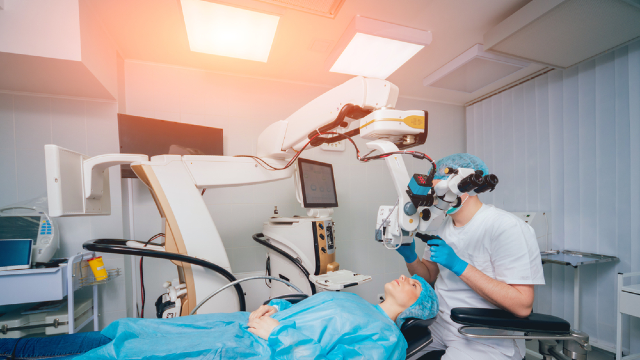
Operating Room Standards: What You Can Ask and Verify
You will never inspect a sterilization room. What you can do is ask questions whose answers reveal whether a facility thinks about this systematically.
Learn More
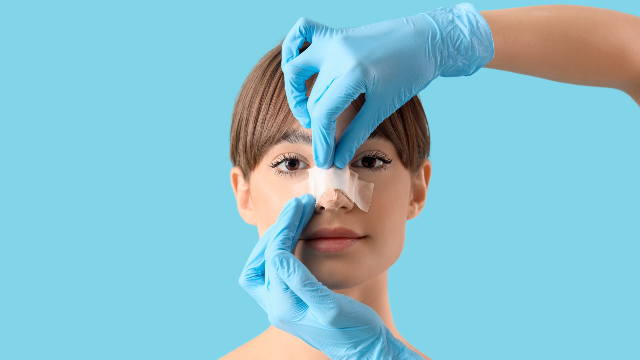
Staying in Korea After Rhinoplasty: Why No Number Exists
The clinic publishes no fixed figure, and that is not an omission. A nose heals on a timetable long enough that any single number would be misleading.
Learn More

Bringing Someone With You: What a Companion Actually Does
Decide this by listing the hours a companion would actually cover, rather than by how you feel about going alone. Most are ordinary, and a few are not.
Learn More