Personalized Medical Care & Dedicated International Patient Concierge

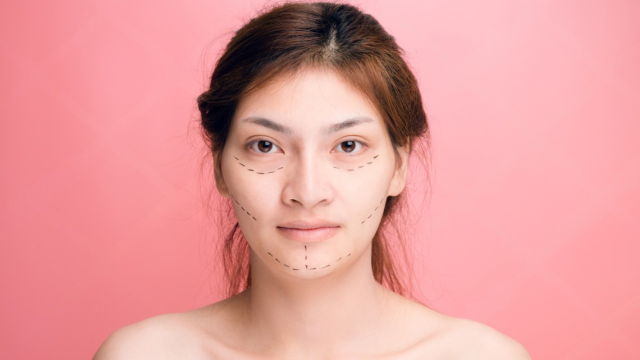
Medical Guide
Petite-Style Plastic Surgery: Planning for Smaller Frames
Petite-style plastic surgery is a named service area at Merry Plastic Surgery in Seoul, not one operation. Here is what the clinic states and what to ask.
Schedule a ConsultationPetite-Style Plastic Surgery: Planning for Smaller Frames
Medically reviewed by Dr. Jimin Lee, Plastic Surgery Specialist / Director, Merry Plastic Surgery
Petite-style plastic surgery is not a single operation. At Merry Plastic Surgery in Seoul it is a named area of service listed in the clinical scope of several of the clinic's doctors, sitting alongside facial contouring, body contouring with liposuction, breast enhancement, face lift, and eyelid surgery. In practice, the term points to a way of planning surgery around a person's overall proportions rather than around one isolated feature. This article sets out what the clinic actually states about it, what it does not, and which questions belong in a consultation.
What the Clinic Lists Under This Name
Merry Plastic Surgery names petite-style plastic surgery in the listed clinical services of Dr. Jimin Lee, of the clinic's chief director Dr. Hong Sung Taek, and of Dr. Park Ga Young, a board-certified family medicine specialist whose listed scope covers skin care and non-surgical treatments.
For Dr. Jimin Lee, the surrounding services are upper eyelid surgery, breast enhancement surgery, facial contouring surgery, S-line body contouring with liposuction, face lift surgery, and eyelid surgery (blepharoplasty, or surgery on the eyelid skin and fat). That grouping is the clearest available signal of what a petite-style discussion at this clinic covers: face, eyes, breast, and body contour, considered together.
What the clinic does state clearly is its planning philosophy. Merry Plastic Surgery describes one-to-one personalized treatment, with plans built around facial structure, tissue condition, and individual goals. Its published principles are personalized treatment, safety and expertise, continuous research, and trust and responsibility, and it states that care should begin with honesty and an understanding of the individual patient.
Why Proportion Guides the Plan
A smaller frame changes the arithmetic of aesthetic surgery. The same implant, the same volume of fat removed, or the same amount of eyelid skin excised occupies a different share of a shorter torso or a narrower chest. That is why surgeons assess dimensions and tissue quality rather than working from a requested size alone.
Merry Plastic Surgery describes this kind of measurement-led planning across its surgical categories. For breast surgery, the clinic states that it evaluates breast volume, skin quality, tissue position, and body proportion before recommending an approach. For its endoscopic breast augmentation specifically, it describes analysis of chest-wall dimensions and existing tissue before implant size, profile, placement plane, and incision are chosen. The same logic applies whenever more than one area is under discussion at once.
The International Society of Aesthetic Plastic Surgery (ISAPS) makes a related point about who should be doing that planning. Commenting on its 2024 Global Survey, ISAPS stated that although aesthetic surgery is elective, it is still surgery with real risks and side effects, and it encouraged patients to choose a board-certified plastic surgeon trained and experienced in the specific procedure. Dr. Jimin Lee is a full member of ISAPS, as well as of the Korean Society of Plastic and Reconstructive Surgeons and the Korean Society for Aesthetic Plastic Surgery.
What the ISAPS Data Says About Demand
ISAPS reported that plastic surgeons worldwide performed more than 17.4 million surgical procedures and 20.5 million non-surgical procedures in 2024, close to 38 million in total. For the first time, eyelid surgery ranked as the most common surgical procedure globally, ahead of liposuction, breast augmentation, scar revision, and rhinoplasty. Face and head procedures grew by 4.3% year over year, with eyelid surgery up 13.4%.
Three of the five most common surgical procedures in that ranking, eyelid surgery, liposuction, and breast augmentation, correspond to services listed in Dr. Jimin Lee's clinical scope. ISAPS also noted that it has begun collecting data specifically on combined procedures, which reflects how often patients now ask about more than one operation at a time.
What Liposuction Can and Cannot Do
S-line body contouring with liposuction appears in the clinic's listed services, so it is worth being clear about what liposuction is for.
The UK's National Health Service describes liposuction as removal of small areas of fat that are difficult to shift through exercise and diet, with the aim of altering body shape. The NHS states that it works best in people who are not overweight and in areas where the skin is firm and elastic, and that results are generally long-lasting provided a stable weight is maintained. Just as importantly, the NHS states plainly that liposuction is not a treatment for obesity and will not remove cellulite or stretch marks.
The NHS also lists what commonly follows the procedure: bruising and swelling that may last up to six months, numbness that usually resolves in six to eight weeks, scars, and fluid leaking from the incisions. Less common problems include lumpy or uneven results, bleeding under the skin, persistent numbness, and skin color changes. Recovery guidance from the NHS includes wearing a compression garment for several weeks, gentle exercise at around three to four weeks, and avoiding strenuous activity for ten to twelve weeks.
Evidence on Combining Procedures
If proportion is the goal, more than one procedure may be discussed. That decision has measurable consequences.
A retrospective study of the Tracking Operations and Outcomes for Plastic Surgeons database, published in Aesthetic Surgery Journal and indexed on PubMed, examined 26,771 patients treated between 2016 and 2020. The authors reported an overall 30-day complication rate of 5.0%, and a higher rate for combined procedures than for single index procedures, 7.6% compared with 4.2%. Within that data, combinations involving trunk liposuction or augmentation mammaplasty (breast enlargement) carried increased risk after adjusting for demographics, while abdominoplasty and mastopexy combinations did not show increased risk. The authors concluded that shared decision-making between surgeon and patient is needed when combinations are recommended.
That is not an argument against combining procedures. It is an argument for asking your surgeon, in specific terms, what combining does to your own risk profile, your operating time, and your recovery.
What the Clinic Confirms About Its Process
Merry Plastic Surgery states that it provides systematic medical service across every stage of care, with dedicated operating, anesthesia, and patient-monitoring systems, and that its surgeries follow relevant medical standards and ethical principles. Anesthesia and perioperative care at the clinic are supported by Dr. Park Hae Gyun, a board-certified anesthesiologist in anesthesiology and pain medicine and a member of the Korean Society of Anesthesiologists.
The clinic describes in-house technology including Full HD endoscopic equipment, used for its endoscopic forehead lift and breast augmentation, alongside Ulthera Prime, Density, and Liftera 2 devices. It reports more than 15 years of plastic-surgery expertise and more than 10,000 cases performed.
What to Establish During Your Consultation
Because petite-style is a scope of practice rather than a packaged operation, the specifics belong to your consultation.
What the clinic publishes is the doctors' listed scope of practice, the individual procedure information for the operations within that scope, and its stated commitment to individualized planning. The procedures themselves, their sequence, the recovery each one involves, and the outcomes you can reasonably expect are set patient by patient rather than fixed in advance.
That makes the consultation the place to pin down:
- Which specific operations are being proposed, and the reason for each one
- Whether they would be staged or combined, and in what order
- What recovery your surgeon expects for each component of the plan
- What outcome is realistic for your anatomy, and what is not
- Which follow-up appointments are included, and when they fall
Deciding Whether Surgery Is Right for You
The NHS publishes guidance for anyone weighing a cosmetic procedure, and its questions apply well here. It suggests asking yourself:
- What do I want to change, and why this procedure?
- How long have I been thinking about it, and what prompted it now?
- Are there other ways to achieve the change I want?
- Am I expecting the procedure to change my life as well as my appearance?
- Am I doing this for myself or to please someone else?
The NHS advises that all procedures carry risk, that disappointment with an outcome can affect emotional wellbeing, and that you should not assume a procedure will resolve wider life problems. It recommends booking a consultation with the person who would perform the surgery, being clear about the change you want, and using the period after that consultation to think before committing. It specifically warns against time-limited offers and against agreeing on the day to extra procedures you had not considered beforehand. That last point is directly relevant to any conversation about combining operations.
Recovery Differs by Procedure
There is no single recovery for a proportion-based plan, because each component heals on its own schedule. Published guidance from the NHS gives a sense of the range:
- Eyelid surgery: most people take about two weeks off work; bruising and redness may take several weeks to fade, and scarring can feel tight for a few months.
- Liposuction: swelling and bruising may last up to six months, and the treated area can take that long to settle completely.
- Breast enlargement: a week or two off work is typical, with heavy lifting and strenuous exercise avoided for at least a month.
Merry Plastic Surgery states that its own follow-up covers patients from consultation through postoperative care. Timelines vary with the individual, the procedures chosen, and healing, and none of these figures should be read as a promise about your own recovery.
Support for International Patients
Merry Plastic Surgery is registered with Korea's Ministry of Health and Welfare as a medical institution for attracting foreign patients. It provides English-language support, in-person and online consultation, and translated documents, and it names two dedicated international patient coordinators, Director Hyemi Jung and Director Yoonjin Park, who assist foreign patients throughout their visit. Clinic hours are Monday to Friday, 9:30 AM to 6:30 PM, and Saturday, 9:30 AM to 4:00 PM.
You can review the full team on the clinic's doctors page, including the profile of Dr. Jimin Lee, who received a 2023 Excellence Award for Oral Presentation in Basic and Reconstructive Plastic Surgery from the Korean Society of Plastic and Reconstructive Surgeons. Consultations can be arranged through the clinic's contact page.
The Bottom Line
- Petite-style plastic surgery at Merry Plastic Surgery is a listed service area, not a defined operation with a published protocol, price, or fixed procedure list.
- The services listed alongside it for Dr. Jimin Lee are upper eyelid surgery, facial contouring, S-line body contouring with liposuction, breast enhancement, face lift, and eyelid surgery.
- The clinic's stated method is one-to-one planning based on facial structure, tissue condition, body proportion, and individual goals.
- Published research in Aesthetic Surgery Journal found combined procedures carried a higher 30-day complication rate than single procedures, which makes combination a decision to examine closely rather than assume.
- Outcomes and recovery vary with individual anatomy and healing, and specifics for this service should be confirmed in consultation rather than inferred.
Frequently Asked Questions
Is petite-style plastic surgery one procedure or several?
It is a service category rather than a specific operation. Merry Plastic Surgery lists it within the clinical scope of several doctors, alongside facial contouring, body contouring with liposuction, breast enhancement, face lift, and eyelid surgery. What that means for you would be determined by the surgeon after assessing your anatomy and goals.
Which doctor at the clinic handles this?
The clinic lists petite-style plastic surgery among the services of Dr. Jimin Lee, a plastic surgery specialist associated with Kyung Hee University Medical Center and a director at the clinic. It is also listed for Dr. Hong Sung Taek, the chief director and a board-certified plastic surgeon, and for Dr. Park Ga Young, whose background is family medicine and whose scope covers skin care and non-surgical treatments.
Does a smaller build change how a procedure is planned?
It changes the measurements that feed into the plan. The clinic states that it assesses body proportion, tissue position, skin quality, and, for breast surgery, chest-wall dimensions before selecting an approach or an implant. The result is that two people asking for the same change may be offered different plans.
Can more than one operation be done in a single session?
Sometimes, but it should be examined rather than assumed. The Aesthetic Surgery Journal study of more than 26,000 patients found a 30-day complication rate of 7.6% for combined procedures against 4.2% for single procedures, with combinations involving trunk liposuction or breast augmentation carrying added risk. Ask your surgeon what combining would do to your specific risk and recovery.
How much detail does the clinic publish about this service?
Less than it publishes for its individually described operations. There is no confirmed protocol, candidacy rule, recovery timeline, or outcome expectation attached to the petite-style name specifically. The detail exists at the level of the individual procedures, so ask for procedure-specific information once a plan has been proposed.
Can I start the conversation before traveling to Seoul?
Yes. Merry Plastic Surgery states that online consultation is available and that English-language support and translated documents are provided, with two named international patient coordinators assisting foreign patients throughout their visit. Preparing photographs, a clear description of your concerns, and your medical history in advance will make that first conversation more useful.
This article is for general informational purposes and does not constitute individualized medical advice. Surgical candidacy, technique, and expected outcomes can only be determined through a consultation with a qualified surgeon. It is not a self-diagnosis tool.
More Articles
Continue reading our clinical guides.
Operating Room Standards: What You Can Ask and Verify
You will never inspect a sterilization room. What you can do is ask questions whose answers reveal whether a facility thinks about this systematically.
Learn More
Staying in Korea After Rhinoplasty: Why No Number Exists
The clinic publishes no fixed figure, and that is not an omission. A nose heals on a timetable long enough that any single number would be misleading.
Learn More

Bringing Someone With You: What a Companion Actually Does
Decide this by listing the hours a companion would actually cover, rather than by how you feel about going alone. Most are ordinary, and a few are not.
Learn More