Personalized Medical Care & Dedicated International Patient Concierge


Medical Guide
Rhinoplasty Explained: Goals, Process, and Results
Explore rhinoplasty goals, the surgical process, recovery, and expected results. Learn what to consider before treatment and discover your options today.
Schedule a ConsultationUnderstanding the Condition: Why Patients Seek Rhinoplasty

Patients consider rhinoplasty for a range of reasons. Some are dissatisfied with the shape, size, or projection of their nose, whether that involves a dorsal hump, a wide or asymmetric bridge, a bulbous or drooping tip, or a profile that feels disproportionate to the rest of the face. Others experience functional issues such as a deviated septum, nasal valve collapse, or chronic breathing difficulty that may or may not be visible externally. A smaller group of patients come in for revision rhinoplasty after a previous surgery left them with a contracted nose, asymmetry, visible implant edges, or unresolved airway problems.
These concerns often overlap. A nose that looks aesthetically uneven may also have an underlying structural cause affecting airflow, and a purely cosmetic fix that ignores the internal framework can lead to complications later, including the contracted nose deformity that frequently brings patients in for revision work. A contracted nose typically develops when scar tissue shrinks and pulls the skin and soft tissue envelope tighter over time, often following the use of certain implant materials or repeated surgeries, and it can leave the nasal tip upturned, the skin thinned, and the internal structure compromised. Recognizing this overlap between form and function is central to how rhinoplasty is evaluated and planned, and it is one of the main reasons a single surgeon managing both the aesthetic and structural aspects of a case tends to produce more predictable, cohesive results than treating the two separately.
What Rhinoplasty Involves
Rhinoplasty reshapes the bone, cartilage, and soft tissue of the nose to change its external appearance, its internal function, or both. Depending on the patient's anatomy and goals, this can include narrowing or widening the bridge, refining or rotating the tip, correcting a deviated septum, adjusting nostril width, or rebuilding structural support that has weakened over time or through prior surgery. In first-time rhinoplasty, the surgical plan usually focuses on shaping existing tissue with more conservative adjustments. In revision cases, the plan is typically more complex, since scar tissue, altered blood supply, and previously removed or repositioned cartilage all need to be accounted for.
At Merry Plastic Surgery, particular emphasis is placed on techniques that avoid long-term reliance on synthetic implants where possible. Autologous costal cartilage grafting, which uses the patient's own rib cartilage, is one method used for patients needing significant structural rebuilding, especially in revision cases where the septum no longer provides enough cartilage on its own. Because rib cartilage is the patient's own tissue, it integrates into the nasal framework rather than sitting as a foreign material, which can reduce certain long-term risks such as displacement, extrusion, or the visible thinning of skin that sometimes occurs over synthetic implants. Implant-free approaches are also used more broadly for patients seeking long-lasting results with a lower risk of the complications sometimes associated with synthetic materials, such as displacement or infection. Septoplasty, or correction of a deviated septum, is frequently performed alongside cosmetic reshaping when a functional airway problem is identified during evaluation, allowing both concerns to be addressed in a single operation.
Who Is a Suitable Candidate

Good candidates for rhinoplasty generally fall into a few categories:
Patients with aesthetic concerns, such as a dorsal hump, wide bridge, bulbous tip, or asymmetry, who are in good general health and have realistic expectations about achievable results.
Patients with functional concerns, including chronic nasal obstruction, septal deviation, or valve collapse, who may benefit from combined functional and cosmetic correction.
Revision patients, particularly those with a contracted nose, visible implant margins, or unsatisfactory results from a previous procedure, who require more complex planning and often structural grafting.
Candidacy also depends on factors that go beyond the nose itself. Skin thickness plays a significant role in how visible fine surgical changes will be and how long swelling takes to resolve; thicker skin tends to mask subtle refinements and settle more slowly, while thinner skin shows detail more readily but can also reveal underlying irregularities. Facial proportions, age, and general health, including whether a patient smokes or has any bleeding disorders, are also considered, since these can affect healing and surgical risk.
A thorough consultation is used to determine candidacy. This includes a physical examination of the nasal structure, a discussion of breathing history, and an honest conversation about what surgery can and cannot achieve for a given anatomy. Patients with unrealistic expectations, or whose concerns may be better addressed through non-surgical means, are advised accordingly rather than moved directly toward surgery.
The Rhinoplasty Process, Step by Step
Initial Consultation and Evaluation
The process begins with a detailed consultation where the surgeon examines the patient's nasal structure, skin thickness, and facial proportions, and discusses both aesthetic goals and any functional symptoms such as difficulty breathing. Imaging and physical assessment, including an internal examination of the septum and nasal valves, help determine whether the concern is primarily cosmetic, primarily functional, or both. For revision patients, this stage also involves reviewing prior operative details where available, since understanding what was done previously informs how much cartilage remains and what structural support may be needed.
Surgical Planning
Based on this evaluation, a customized plan is developed. This may involve cartilage grafting, septal correction, tip refinement, or dorsal reshaping, depending on individual needs. For revision cases, planning also accounts for scar tissue and previous structural changes, and often includes a decision about whether rib cartilage will be needed to rebuild the framework adequately.
The Procedure
Rhinoplasty is performed under appropriate anesthesia, with careful attention to preserving or restoring the internal airway while achieving the intended external shape. Where structural grafting is required, cartilage is harvested and shaped before being placed to support the new framework. Depending on the surgical approach, incisions may be placed entirely inside the nose or extended across the columella, the strip of tissue between the nostrils, to allow direct visualization of the underlying structure for more complex reshaping or grafting.
Recovery and Follow-Up
Following surgery, patients typically wear a splint for about a week to support the new structure during initial healing. Swelling and bruising are common in the early recovery period and gradually subside over the following weeks, with most visible bruising resolving within the first two weeks. Most patients return to non-strenuous daily activities within one to two weeks, though strenuous exercise, contact sports, and activities with a risk of impact to the nose are generally avoided for a longer period, often six to eight weeks or as advised by the surgeon. Final results, particularly refinement of the tip and resolution of subtle swelling, continue to settle over several months to a year, since nasal tissue tends to reshape and soften gradually long after the surgical wounds themselves have healed.
Surgeon Expertise
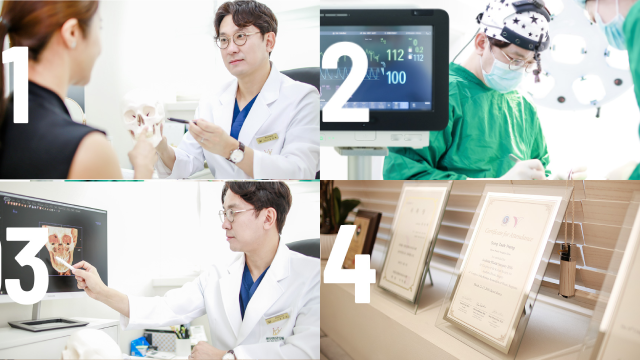
Rhinoplasty and revision rhinoplasty at Merry Plastic Surgery are led by Dr. Sungtaek Hong, Plastic Surgery Specialist and Representative Director of the clinic. Dr. Hong is a graduate of Korea University College of Medicine, holds a Master's Degree in Plastic Surgery, and serves as an Adjunct Professor at Korea University Medical Center. His clinical training includes experience at IWK Health Centre in Canada, and his surgical focus centers on rhinoplasty, eyelid surgery, facial contouring, and lifting procedures, with particular attention to functional rhinoplasty and revision surgery for contracted noses. He is an active member of multiple specialist study groups under the Korean Society of Plastic and Reconstructive Surgeons. This combination of structural training and a specific clinical focus on revision cases is relevant to patients whose anatomy has already been altered by a previous operation, since these cases typically demand more individualized planning than a first-time procedure.
Why Patients Choose Merry Plastic Surgery
Merry Plastic Surgery is located just steps from Apgujeong Station in Gangnam, Seoul, at 6, Nonhyeon-ro 175-gil (Royal Building, 4th Floor). The clinic's approach to rhinoplasty is built around evaluating both structure and function rather than treating them as separate concerns, which is especially relevant for patients pursuing revision surgery after unsatisfactory results elsewhere. Consultations are conducted with an emphasis on candid communication, so patients understand realistic outcomes before deciding to proceed, rather than being guided toward procedures that may not suit their anatomy or goals. Structured safety protocols, including thorough pre-operative evaluation, careful anesthesia management, and attentive post-operative monitoring, are maintained throughout the surgical process, and advanced imaging and endoscopic technology are used where appropriate to support surgical precision.
Recovery, Safety, and Realistic Outcomes
As with any surgical procedure, rhinoplasty carries inherent risks, including swelling, bruising, temporary numbness, minor asymmetry during healing, and, in some cases, the need for further refinement. Less common risks can include infection, difficulty breathing during the healing period, or changes in skin sensation, and these are discussed as part of the informed consent process before surgery. Results also vary depending on individual anatomy, skin thickness, and healing patterns, and no outcome can be guaranteed in advance. Patients are encouraged to view rhinoplasty as a process that unfolds over months rather than an immediate transformation, with final results best assessed once swelling has fully resolved, typically within the first year after surgery.
A well-planned rhinoplasty, grounded in careful evaluation and honest communication between patient and surgeon, aims to achieve a nose that is proportionate to the rest of the face, functions properly for breathing, and reflects the patient's own facial characteristics rather than a generic ideal. Patients considering the procedure, whether for a first-time cosmetic change, a functional breathing concern, or a revision after a prior surgery, are encouraged to schedule a consultation to discuss their specific anatomy, concerns, and goals in detail before making a decision.
More Articles
Continue reading our clinical guides.
Operating Room Standards: What You Can Ask and Verify
You will never inspect a sterilization room. What you can do is ask questions whose answers reveal whether a facility thinks about this systematically.
Learn More

Staying in Korea After Rhinoplasty: Why No Number Exists
The clinic publishes no fixed figure, and that is not an omission. A nose heals on a timetable long enough that any single number would be misleading.
Learn More

Bringing Someone With You: What a Companion Actually Does
Decide this by listing the hours a companion would actually cover, rather than by how you feel about going alone. Most are ordinary, and a few are not.
Learn More