Personalized Medical Care & Dedicated International Patient Concierge

Medical Guide
Thread Lift or Mini Facelift: A Difference of Depth
One works beneath the skin, the other at the structural layer under it. That single difference sets the downtime, the durability and who each one suits.
Schedule a ConsultationThread Lift or Mini Facelift: A Difference of Depth
Medically reviewed by Dr. Hong Sung Taek, Chief Director, Merry Plastic Surgery
These two procedures are usually compared on the axis that matters least to the result: how much of an ordeal each one is.
The axis that actually matters is depth. A thread lift places dissolvable threads beneath the skin, without an incision. A mini facelift dissects down to the SMAS — the structural layer beneath the skin — releases ligaments, and fixes that layer in its new position.
Everything else follows. Thirty minutes against about a week of recovery. A thread that dissolves against a structural correction. A treatment positioned for earlier-stage sagging against an operation for sagging that has become structural.
Merry Plastic Surgery publishes both, in two different categories, and the published language about the thread lift says why: it is positioned as an option for earlier-stage sagging rather than a replacement for structural surgical lifting.
The thread lift, as published
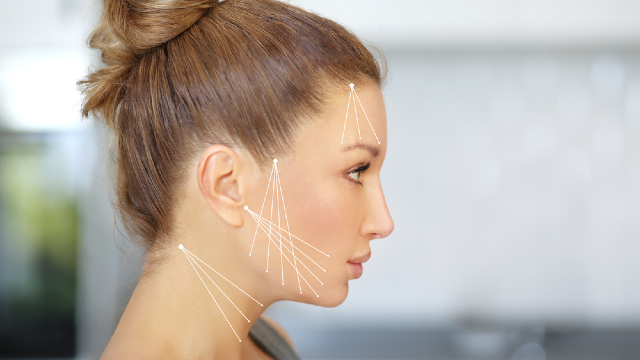
What it is. A non-surgical, minimally invasive facial lifting procedure using dissolvable medical-grade threads inserted beneath the skin without an incision.
How it works, in two parts. A mechanical lifting effect immediately, and then a biological healing response as the thread gradually dissolves, which the clinic describes as stimulating collagen production and supporting skin elasticity and tone.
The procedure. Consultation and assessment; marking designed according to wrinkle pattern, facial shape and desired contour; local or sedation anesthesia; threads inserted beneath the skin with a cannula along the planned markings.
Time and downtime. About 30 minutes. No hospitalization, no suture removal, and return to normal daily activities immediately, under the clinic's stated protocol.
Where. Cheek and mid-face sagging, nasolabial folds and lower-face wrinkles, jawline and V-line definition, and selected neck laxity.
Durability, by thread type. This is where the record is specific. Silhouette Lifting is described as maintaining its effect for approximately 18 to 24 months. Blue Rose Lifting is described as offering a notably longer duration, approximately four times that of standard thread-lift threads. Other named types — Hoe-ori, Mint, Bob and Caveon — are positioned more toward immediate wrinkle and elasticity improvement than toward extended duration.
Risks. Temporary swelling, tenderness or bruising at insertion sites, with medical consultation advised for unusual or prolonged discomfort, signs of infection, or asymmetry.
The mini facelift, as published
What it is. A surgical lifting procedure targeting the SMAS layer through a smaller, more localized incision and treatment scope than a full facelift.
Where it is aimed. Early, localized sagging around the nasolabial folds, cheeks and corners of the mouth.
The operation. Incision planned around the front of the ear and the temporal area; sedation anesthesia; dissection of skin and SMAS; release of retaining ligaments; lifting and fixing the SMAS in the targeted areas; trimming of excess sagging skin; layered closure.
Recovery. About one week, stitches typically out at 7 to 10 days, one to two follow-up visits, no hospitalization, same-day discharge.
Durability. Described as long-lasting and semi-permanent because correction is performed at the structural SMAS layer — with natural aging continuing afterward, so facial change is not permanently stopped.
Risks. Temporary bruising and swelling expected; unexpected pain, asymmetry, numbness or prolonged swelling beyond the expected period to be raised promptly. And the anatomical caution: because the SMAS is located close to the facial nerve, the procedure requires precise anatomical knowledge and surgical experience.
The candidate lists overlap, and then they separate
Both name early sagging. Read closely, though, and the mini facelift's list contains a sentence that does the separating:
Declining skin elasticity without extensive sagging across the mid-face, lower face and neck — and, explicitly, patients who have tried thread lifting, laser lifting, or similar non-surgical procedures without achieving the desired degree of improvement.
So the published relationship between these two is not symmetrical. The thread lift is an option for earlier-stage sagging. The mini facelift is an option for early sagging and for people the thread lift did not satisfy.
That is a sequence, not a fork — and it is the honest way to read the pair.
What each one is actually moving
The thread lift moves tissue and then provokes a response. Threads placed beneath the skin exert a mechanical pull, and the clinic describes collagen stimulation developing as the thread dissolves. Both parts are temporary in nature: the thread goes away, and the response it provoked is a change in skin quality rather than in tissue position.
The mini facelift moves the structure and secures it there. Retaining ligaments released, SMAS lifted and fixed, excess skin trimmed. Nothing dissolves. What holds the result is the fixation and the healing around it.
That difference explains the durability gap without anyone needing to claim one procedure is better. A dissolvable implant has a timetable. A structural repositioning does not have one in the same sense — which is why the published language shifts from months to "semi-permanent, and aging continues."
The National Library of Medicine's overview of skin aging covers what is changing underneath both.
The trip question, which is not close
Thread lift: 30 minutes, no hospitalization, no suture removal, immediate return to daily activities under the published protocol. It fits into a day.
Mini facelift: about a week of recovery, stitches out at 7 to 10 days, one to two follow-up visits — all of which must land inside a clinic week that opens at 9:30 a.m., closes at 6:30 p.m. Monday to Friday and 4:00 p.m. on Saturday, and shuts on Sundays and public holidays.
For someone traveling with a fixed return date, that is a genuine constraint rather than a preference, and it is worth confirming the expected stay before booking flights. The National Library of Medicine's travelers' health page and the CDC's guidance on medical tourism cover the wider planning.
A caution about letting the schedule choose. Picking the thread lift because the calendar allows it, when the assessment points at structural sagging, buys a result the procedure was not positioned to deliver. The published candidate list for the mini facelift names exactly those patients — the ones who tried the lighter option first.
What neither one is
Neither is a volume treatment. Hollowing is absent tissue; both of these move or provoke what is there. The clinic's published surgical anti-aging record says facial fat grafting addresses volume loss that lifting alone may not correct.
Neither is a skin-quality treatment, although the thread lift's published biological effect touches on elasticity and tone. Pigment and texture are their own category — skin pigmentation disorders and skin conditions cover them.
Neither stops aging. The mini facelift record says so directly. The thread lift's results are described as varying by thread type and individual factors, and are not assured.
Five questions that settle it
Where is my sagging, and how far has it gone? The finding that decides everything else.
Is my neck involved? The mini facelift's published scope does not include it.
If I choose threads, which type and what duration is expected? The published durations differ substantially between named threads, so "a thread lift" is not one answer.
If threads do not deliver what I want, what is the next step and when? The published mini-facelift candidate list already contains that scenario.
What would you expect this not to change? Volume, skin quality and neck involvement are the three most common answers.
Put them through the clinic's contact page before you commit to a date. The clinic's own account of its approach is published on its about page, and the National Library of Medicine's guidance on evaluating health information is worth applying to the large quantity written comparing these two elsewhere.
What the thread types tell you
Worth isolating, because "a thread lift" is not one procedure and the published record makes that clear.
Six thread names appear: Silhouette, Blue Rose, Hoe-ori, Mint, Bob and Caveon. They are not interchangeable. Two of them carry published duration claims — Silhouette at roughly 18 to 24 months, Blue Rose at notably longer. The other four are positioned toward immediate wrinkle and elasticity improvement rather than extended duration.
So a patient comparing a thread lift against surgery on the basis of "about two years" may be comparing against a thread they are not going to receive. The published assessment says the physician selects the thread type or types most suitable for the patient's concerns — plural, which means a single treatment may combine them.
Two questions follow, and they are the ones that make a quoted duration meaningful: which thread type or types, and what duration is expected for that combination in my case?
Without those, a duration figure is a property of a product rather than a prediction about you. And the same caution applies in the other direction: a comparison that treats the shortest-lived thread as representative understates what the published range actually covers, which is a wide one. A patient weighing surgery against threads deserves the figure for the threads actually proposed, not the least generous number available.
The Bottom Line
- The real difference is depth: threads work beneath the skin without an incision; a mini facelift dissects to the SMAS and fixes it.
- The thread lift has two published effects — immediate mechanical lift, then a collagen response as the thread dissolves — and durability that varies by thread type, with Silhouette described as about 18 to 24 months.
- The mini facelift is described as long-lasting and semi-permanent because the correction is structural, with natural aging continuing afterward.
- The published relationship is a sequence, not a fork: the mini facelift's candidate list explicitly includes patients whom thread lifting did not satisfy.
- Downtime separates them decisively — 30 minutes with immediate return to activity against about a week plus stitches at 7 to 10 days.
Frequently Asked Questions
What is the core difference?
Depth. Threads are inserted beneath the skin without an incision; a mini facelift dissects to the SMAS layer, releases ligaments and fixes that layer in place.
How long does a thread lift last?
It depends on the thread. Silhouette Lifting is described as maintaining its effect for approximately 18 to 24 months, and Blue Rose Lifting as lasting notably longer.
How long does a mini facelift last?
The record describes the effect as long-lasting and semi-permanent because the correction is made at the SMAS layer, while noting that natural aging continues.
Which has less downtime?
The thread lift, decisively. It takes about 30 minutes with no hospitalization, no suture removal and immediate return to daily activities under the published protocol.
Can I have a thread lift first and surgery later?
The published mini-facelift candidate list explicitly includes patients who tried thread lifting or laser lifting without the improvement they wanted.
Will either help my neck?
The thread lift's published areas include selected neck laxity. The mini facelift's candidate description specifies sagging without extensive lower-face and neck involvement.
Do either of them add volume?
No. Both move or provoke tissue that is present. The record says fat grafting addresses volume loss that lifting alone may not correct.
What are the risks of each?
Threads: temporary swelling, tenderness or bruising at insertion sites. Mini facelift: temporary bruising and swelling, with the SMAS lying close to the facial nerve.
This article is for general informational purposes and does not constitute individualized medical advice. It is not a self-diagnosis tool. Surgical results vary with anatomy, tissue condition and individual healing, and whether a procedure is appropriate for you can only be determined through an in-person consultation and examination by a qualified plastic surgeon.
More Articles
Continue reading our clinical guides.

Operating Room Standards: What You Can Ask and Verify
You will never inspect a sterilization room. What you can do is ask questions whose answers reveal whether a facility thinks about this systematically.
Learn More

Staying in Korea After Rhinoplasty: Why No Number Exists
The clinic publishes no fixed figure, and that is not an omission. A nose heals on a timetable long enough that any single number would be misleading.
Learn More

Bringing Someone With You: What a Companion Actually Does
Decide this by listing the hours a companion would actually cover, rather than by how you feel about going alone. Most are ordinary, and a few are not.
Learn More