Personalized Medical Care & Dedicated International Patient Concierge

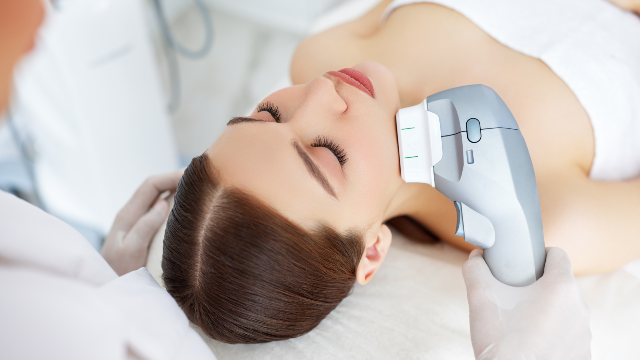
Medical Guide
Ultherapy or Threads: Energy Delivered, or Tissue Pulled
Both are non-surgical and both end up asking your body to make collagen. One gets there by delivering energy, the other by pulling tissue and dissolving.
Schedule a ConsultationUltherapy or Threads: Energy Delivered, or Tissue Pulled
Medically reviewed by Dr. Park Ga Young, Director, Merry Plastic Surgery
Two non-surgical options, both published by the same clinic, both ending up in the same place: a collagen response produced by your own body.
They arrive there by opposite routes.
Ultherapy PRIME delivers energy — microfocused ultrasound, at a chosen tissue depth, with real-time imaging — and nothing is left behind. The result is whatever your tissue does in response over the following weeks and months.
A thread lift places something and pulls. Dissolvable medical-grade threads are inserted beneath the skin without an incision, producing a mechanical lift immediately, and then, as the thread dissolves, a biological response the clinic describes as stimulating collagen.
So one gives you an effect today and a response later. The other gives you only the response. That difference decides almost everything a patient cares about, including the one thing people rarely ask about in advance: when you will be able to tell whether it worked.
Ultherapy PRIME, as published
The category. Merry Plastic Surgery's energy-based treatments are described as non-surgical procedures designed to improve skin firmness, elasticity and facial definition by delivering controlled energy beneath the skin. Two systems are named: Ultherapy PRIME, using microfocused ultrasound energy with real-time imaging, and Density, using radiofrequency.
Real-time imaging is the distinguishing feature named in the published claims — microfocused ultrasound with real-time imaging to support gradual lifting and firming through the body's collagen-production process. Energy is being placed at a depth, and the imaging is how the depth is seen.
Where it is aimed. The published claims name non-surgical lifting and definition in areas such as the brow, lower face, under the chin and neck.
The visit. Consultation and assessment of skin, anatomy, medical history, concerns and expectations; selection of Ultherapy PRIME or Density according to the targeted tissue depth and desired improvement; planning of areas, energy level and scope; skin cleansed, with comfort measures as appropriate; energy delivered; individualized aftercare guidance on skincare, sun protection, physical activity and symptoms needing attention.
Sensation. Described as possibly including warmth, tingling, small pulses or warming, depending on the technology.
Afterward. Many patients resume routine activities shortly after. Hospitalization and sutures are generally not required. Temporary redness, swelling, tenderness, tingling or sensitivity may occur.
Timing of results. This is the important one. Results develop gradually because both treatments depend on the body's collagen-remodeling response. Some patients may notice early changes in firmness or definition; further improvement may develop over the following weeks or months. Maintenance sessions may be recommended based on physician assessment.
Thread lifting, as published
What it is. A non-surgical, minimally invasive lifting procedure using dissolvable medical-grade threads inserted beneath the skin without an incision, intended to improve facial sagging and wrinkles.
Two mechanisms, stated as such. A mechanical lifting effect, combined with a biological healing response as the thread gradually dissolves — described as stimulating collagen production and supporting skin elasticity and tone.
The visit. Assessment of skin condition, degree of sagging, fat in the treatment area, facial zone, facial shape, wrinkle pattern and goals; marking designed to the wrinkle pattern and desired contour; local or sedation anesthesia; threads inserted with a cannula along the markings.
Time. About 30 minutes, no hospitalization, no suture removal, and return to normal daily activities immediately under the clinic's stated protocol.
Timing of results. A lifting effect can be visually confirmed shortly after the procedure, with further development as the thread dissolves and collagen is stimulated.
Duration, by thread. Silhouette Lifting: approximately 18 to 24 months. Blue Rose Lifting: notably longer, described as roughly four times that of standard thread-lift threads. Hoe-ori, Mint, Bob and Caveon are positioned more toward immediate wrinkle and elasticity improvement.
Risks. Temporary swelling, tenderness or bruising at insertion sites; consultation advised for unusual or prolonged discomfort, signs of infection, or asymmetry.
The comparison that matters
Is anything placed in you? Threads, yes — dissolvable, but physically present for a period. Ultherapy, no. For some patients that is the whole decision, and it is a legitimate basis for one.
When do you see something? Threads: shortly after. Ultherapy: gradually, over weeks to months. If you are traveling for a treatment and want to see a change before you fly home, that difference is decisive.
Is anesthesia involved? The thread lift uses local or sedation anesthesia. The energy-based record lists anesthesia as unconfirmed, with comfort measures mentioned in the procedure steps. Worth asking about directly.
How is the depth chosen? For Ultherapy PRIME, by targeted tissue depth with real-time imaging. For threads, by thread type selected to the patient's concerns — the published assessment says the physician selects the thread type or types most suitable.
How long does it last? Threads have published durations that differ by type. Energy-based longevity is described as varying, with natural aging continuing and maintenance possibly recommended.
What is the downside if it under-delivers? With threads, something was placed and a duration was expected. With energy, the response was smaller than hoped and nothing remains to account for. Neither is worse; they fail differently, and knowing how is part of choosing.
What both of them are honest about
The energy-based record states it flatly: these treatments cannot reproduce the results of a surgical facelift, and outcomes vary by patient.
The thread-lift record says the same in its own terms: positioned as an option for earlier-stage sagging rather than a replacement for structural surgical lifting, with results and longevity varying by thread type and individual factors and not assured.
Two non-surgical options, and both published descriptions decline to claim they substitute for surgery. That is the most useful thing either record says, and it is worth weighing against the marketing you will encounter elsewhere for this exact comparison — the National Library of Medicine's guidance on evaluating health information and health fraud applies directly.
The FDA's overview of aesthetic and cosmetic devices and its material on non-invasive body contouring technologies cover the general device category.
Who each is published for
Energy-based treatments: mild to moderate facial or neck laxity, reduced firmness or elasticity, jawline or lower-face concerns, fine lines, age-related texture change. Also patients who prefer non-incisional treatment, want gradual improvement, are not ready for surgical lifting, or want maintenance as part of an individualized plan.
Thread lifting: early to moderate sagging in the cheeks, jawline or neck, without incisional surgery. Also patients wanting a minimally invasive option, improved elasticity, a firmer V-line contour, or a fast return to daily activities.
The overlap is substantial and the distinguishing phrases are worth noticing. "Want gradual improvement" and "want maintenance" sit on the energy side. "A fast return to daily activities" and "a firmer V-line contour" sit on the thread side.
Who is unsuitable is left unconfirmed for both. That question goes to the consultation.
One practical note on assessment
Merry Plastic Surgery lists non-surgical skin tightening (Ultherapy) among the published core specializations of Dr. Park Ga Young, alongside dermatology services for skin care and skin pigmentation treatment.
The relevance for a patient is narrow and concrete: skin-quality concerns and tissue-laxity concerns are different problems that often arrive together, and assessment by someone whose published scope covers both makes it more likely the distinction gets drawn. Skin conditions and skin pigmentation disorders cover the first; laxity is the second.
How to decide, in four questions
How soon do I need to see a change? The clearest separator. Threads show something shortly after; energy develops over weeks to months.
Do I want anything placed under my skin? A yes-or-no that resolves the question for some people immediately.
Am I treating laxity, skin quality, or both? Both records touch elasticity, but the assessments look at different things.
Is my degree of sagging within what either is positioned for? Both records say they are not substitutes for surgical lifting. If the honest answer is that it is not, the useful conversation is a different one.
Send those ahead of a visit through the clinic's contact page; the clinic's own framing of its approach sits on its about page. Appointments fall inside a week running 9:30 a.m. to 6:30 p.m. on weekdays and 9:30 a.m. to 4:00 p.m. on Saturdays, closed Sundays and public holidays — relevant if maintenance sessions are recommended.
The second energy system, briefly
Ultherapy PRIME is not the only energy-based option published here, and knowing the other exists changes the conversation from a two-way comparison to a three-way one.
Density uses monopolar and bipolar radiofrequency energy with impedance feedback and adjustable cooling, described as supporting controlled energy delivery and collagen remodeling. The published benefits name firmness, elasticity, facial contours and fine-line improvement.
The published selection logic between the two energy systems is stated in a single phrase: the treatment is chosen according to the targeted tissue depth and desired improvement. Depth is the variable.
Which means a patient arriving asking for Ultherapy by name may be answered with a different recommendation, and the reason will be about where in the tissue the change needs to happen rather than about which brand is better. Worth knowing before the conversation rather than during it, because a patient who has already decided on a brand name tends to hear a different recommendation as a refusal rather than as an answer to a question they did not know was being asked.
The Bottom Line
- Ultherapy PRIME delivers microfocused ultrasound with real-time imaging and leaves nothing behind; a thread lift places dissolvable threads that pull immediately and then provoke a response as they dissolve.
- The decisive practical difference is when you can tell: thread lifting shows a change shortly after, energy-based treatment develops over weeks to months.
- Thread durability is published by thread type — Silhouette at roughly 18 to 24 months, Blue Rose notably longer — while energy longevity varies and may involve maintenance.
- Thread lifting uses local or sedation anesthesia; the anesthesia row for energy-based treatment is unconfirmed and worth asking about.
- Both published records decline to claim equivalence with surgery, which is the most useful statement either of them makes.
Frequently Asked Questions
What is the mechanical difference?
Ultherapy PRIME delivers microfocused ultrasound energy at a targeted depth with real-time imaging. A thread lift inserts dissolvable threads beneath the skin that lift mechanically and then dissolve.
Which one shows results sooner?
Thread lifting. A lifting effect can be visually confirmed shortly after the procedure, while energy-based results develop gradually over weeks or months.
How long does each last?
Thread duration is published by type — Silhouette approximately 18 to 24 months, Blue Rose notably longer. Energy-based longevity varies and maintenance sessions may be recommended.
Is either a replacement for a facelift?
No. The energy-based record states these treatments cannot reproduce a surgical facelift, and the thread record positions itself for earlier-stage sagging.
Does either involve anesthesia?
Thread lifting uses local or sedation anesthesia. For energy-based treatment the anesthesia row is unconfirmed, with comfort measures mentioned in the steps.
What areas can Ultherapy PRIME treat?
The published claims name non-surgical lifting and definition in areas such as the brow, lower face, under the chin and neck.
What are the side effects?
Energy-based: temporary redness, swelling, tenderness, tingling or sensitivity. Threads: temporary swelling, tenderness or bruising at insertion sites.
Who is not suitable for either?
The unsuitability row is left unconfirmed for both, so that question has to be answered at consultation rather than looked up.
This article is for general informational purposes and does not constitute individualized medical advice. It is not a self-diagnosis tool. Results vary with anatomy, tissue condition and individual healing, and whether a treatment is appropriate for you can only be determined through an in-person consultation and examination by a qualified plastic surgeon or other qualified physician.
More Articles
Continue reading our clinical guides.
Operating Room Standards: What You Can Ask and Verify
You will never inspect a sterilization room. What you can do is ask questions whose answers reveal whether a facility thinks about this systematically.
Learn More
Staying in Korea After Rhinoplasty: Why No Number Exists
The clinic publishes no fixed figure, and that is not an omission. A nose heals on a timetable long enough that any single number would be misleading.
Learn More

Bringing Someone With You: What a Companion Actually Does
Decide this by listing the hours a companion would actually cover, rather than by how you feel about going alone. Most are ordinary, and a few are not.
Learn More