Personalized Medical Care & Dedicated International Patient Concierge


Medical Guide
Understanding Ptosis: The Muscle, Not the Skin Above It
A heavy upper lid can be loose skin or a weak lifting muscle. They look alike in a mirror and lead to different operations, so the right test matters.
Schedule a ConsultationUnderstanding Ptosis: The Muscle, Not the Skin Above It
Medically reviewed by Dr. Hong Sung Taek, Chief Director, Merry Plastic Surgery
Two people describe the same thing — a heavy upper lid, eyes that look tired, a face that reads as sleepy when it is not — and they have different problems.
In one, there is too much skin sitting over the eye. In the other, the muscle that lifts the lid is not lifting it far enough.
Those are not degrees of the same condition. Ptosis is the second one, and it is defined by muscle function rather than by appearance. Merry Plastic Surgery's published description is precise about which muscles: the levator palpebrae superioris, and where appropriate Müller's muscle — the structures that raise the upper lid.
Knowing which of the two you have is the whole of this article, because it decides everything that follows.
The sign that separates them
The published record gives the measurement that matters: iris exposure.
The iris is the colored circle of your eye. In a lid that opens normally, a predictable amount of it is visible when you look straight ahead at rest. When the lifting muscle is weak, the lid sits lower and covers more of it.
That is what a surgeon is looking at, and it is why the published consultation describes assessing iris exposure and eyelid muscle strength alongside eyelid thickness and fat or muscle volume.
Excess skin, by contrast, hangs over the lid margin without the lid itself sitting low. The eye opens normally; something is draped on top of it.
A crude version you can do at a mirror: look straight ahead, relaxed, and lift the skin of your upper lid gently upward and outward with a fingertip without pulling the lid margin itself. If the eye now looks open and the iris more visible, skin was the obstruction. If the lid margin still sits low over the iris, the lifting mechanism is part of the picture. This is an observation to report, not a diagnosis — but it is a far more useful thing to bring to a consultation than "my eyes look tired."
The compensation nobody mentions
Here is the detail in the published record that most patients recognize immediately once it is pointed out.
Among the candidate findings: habitual eyebrow or forehead compensation.
When the lid muscle underperforms, people recruit the forehead. The brow lifts to get the lid out of the way, all day, without the person noticing. Over years that produces a characteristic pattern — raised eyebrows at rest, horizontal forehead lines earlier than expected, and sometimes a feeling of tiredness in the forehead by evening.
Two consequences follow.
It is a sign, and a useful one. If people tell you that you look surprised, or that your forehead is doing work, mention it.
It is also a thing correction can change. The published benefits include that correcting the underlying muscle weakness may reduce habitual eyebrow or forehead compensation — which is a functional improvement rather than an aesthetic one.
Who the published record describes
Patients with mild to moderate or more significant ptosis who experience:
- Reduced iris exposure
- Sleepy-looking eyes
- Eyelid asymmetry
- Habitual eyebrow or forehead compensation
And the technique chosen depends on eyelid thickness, fat and muscle volume, and the degree of ptosis — not on preference.
Note that asymmetry appears on that list. One lid sitting lower than the other is a common presentation and one people often attribute to how they sleep. It is worth raising specifically.
The two techniques, and what decides between them
The published record describes two approaches and is clear that the choice follows the anatomy.
Non-incisional. Small holes are made in the eyelid, the levator muscle is looped and fixed with fine sutures to shorten and lift it, and natural skin-muscle adhesion helps form the eyelid crease. Approximately 30 minutes. No suture removal.
Incisional. An opening is made in the lid. Sagging skin, along with fat or muscle that is surplus to the correction, may then be taken away; the levator is reinforced and anchored down to the tarsal plate; and, if wanted, the crease of a double eyelid is built during the same operation. Typically under one hour. Sutures removed at approximately three to seven days.
Both are performed under local or twilight anesthesia, with no hospitalization and same-day discharge.
The practical distinction is not "small versus big". It is that the incisional approach can also remove tissue — skin, fat, muscle — while the non-incisional approach works on the lifting mechanism alone. Which is why the excess-skin question at the top of this article feeds directly into which technique is appropriate.
What to expect from correction
The published benefits: greater visible iris exposure, a larger and clearer appearance of the eyes, a more alert and less tired resting expression, easier and more comfortable eye opening, and possibly reduced eyebrow or forehead compensation.
The published timing: general recovery approximately five to seven days, with one to two follow-up visits.
The published limits: results vary according to ptosis severity and individual eyelid anatomy and are not promised. The eyelid-opening effect is described as intended to be durable because the procedure directly shortens or reinforces the muscle — but individual healing, muscle tone, aging and other biological factors can affect results over time, so permanent or lifetime results are not promised.
The risk list deserves a careful read
More specific than most, and each item is worth understanding rather than skimming.
Temporary swelling, bruising and mild discomfort during recovery. Expected.
Eyelid asymmetry. Note that asymmetry is both a reason for surgery and a possible outcome of it. Two lids, two muscles, two healing responses.
Under-correction and over-correction, with the potential need for adjustment. This is the honest core of ptosis surgery: it is a calibration, and calibrations can land on either side.
Suture-related irritation with the incisional technique.
And the reporting list: persistent double vision, significant ongoing asymmetry, signs of infection, or difficulty fully closing the eyes should be reported to the surgical team.
That last item is the one to hold on to. A lid that has been shortened may not close completely at first, and difficulty closing the eye affects the surface of the eye itself. The National Library of Medicine's overviews of eyelid disorders and eye diseases cover the surrounding territory, and tears covers why lid closure and eye-surface comfort are connected.
What to disclose, and why each item is on the list
The published preparation asks for your relevant eye-health and surgical history, and names four things specifically.
Dry eye. Because an operation that changes lid position and closure interacts with it directly.
Thyroid eye disease. Because it changes lid position and eye protrusion on its own, and a lid correction planned without knowing about it is planned against a moving target.
Previous eyelid surgery. Because it changes the anatomy the surgeon will find.
Bleeding disorders. Because this is surgery on thin, vascular tissue.
Then hand over an inventory of what you take, transcribed from the packaging while you are standing in front of it. The categories worth checking before you close the list: blood thinners, over-the-counter medicines, and dietary supplements. General background sits in drug safety. Do not discontinue anything prescribed without asking the prescriber first.
When to seek an assessment
Three situations where the answer is clearly yes.
When it changed. Ptosis that appears or worsens over weeks or months, rather than gradually over years, is a different clinical question and deserves an eye-health assessment rather than a cosmetic consultation first.
When it is one-sided and new. Same reason.
When it affects your field of vision. A lid that encroaches on what you can see is a functional problem, not an appearance one.
And one where the answer is "assessment, not surgery yet": when what bothers you is tiredness in photographs and nothing else has changed. That is worth an examination that can distinguish skin from muscle, which is exactly what the published consultation describes doing.
You can open the conversation before traveling through the clinic's contact page, and for the clinic's self-description, unfiltered, there is its about page. For the rest of what you will read about eyelids online, the National Library of Medicine's guidance on evaluating health information is worth applying.
Why the choice of technique is not yours to make
This deserves saying directly, because patients often arrive having decided between the two approaches before being examined.
The published record states that technique selection follows eyelid thickness, fat and muscle volume, and the degree of ptosis. Those are measurements. A thicker lid with more tissue behaves differently under a suture than a thin one, and a more significant droop requires more correction than a suture loop can reliably deliver.
What is genuinely yours is everything around that: whether you want a visible crease formed at the same time, how much recovery your schedule allows, what you want the result to look like, and what you are unwilling to trade. Bring those. Leave the technique decision to the examination, and treat a clinic that lets you choose it from a webpage as having skipped a step. The examination is where the measurement happens, and the measurement is what the published record says the decision rests on.
The Bottom Line
- Ptosis is a muscle problem — weakness of the levator palpebrae superioris and sometimes Müller's muscle — not excess skin, though the two look similar at a mirror.
- The sign that separates them is iris exposure: how much of the colored circle the lid covers at rest.
- Habitual eyebrow or forehead lifting is both a recognizable sign and something correction may reduce.
- Two techniques — non-incisional (about 30 minutes, no suture removal) and incisional (under an hour, sutures out at three to seven days) — chosen by eyelid thickness, fat and muscle volume, and severity rather than by preference.
- Under- and over-correction are both named possibilities, and difficulty fully closing the eyes is on the list of things to report promptly.
Frequently Asked Questions
What is ptosis?
Weakness of the muscles that open the upper eyelid, primarily the levator palpebrae superioris and where appropriate Müller's muscle, so the lid sits lower than usual.
How is it different from excess eyelid skin?
Excess skin drapes over a lid that opens normally. In ptosis the lid margin itself sits low, covering more of the iris.
Why do my eyebrows feel tired?
Habitual eyebrow and forehead lifting is a common compensation for a weak lid muscle, and the published record names it among the candidate findings.
What are the two techniques?
Non-incisional, which loops and fixes the levator muscle through small holes, and incisional, which opens the lid and can also remove excess skin, fat or muscle.
How long is recovery?
Approximately five to seven days generally, with sutures removed at three to seven days for the incisional technique and none for the non-incisional one.
Can the correction be too much or too little?
Yes. Under-correction and over-correction are both named in the published risk list, with the potential need for adjustment.
What should I disclose beforehand?
Dry eye, thyroid eye disease, previous eyelid surgery, bleeding disorders, and a written list of medications and supplements.
When should I get an assessment rather than surgery?
When the droop is new, worsening over weeks, one-sided and recent, or affecting your field of vision — those deserve an eye-health assessment first.
This article is for general informational purposes and does not constitute individualized medical advice. It is not a self-diagnosis tool. Surgical results vary with anatomy, tissue condition and individual healing, and whether a procedure is appropriate for you can only be determined through an in-person consultation and examination by a qualified plastic surgeon.
More Articles
Continue reading our clinical guides.
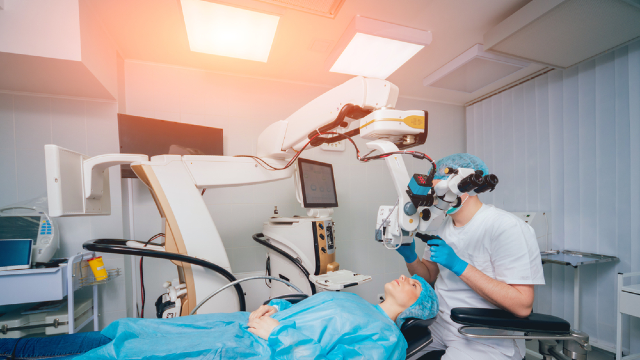
Operating Room Standards: What You Can Ask and Verify
You will never inspect a sterilization room. What you can do is ask questions whose answers reveal whether a facility thinks about this systematically.
Learn More
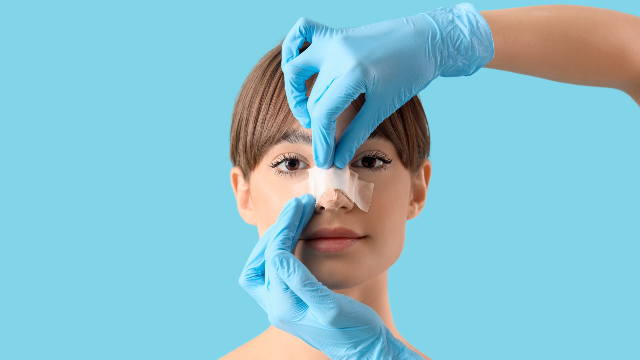
Staying in Korea After Rhinoplasty: Why No Number Exists
The clinic publishes no fixed figure, and that is not an omission. A nose heals on a timetable long enough that any single number would be misleading.
Learn More

Bringing Someone With You: What a Companion Actually Does
Decide this by listing the hours a companion would actually cover, rather than by how you feel about going alone. Most are ordinary, and a few are not.
Learn More