Personalized Medical Care & Dedicated International Patient Concierge


Medical Guide
Who Is a Good Candidate for an Endoscopic Forehead Lift?
Seven published findings, and two of them are about how your face reads to other people rather than about anatomy. That is the unusual part of this list.
Schedule a ConsultationWho Is a Good Candidate for an Endoscopic Forehead Lift?
Medically reviewed by Dr. Hong Sung Taek, Chief Director, Merry Plastic Surgery
Short answer: seven findings are published, and two of them are not anatomical at all.
Most candidate lists in aesthetic surgery describe tissue. This one describes tissue and how a face is being read — a stern resting expression, a crowded look around the eyes. That is a meaningful inclusion, because those are the complaints patients arrive with and rarely find reflected back in clinical language.
Here is the published list, and what each item is actually pointing at.
The seven published findings
Merry Plastic Surgery's published candidate description names patients who:
- Want to improve upper-face wrinkles and sagging in a single procedure
- Have forehead wrinkles together with eyebrow or upper-eyelid heaviness
- Feel that the eyes and eyebrows appear crowded
- Have a sharp, stern, or fierce resting expression
- Have noticeably uneven eyebrows
- Want a softer and more refreshed change rather than a dramatic alteration
- Have tried other lifting approaches
Seven, and they are not seven descriptions of the same person.
Items 3 and 4 are the unusual ones
"Crowded" describes reduced distance between the brow and the lash line — the brow having descended toward the eye, compressing the space between. Patients describe it as looking heavy, or hooded, or as eyes that seem smaller than they were, and it is a spatial observation rather than a skin one.
"A sharp, stern, or fierce resting expression" describes what brow position does to how you are read. Brows that sit low and angled inward are the anatomy of a frown, and a face carrying that at rest is read as displeased by people who have not asked.
If either of those is why you are here, you are describing exactly what this list names — which is worth knowing, because "I look angry when I am not" can feel like a complaint with nowhere to go clinically.
Item 2 is the one that decides which operation
Forehead wrinkles together with eyebrow or upper-eyelid heaviness.
That pairing is the crux. Upper-lid heaviness can originate in the lid — excess skin, a weak lifting muscle — or above it, from a brow that has descended and is pressing down.
They look similar. They lead to different operations. And an eyelid procedure performed on a lid that is heavy because of the brow above it treats the place where the symptom shows rather than where it comes from.
Which is why the published consultation assesses the forehead, eyebrow position and the upper-eyelid area together, along with skin quality, anatomy, hairline position and degree of tissue laxity.
The practical version: if your complaint is heavy lids, insist that the brow be assessed too. The National Library of Medicine's overview of eyelid disorders covers the neighboring conditions, and skin aging the changes that produce both.
Item 6 is a filter on expectations
"A softer and more refreshed change rather than a dramatic alteration."
That is the clinic describing the size of the effect, and it belongs in a candidacy list because a mismatch here is not a surgical failure — it is a disappointment that was available before anyone operated.
The published benefits are correspondingly scoped: a softer, more refreshed and youthful upper-face appearance; improved sagging eyebrows; reduced forehead and glabellar wrinkles; improved eyebrow asymmetry; reduced heavy or tired appearance around the eyes; adjusted eyebrow position; and addressing a sharp or fierce resting expression. The degree of improvement is stated as depending on anatomy and skin.
Read those together and the shape is clear: this operation changes the upper third of the face, by a moderate amount, in a direction described as refreshed.
Item 7, and why previous attempts are relevant
"Have tried other lifting approaches."
Prior treatments matter for the same reason they matter everywhere in surgery: they change the tissue. Tell the clinic what you have had, when, and where — including non-surgical treatments, threads, and injectables, not only operations.
What this operation is not aimed at
The honest complement to a candidacy list, and it is not published as such, so it is inferred from what the benefits describe.
Not the lower face. Jowls, the jawline and the neck are separate categories on the clinic's own menu.
Not skin quality. Pigment, texture and fine surface lines are a different problem from tissue position. The National Library of Medicine covers skin pigmentation disorders.
Not the lid itself, where the problem is in the lid. That is the item-2 distinction running the other way.
Not volume. Hollowing is an absence of tissue; lifting repositions what is there.
Asking "what would you expect this not to change?" at a consultation surfaces all four in one answer, and it is the question that prevents the most disappointment.
What the published record leaves unconfirmed
Two absences worth knowing before you go.
Who is not suitable is left unconfirmed for this procedure, as is why patients in this market request it. So the exclusion list that would normally let you rule yourself out does not exist in published form here.
That means the suitability question must be asked directly. It also means a page elsewhere offering a confident exclusion list for this operation at this clinic is supplying something the clinic has not.
The risk section is general — what it offers is three statements of principle. Healing responses differ from person to person. Your own risk factors, and the side effects you should expect, belong in a conversation with the surgeon. And pain, swelling or anything else unexpected during recovery warrants getting seen promptly rather than waiting. Ask for the specific enumeration in person. The National Library of Medicine's overviews of surgery and after surgery cover the general picture, and anesthesia the sleep anesthesia used.
The practical facts if you qualify
About one hour of surgery under sleep anesthesia, no hospitalization, same-day discharge.
Approximately five to seven days of general recovery, sutures generally removed after five to seven days, one to two early follow-up visits.
Short incisions inside the hairline, with an endoscope providing magnified visualization of nerves, blood vessels and muscle, and Endotine fixation securing the repositioned tissue.
For a traveling patient the binding constraint is the suture-removal visit: it has to fall inside the clinic's hours of a 9:30 a.m. start daily, a 6:30 p.m. weekday close, a 4:00 p.m. Saturday close, and nothing at all on Sundays or public holidays. That sets the floor on how long you need to be in Seoul, and it is worth confirming before flights are booked through the clinic's contact page.
Five things to bring
Photographs at rest, front-on, with a relaxed face — not smiling, not raising your brows. Most people cannot hold their forehead still for a camera, so take several.
A note of how your face is read. "People ask if I am annoyed" is clinical information here.
Your hairline situation. Height, density, any recession.
Your history of previous lifting treatments, surgical or not.
Every product you take, copied off its label. Two categories get forgotten most reliably: blood thinners, and the vitamin or herbal products people do not think of as medicine at all, which dietary supplements addresses. drug safety covers why the list is worth assembling in advance. Stopping a prescribed medicine is the prescriber's call.
Read that list against whatever else you have found: evaluating health information is the National Library of Medicine's guide to doing it, and other candidacy lists for this operation deserve the treatment. Where the clinic speaks for itself is its about page.
The Bottom Line
- Seven findings are published, and two describe how a face reads — a crowded look around the eyes, and a sharp, stern or fierce resting expression — rather than tissue.
- Item 2 decides which operation you need: upper-lid heaviness can come from the lid or from a descended brow above it, and those lead to different surgery.
- Item 6 is an expectations filter — the published effect is a softer, refreshed change to the upper third of the face, not a dramatic alteration.
- There is no published exclusion list for this procedure and the risk section is general, so both must be asked about directly.
- If you qualify: about an hour of surgery, five to seven days of recovery, sutures out at five to seven days, and one to two follow-ups that must fit the clinic's six-day week.
Frequently Asked Questions
What are the published candidate findings?
Wanting upper-face wrinkle and sagging improvement in one procedure; forehead wrinkles with brow or upper-lid heaviness; a crowded look around the eyes; a stern or fierce resting expression; uneven eyebrows; wanting a refreshed rather than dramatic change; and having tried other lifting approaches.
My eyelids feel heavy — do I need eyelid surgery or this?
That depends on whether the heaviness originates in the lid or in a descended brow above it. Insist that the brow be assessed alongside the lid.
Can it fix a stern resting expression?
Addressing a sharp or fierce resting expression is named among the published benefits, and low, inward-angled brows are the anatomy behind that appearance.
How large is the change?
The published description is a softer, more refreshed upper-face appearance rather than a dramatic alteration, with the degree depending on anatomy and skin.
Who should not have it?
The published record leaves that unconfirmed, so it has to be asked directly at consultation rather than looked up.
Will it help my jawline or neck?
No. The published benefits describe the upper third of the face; the lower face and neck are separate categories.
How long will I need to be in Korea?
Recovery is about five to seven days with sutures removed at five to seven days, so the suture-removal visit sets the floor. Confirm with the clinic before booking.
What should I photograph?
Your face at rest, front-on, with your forehead relaxed rather than raised. Take several, because most people cannot hold it still.
This article is for general informational purposes and does not constitute individualized medical advice. It is not a self-diagnosis tool. Surgical results vary with anatomy, tissue condition and individual healing, and whether a procedure is appropriate for you can only be determined through an in-person consultation and examination by a qualified plastic surgeon.
More Articles
Continue reading our clinical guides.
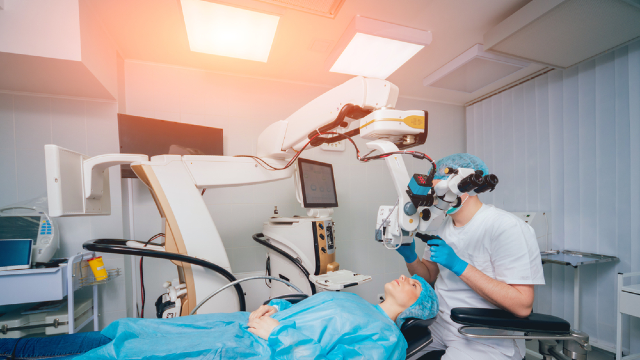
Operating Room Standards: What You Can Ask and Verify
You will never inspect a sterilization room. What you can do is ask questions whose answers reveal whether a facility thinks about this systematically.
Learn More
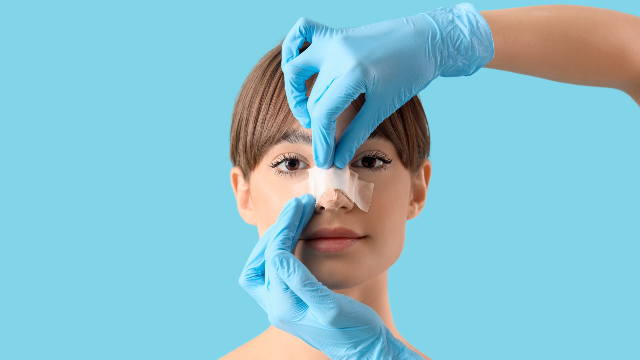
Staying in Korea After Rhinoplasty: Why No Number Exists
The clinic publishes no fixed figure, and that is not an omission. A nose heals on a timetable long enough that any single number would be misleading.
Learn More

Bringing Someone With You: What a Companion Actually Does
Decide this by listing the hours a companion would actually cover, rather than by how you feel about going alone. Most are ordinary, and a few are not.
Learn More