Personalized Medical Care & Dedicated International Patient Concierge


Breast Surgery · Needs Clinic Confirmation
Breast Reduction
Breast reduction surgery addresses breast hypertrophy by removing excess glandular tissue, fat, and skin, then reshaping and repositioning the remaining breast tissue and nipple-areola complex into a smaller, more elevated contour.
Schedule a ConsultationWhat is breast reduction in plastic surgery?

Breast reduction surgery addresses breast hypertrophy by removing excess glandular tissue, fat, and skin, then reshaping and repositioning the remaining breast tissue and nipple-areola complex into a smaller, more elevated contour. The surgical goal is twofold: reducing physical bulk and weight, and correcting the ptosis that frequently accompanies enlarged breasts.
Because breast tissue reduction inevitably involves incisions, the specific incision pattern used — periareolar, vertical, or omega (anchor/inverted-T) — is matched to how much tissue needs to be removed and how much the breast has already dropped. Larger reductions with significant ptosis generally require more extensive incision patterns, while smaller reductions with minimal sagging may be addressed through more limited incisions. The objective throughout is to select the most effective technique for achieving a naturally proportioned result while keeping the resulting scar as limited as the case allows.
Understanding breast hypertrophy (gigantomastia)
The problems associated with breast hypertrophy
Beyond the visible impact on body proportion, disproportionately large or heavy breasts are commonly associated with a range of physical and skin-related issues, including:
Pain in the breasts, neck, shoulders, or back
Postural spinal changes related to carrying excess breast weight
Recurring headaches
Skin irritation or breakdown beneath the breast fold
Skin conditions such as eczema in the inframammary area
Psychological discomfort or self-consciousness related to breast size
What causes breast hypertrophy
Endocrine-related (hormonal) breast hypertrophy
This form is often influenced by genetic factors, where hormones that affect breast tissue development are secreted in greater-than-typical amounts, causing breasts to enlarge beyond typical proportions. It can also emerge during periods of significant physical change such as pregnancy, childbirth, or breastfeeding, and is frequently linked to hormonal imbalance during adolescence.
Obesity-related breast hypertrophy
In this form, breast enlargement occurs as part of overall body weight gain. This pattern has become more common in connection with increasingly Westernized dietary habits.
Self-assessment of breast hypertrophy
The distance between the sternal notch (pit of the neck) and the nipple is one reference point used to help distinguish typical breast size from hypertrophy, and this measurement can also influence which surgical technique is most appropriate.
As a general reference:
Cup A is associated with a sternal notch-to-nipple distance of approximately 10 cm
Cup B corresponds to approximately 12.5 cm
Cup C corresponds to approximately 15 cm
Cup D corresponds to approximately 17.5 cm
Measurements associated with breast hypertrophy classification are generally higher:
Cup E is associated with approximately 20 cm
Cup F is associated with approximately 22.5 cm
Cup G is associated with approximately 35 cm
These figures are general reference points; an in-person consultation and physical assessment are needed to evaluate individual anatomy accurately.
Who needs breast reduction treatment?
Breast reduction may be worth discussing with a specialist if you experience any of the following:
Breasts that appear large and sagging in a way that feels physically restrictive or uncomfortable
Psychological stress connected to having disproportionately large breasts
Neck or back pain associated with the weight of the breasts
Skin conditions that have developed due to breast ptosis, such as irritation beneath the breast fold
A desire to achieve a breast line that better suits your overall body shape
A physical evaluation with a specialist is the appropriate next step to determine whether breast reduction is suitable for your individual anatomy and goals.
Meet the specialists in breast surgery
|
|
Dr. Sungtaek Hong | Dr. Jimin Lee |


Dr. Sungtaek Hong — Representative Director
Board-certified Plastic Surgeon (Korea University Medical Center) with surgical experience across breast surgery, facial contouring, and lifting procedures. Dr. Hong is a member of the fat grafting research group within the Korean Society of Plastic and Reconstructive Surgeons, relevant to breast contouring cases where fat-based techniques may be considered alongside implant-based approaches.
Dr. Jimin Lee — Director
Board-certified Plastic Surgeon (Kyung Hee University Medical Center) and full member of the Korean Society of Plastic and Reconstructive Surgeons, the Korean Society for Aesthetic Plastic Surgery, and the International Society of Aesthetic Plastic Surgery (ISAPS), among other professional societies.
Together, these specialists share a treatment philosophy centered on evaluating each patient's breast tissue and proportion individually, aiming for results that are both anatomically appropriate and aligned with the patient's personal goals, supported by thorough consultation before any surgical decision is made.
Treatment areas & expected improvements
- Breast volume and proportion: Excess glandular tissue, fat, and skin are reduced to bring breast size into better proportion with the rest of the body. The reduction is planned around individual body ratio and physical characteristics rather than a single standardized target size.
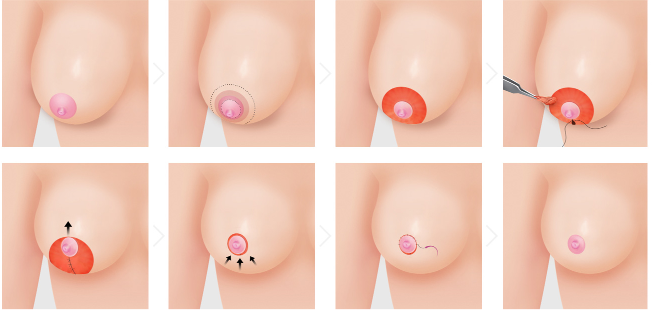
- Breast shape and ptosis (sagging): Along with volume reduction, breast tissue is repositioned to lift breasts that have dropped, correcting the downward, drooping contour that often accompanies breast hypertrophy.
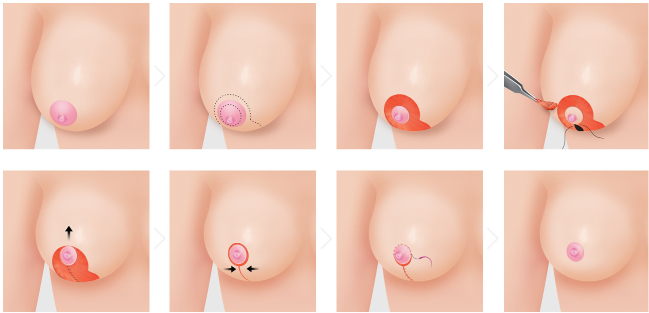
- Nipple-areola position: The nipple-areola complex is repositioned as part of the procedure to align proportionally with the newly reduced breast shape, using the incision approach best suited to the degree of correction required.
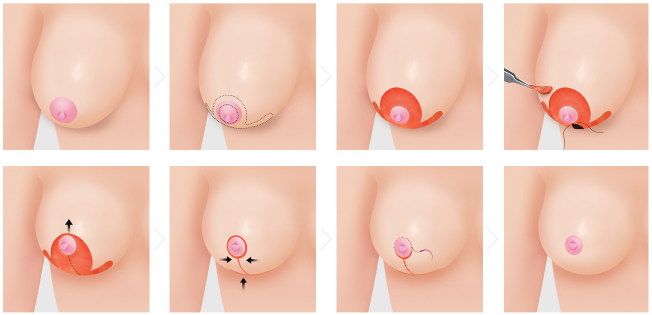
- Related musculoskeletal and dermatologic symptoms: By reducing the physical weight carried by breast tissue, the procedure is intended to help address associated neck, shoulder, and back discomfort, as well as skin irritation beneath the breast fold.
Expected improvements vary between individuals depending on original breast size, skin elasticity, degree of ptosis, and the surgical technique used. Results should be discussed individually with your surgeon, and outcomes cannot be guaranteed to be identical between patients.
Treatment process & timeline
Initial consultation — Discussion of your concerns, breast history, and aesthetic goals with the surgical team.
Diagnostic assessment — Physical evaluation of breast size, shape, skin elasticity, areolar position, and degree of ptosis to determine candidacy and the most suitable incision technique (periareolar, vertical, or omega/anchor).
Pre-surgical preparation — Preoperative planning and instructions in advance of the procedure.
Surgical procedure — Performed under general anesthesia, with an approximate surgical duration of 2 to 3 hours, depending on the technique and extent of correction required.
Immediate aftercare — Hospitalization is generally not required following the procedure.
Follow-up timeline — Sutures are typically addressed at approximately 1 week post-surgery, with around 2 to 3 follow-up visits, and a general recovery period of approximately 1 to 2 weeks. These timeframes may vary depending on individual patient condition and the surgical method used.
Results, safety & longevity
Breast reduction surgery is intended to provide a lasting reduction in breast volume and an improved, lifted breast contour; however, breast shape can still be influenced over time by factors such as aging, weight change, and pregnancy, which are outside the scope of the surgery itself.
Scarring: All breast reduction techniques involve some degree of scarring, since tissue removal requires an incision. Technique selection — periareolar, vertical, or omega — is chosen specifically to balance the extent of correction needed against minimizing visible scarring.
The periareolar incision limits scarring to the area around the areola, generally resulting in the smallest scar, but is less suited to cases with significant ptosis.
The vertical incision falls between periareolar and omega approaches, producing a smaller scar than the omega technique while still accommodating moderate-to-larger reductions; the final breast shape may continue to settle and refine in the months following surgery.
The omega (anchor/inverted-T) incision is suited to more significant ptosis or larger reductions, generally producing a stable, well-defined shape shortly after surgery, at the trade-off of a larger overall incision.
Anesthesia and safety approach: The procedure is performed under general anesthesia. Precision dissection techniques, including the use of Full HD endoscopic visualization where applicable, are intended to help minimize damage to blood vessels and nerves during surgery, and meticulous suturing combined with structured post-operative care is intended to help minimize incisional scarring and postoperative discomfort.
Risk transparency: As with any surgical procedure, breast reduction carries inherent risks, and individual healing, sensation retention, and final scar appearance vary. A personal consultation is necessary to review your specific anatomy, discuss realistic expectations, and determine whether you are an appropriate candidate. Please consult a qualified specialist regarding any concerns before and after surgery.
Why choose Merry Plastic Surgery for breast reduction?
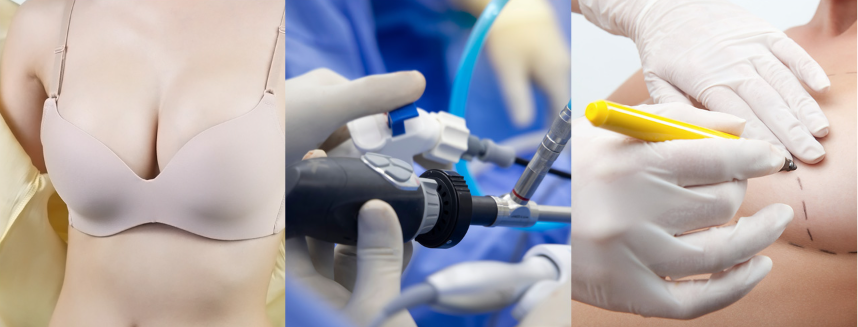
Merry Plastic Surgery approaches breast reduction with an emphasis on tailoring the outcome to each patient's individual body proportions rather than applying a single standardized shape or size. The surgical team's stated aim is to help patients achieve breast size and contour that fits naturally with their overall body characteristics, while managing the surgery with attention to nerve and vascular preservation and postoperative comfort.
Proportion-focused planning: Breast size and line are planned in consideration of overall body balance and individual physical characteristics, rather than a fixed target measurement.
Precision dissection: Full HD endoscopic-assisted dissection is used with the aim of minimizing damage to blood vessels and nerves during surgery.
Scar and pain-conscious technique: Minimal incision approaches, careful suturing, and structured post-surgical care are used with the goal of reducing incisional scarring and discomfort.
Specialist-led surgical team: Procedures are led by plastic surgery specialists with formal training and professional society memberships in reconstructive and aesthetic plastic surgery.
For international patients, the same consultation and evaluation process applies: a physical assessment of breast anatomy is required in every case to determine the appropriate technique and confirm candidacy before proceeding.
Real patient experiences
Case A — Neck and shoulder discomfort
A patient in her thirties sought consultation due to ongoing neck and shoulder discomfort she attributed to breast weight, along with a desire for a breast line better suited to her frame. Following evaluation, a technique was selected based on her breast size and degree of ptosis. She reported that her recovery followed the general expected timeline for suture removal and follow-up visits.
Suggested image: front-facing torso photograph, professionally composed to protect patient anonymity, showing pre- and post-procedure breast contour.
Case B — Skin irritation beneath the breast fold
A patient presented with recurring skin irritation beneath the breast crease that she linked to breast size and ptosis. After consultation and physical assessment, an incision approach appropriate to her anatomy was chosen. She noted improvement in the skin irritation during her follow-up period.
Suggested image: side-profile silhouette illustration emphasizing breast contour change, without identifiable features.
Case C — Postural strain and self-consciousness
A patient described feeling self-conscious about breast size disproportionate to her frame, along with postural strain she associated with breast weight. Following a tailored surgical plan, she went through the standard recovery and follow-up schedule discussed during consultation.
Suggested image: soft-focus lifestyle photograph representing comfort and confidence, without directly depicting the surgical outcome.
Start your consultation for a proportionate, comfortable breast size
If breast size, weight, or ptosis has been affecting your comfort, posture, or confidence, a personal consultation with the specialist team at Merry Plastic Surgery is the appropriate first step. During your consultation, your breast anatomy, degree of ptosis, and areolar position will be assessed in person so that the most suitable technique — periareolar, vertical, or omega incision — can be discussed with you directly, along with realistic expectations, potential risks, and an individualized recovery timeline. No outcome can be guaranteed in advance of this assessment, and all surgical decisions should be made together with your surgeon based on your specific anatomy and goals.
To take the next step, reach out to Merry Plastic Surgery to schedule a consultation and discuss whether breast reduction surgery is right for you. Our team is available to answer your initial questions and guide you through what to expect at each stage of the process, with your comfort and safety as the priority throughout.
Other Services
Explore additional treatments offered by our specialists.

Eye Revision Surgery
Eye revision surgery is a corrective procedure for patients who have already undergone double eyelid surgery but are not satisfied with the outcome, or who have developed complications such as an irregular crease, asymmetry, or scarring.
Learn More

Breast Lift
A breast lift, known clinically as mastopexy, is a surgical procedure designed to correct breast sagging by repositioning breast tissue, removing excess skin where necessary, and restoring the nipple-areola complex to a more natural position on the breast.
Learn More

Double Eyelid Surgery
Double eyelid surgery is a procedure within eye plastic surgery designed to create or redefine the fold above the eye — the crease that separates the upper eyelid into two visible sections.
Learn More