Personalized Medical Care & Dedicated International Patient Concierge


Breast Surgery · Needs Clinic Confirmation
Endoscopic Breast Augmentation
Endoscopic Breast Augmentation is a surgical breast augmentation technique that uses a high-definition endoscopic camera system to guide implant placement with a smaller incision and more controlled tissue dissection than conventional open techniques.
Schedule a ConsultationWhat is Endoscopic Breast Augmentation in breast surgery?

Endoscopic Breast Augmentation is a surgical breast augmentation technique that uses a high-definition endoscopic camera system to guide implant placement with a smaller incision and more controlled tissue dissection than conventional open techniques.
Rather than relying on direct visual access through a large incision, the surgical team inserts endoscope through a small incision, which projects a magnified, high-resolution view of the internal tissue planes onto a monitor. This allows the surgeon to identify blood vessels, nerves, and muscle fibers with greater accuracy while creating the implant pocket, which is intended to reduce unnecessary tissue trauma during dissection.
At Merry Plastic Surgery, this technique is paired with a dual-plane implant placement method. Dual plane surgery creates a pocket in the space between the fascia covering the pectoral muscle and the muscle itself, combining elements of both subglandular (above-muscle) and submuscular (below-muscle) placement. This approach is intended to allow the implant to sit in a way that suits a range of breast tissue types, from thinner chest walls with limited natural tissue to fuller, more glandular breasts, while aiming to minimize visible or palpable implant edges under the skin.
Two other implant placement approaches exist and may be discussed during consultation depending on individual anatomy:
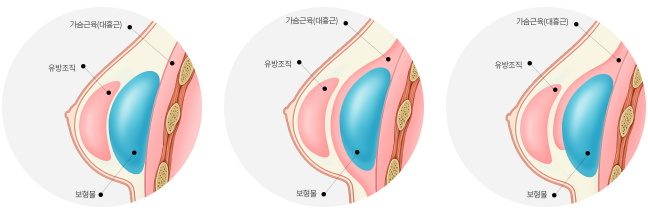
Subglandular placement (above the pectoral muscle): implant sits beneath breast tissue but above the muscle. This may suit individuals with more developed chest muscle, such as athletes, or those with a degree of natural ptosis, since the shape is less affected by muscle movement. It may be more noticeable to the touch in those with very little natural breast tissue, and can carry a higher likelihood of capsular contracture requiring ongoing monitoring.
Submuscular placement (below the pectoral muscle): implant sits underneath the muscle, typically approached through an axillary endoscopic incision. This may reduce the risk of vascular or nerve disruption during surgery and can result in a softer, more natural contour with a lower likelihood of capsular contracture, though those with more pronounced ptosis may notice the under-breast crease appears less smooth.
Incision location is a separate decision from implant plane and is selected based on anatomy, scarring preference, and surgical history:
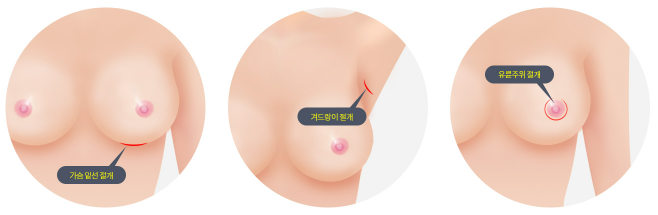
Inframammary fold incision: a 4–5 cm incision along the natural crease beneath the breast, allowing direct visualization during surgery, generally shorter operative time, and more straightforward correction — often considered for revision cases or more significant ptosis.
Axillary incision: a 4–5 cm incision along the natural crease of the underarm, keeping any scarring away from breast skin and reducing the likelihood of disruption near the nipple and areola, which can help preserve nipple sensation. This is currently the most frequently performed incision approach for patients seeking to keep any scarring off the breast itself.
Periareolar incision: a small 1.5–2 cm incision along the lower border of the areola, which places the incision close to the implant pocket. This approach is generally less suitable for smaller areola dimensions (roughly 2.5–3 cm or under), and may not be advised for women who have not yet given birth, given the proximity to breast tissue involved in lactation; it may be considered for revision surgery or more significant ptosis.
The surgical team selects the implant plane and incision location together, based on your existing breast tissue, chest wall anatomy, activity level, and aesthetic goals, discussed in detail during your consultation.
Who needs Endoscopic Breast Augmentation?
This procedure may be worth discussing with a specialist if you recognize any of the following:
Breasts that feel underdeveloped, flat, or lacking in natural fullness
A desire for natural-looking volume rather than an exaggerated or overly firm appearance
Volume loss or shape changes following significant weight reduction or after childbirth and breastfeeding
A chest wall where muscle is more prominent relative to breast fat, creating a flatter contour
Noticeable asymmetry between the left and right breast
A preference for minimal visible scarring and a same-day surgical experience
Interest in a procedure that prioritizes proportion and balance with the rest of the body rather than size alone
A consultation with the surgical team is the appropriate next step to confirm whether this approach fits your anatomy and goals, and to review your general health history for surgical candidacy.
Meet the specialists in breast surgery
|
|
Dr. Sungtaek Hong | Dr. Jimin Lee |
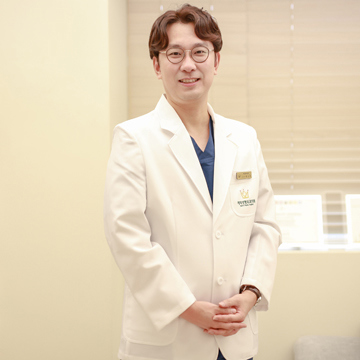
Dr. Sungtaek Hong — Representative Director
Board-certified Plastic Surgeon (Korea University Medical Center) with surgical experience across breast surgery, facial contouring, and lifting procedures. Dr. Hong is a member of the fat grafting research group within the Korean Society of Plastic and Reconstructive Surgeons, relevant to breast contouring cases where fat-based techniques may be considered alongside implant-based approaches.
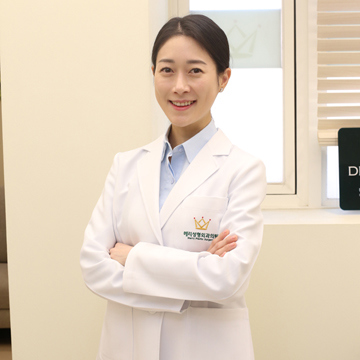
Dr. Jimin Lee — Director
Board-certified Plastic Surgeon (Kyung Hee University Medical Center) and full member of the Korean Society of Plastic and Reconstructive Surgeons, the Korean Society for Aesthetic Plastic Surgery, and the International Society of Aesthetic Plastic Surgery (ISAPS), among other professional societies.
Together, these specialists share a treatment philosophy centered on evaluating each patient's breast tissue and proportion individually, aiming for results that are both anatomically appropriate and aligned with the patient's personal goals, supported by thorough consultation before any surgical decision is made.
Treatment areas and expected improvements
Breast volume and fullness: For breasts that appear flat, underdeveloped, or have lost volume over time, implant placement is intended to restore a fuller silhouette. The dual-plane technique aims to distribute this added volume in a way that follows the natural slope of the chest rather than creating an artificially rounded or overly firm appearance.
Breast symmetry: Where one breast is noticeably smaller or shaped differently than the other, implant selection and placement can be adjusted individually on each side during planning, with the goal of achieving a more balanced appearance between the two breasts.
Upper pole and contour smoothness: The Mentor implant technology used at Merry Plastic Surgery is designed with a soft-curve side edge line intended to reduce the likelihood of visible or palpable rippling at the breast periphery, along with gel formulation intended to reduce upper pole dimpling.
Overall body proportion: Because implant size and placement are selected in relation to individual chest width, tissue thickness, and body frame — rather than a single generalized size — the aim is a result that appears proportionate to the individual's body rather than disproportionately large.
Improvements will vary depending on your existing breast tissue, chest wall anatomy, skin elasticity, and the specific implant size and plane selected. Results should be discussed as an individualized outcome during consultation rather than a fixed guarantee, and follow-up appointments allow the surgical team to monitor healing and final shape as swelling resolves.
Treatment process and timeline
|
|
Full HD endoscopic | Mentor silicone gel implant |
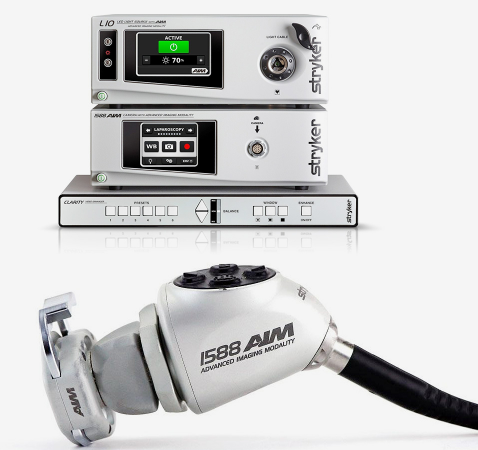
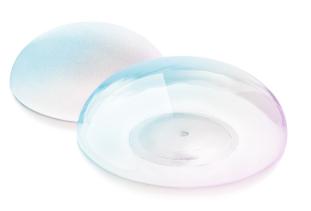
Initial consultation: You will discuss your goals, chest and breast anatomy, and relevant medical history with the surgical team, including any prior breast surgery.
Diagnostic and precision analysis: The clinical analysis process evaluates chest wall dimensions, existing breast tissue and position, and your size and shape preferences, in order to determine a suitable implant type, size, and placement plane.
Implant selection: Based on the analysis, an appropriate implant — such as a Mentor silicone gel implant — is selected in the size and profile best suited to your chest width and tissue characteristics.
Surgical procedure: Performed under general anesthesia, the procedure takes approximately 1 to 2 hours. Using the endoscopic system, the surgical team creates the implant pocket through the selected incision (axillary, inframammary, or periareolar) and places the implant using the dual-plane technique.
Immediate aftercare: Merry Plastic Surgery's same-day surgical protocol is designed around the endoscopic approach: incisions are closed with adhesive wound closure rather than external stitches, and the reduced bleeding associated with this technique is intended to allow surgery without a surgical drain or compression bandaging in many cases. Hospitalization is not required, and patients are able to return home the same day.
Follow-up timeline: Any adhesive closures are typically removed after approximately 1 week, with 2 to 3 follow-up visits scheduled to monitor healing. General recovery, allowing return to most daily activities, is typically expected within 1 to 2 weeks, though this can vary by individual and by the specific surgical approach used.
Recovery timing and follow-up needs can differ based on your individual healing pattern, the incision and placement method chosen, and your overall health, so your surgical team will confirm a personalized schedule at your consultation.
Results, safety and longevity
The endoscopic approach is intended to reduce bleeding, tissue trauma, and postoperative pain compared with conventional open breast augmentation techniques, since the magnified visual field allows more precise dissection around blood vessels and nerves. This is associated with a comparatively shorter recovery window for many patients, though individual healing varies.
The Mentor implants used are silicone gel implants with a cohesive, soft-type gel designed to maintain its shape rather than behave like a free-flowing liquid, along with a reinforced outer shell intended to resist leakage or rupture; these implants carry FDA approval. As with any implant-based procedure, capsular contracture (firming or tightening of scar tissue around the implant) remains a possible long-term consideration, and the submuscular and dual-plane placement techniques are used, in part, with the aim of reducing this likelihood compared with subglandular placement alone.
Because breast implants are not intended to be lifetime devices, ongoing monitoring and periodic follow-up with your surgical team is part of responsible long-term care. Individual factors — including tissue thickness, healing response, activity level, and adherence to post-surgical guidance — all influence how results develop and how long they are maintained. Your surgical team will review possible risks and complications specific to your case, including infection, changes in nipple sensation, and asymmetry, as part of informed consent before surgery.
Why choose Merry Plastic Surgery for Endoscopic Breast Augmentation?
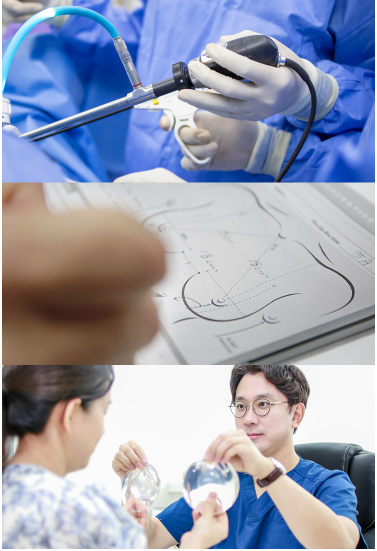
Merry Plastic Surgery's approach to breast augmentation is built around precision planning and a surgical technique designed to minimize trauma to existing tissue. Rather than applying a standardized implant size or placement plan, the clinical team conducts an individualized body and breast analysis — assessing chest width, breast shape and position, and personal preference — before proposing a surgical plan, and the dual-plane technique is used specifically because it accommodates a wider range of natural breast tissue types than a single fixed placement method.
The clinic's same-day surgical protocol reflects this same precision-first philosophy: because the endoscopic technique is associated with reduced intraoperative bleeding, the clinic's one-day breast surgery pathway is designed without hospitalization, without external stitches (using adhesive wound closure instead), and, in many cases, without a surgical drain or compression bandaging — allowing eligible patients to return home the same day.
For patients traveling for care, the combination of a same-day surgical pathway, a defined follow-up schedule, and a surgical team holding affiliations with recognized professional bodies such as the International Society of Aesthetic Plastic Surgery may be relevant considerations when planning travel logistics around recovery time.
Endoscopic visualization for precise, minimally traumatic tissue dissection
Dual-plane implant placement selected to suit a range of chest and tissue types
Mentor silicone gel implants, FDA approved, with a soft cohesive gel and reduced-rippling edge design
Same-day surgical protocol with adhesive wound closure and, in eligible cases, no surgical drain or compression bandaging
Individualized precision analysis of chest anatomy, breast shape, and patient preference prior to surgical planning
Real patient experiences
Case A — Post-weight-loss volume loss
A patient in her late twenties experienced a noticeable reduction in breast fullness after a significant weight loss, resulting in a flatter chest contour that felt disproportionate to the rest of her frame. Following consultation and precision analysis, a dual-plane augmentation was planned to restore proportionate volume while maintaining a natural slope. Suggested image: a soft, natural before-and-after silhouette comparison from a side profile, without identifying features.
Case B — Breast asymmetry
A patient noticed a visible size difference between her left and right breast that had been present since adolescence. Implant size was selected individually for each side as part of the surgical plan, with the goal of achieving better visual balance between the breasts. Suggested image: a front-facing silhouette illustration showing symmetrical contour, without identifiable features.
Case C — Muscle-dominant chest contour
An athletic patient with well-developed pectoral muscle found that her chest appeared flat despite regular training, since muscle development did not correspond to breast volume. A submuscular or dual-plane approach was discussed to achieve fullness without disrupting the natural contour created by her muscle tone. Suggested image: an active-lifestyle lifestyle photo silhouette, non-identifiable, paired with a simple anatomical diagram of implant placement relative to muscle.
These scenarios are illustrative composites reflecting the types of concerns addressed by this procedure and do not represent guaranteed outcomes. Actual results vary by individual anatomy, healing response, and surgical plan.
Ready to talk to a specialist?
If you've been considering breast augmentation and want an approach built around your own chest anatomy rather than a one-size-fits-all plan, the next step is a consultation with Merry Plastic Surgery's surgical team. During this visit, your breast tissue, chest wall structure, and aesthetic goals will be assessed in detail, and the surgical team will walk you through whether Endoscopic Breast Augmentation, along with the appropriate implant plane and incision approach, is a suitable option for your body — including a clear discussion of expected recovery, possible risks, and realistic outcome expectations before any decision is made.
To arrange a consultation or ask a question about the procedure, please reach out to Merry Plastic Surgery directly through the contact details provided on this page. All surgical decisions are made only after a thorough in-person or documented evaluation by a board-certified specialist, and your questions are welcome at any stage of that process.
Other Services
Explore additional treatments offered by our specialists.

Eye Revision Surgery
Eye revision surgery is a corrective procedure for patients who have already undergone double eyelid surgery but are not satisfied with the outcome, or who have developed complications such as an irregular crease, asymmetry, or scarring.
Learn More

Breast Lift
A breast lift, known clinically as mastopexy, is a surgical procedure designed to correct breast sagging by repositioning breast tissue, removing excess skin where necessary, and restoring the nipple-areola complex to a more natural position on the breast.
Learn More

Double Eyelid Surgery
Double eyelid surgery is a procedure within eye plastic surgery designed to create or redefine the fold above the eye — the crease that separates the upper eyelid into two visible sections.
Learn More