Personalized Medical Care & Dedicated International Patient Concierge


Eye Surgery · Needs Clinic Confirmation
Eye Revision Surgery
Eye revision surgery is a corrective procedure for patients who have already undergone double eyelid surgery but are not satisfied with the outcome, or who have developed complications such as an irregular crease, asymmetry, or scarring.
Schedule a ConsultationWhat is eye revision surgery in plastic surgery?

Eye revision surgery is a corrective procedure for patients who have already undergone double eyelid surgery but are not satisfied with the outcome, or who have developed complications such as an irregular crease, asymmetry, or scarring.
Unlike a first-time double eyelid procedure, revision surgery begins from tissue that has already been surgically altered. Scar tissue, adhesions between skin and the underlying eyelid muscle, and structural changes from the initial operation all make the eye area more complex to work with. For this reason, the process starts with a careful diagnostic step: identifying precisely why the first surgery didn't produce the desired look or function, before any decision is made about a new approach.
The core surgical technique at the center of Merry's eye revision approach is releasing the previous double eyelid line and carefully dissecting away adhered tissue, so that a new, properly positioned crease can be established. This is carried out in two conceptual steps:
Step 1 — releasing the misaligned adhesion: the existing, incorrectly set double eyelid adhesion between the skin, eyelid muscle, and orbital fat is released.
Step 2 — broader, delicate dissection: dissection is carried out over a wider area than the original surgical field, performed delicately to reduce further tissue disruption.
Throughout this process, the guiding priorities are minimizing additional damage to already-compromised tissue, reducing the risk of further scarring or side effects, and re-establishing a natural-looking, well-defined eyelid crease. This is not a matter of simply repeating the original procedure — it requires an individualized plan built around what specifically went wrong the first time.
Who needs eye revision surgery treatment?
Eye revision surgery may be appropriate for patients who have already had double eyelid surgery and are experiencing one or more of the following:
The double eyelid line has loosened, faded, or become difficult to see
The double eyelid crease sits too high, giving an overly deep or exaggerated fold
The double eyelid crease sits too low, making the fold appear shallow or poorly defined
The double eyelid line is asymmetric between the two eyes
Scarring from the original surgery is visible or prominent
Multiple or unintended creases have developed above the eyelid
The eyes appear smaller than they did before the original surgery
Patients considering revision are often looking not just for an aesthetic adjustment, but for resolution of a functional or emotional concern tied to their first surgical experience — including discomfort with how the eye area looks or moves day to day.
Meet the specialist in eye surgery
|
|
Dr. Sungtaek Hong | Dr. Jimin Lee |


Dr. Sungtaek Hong — Representative Director
Board-certified Plastic Surgeon (Korea University Medical Center) with surgical experience across eye surgery, rhinoplasty, facial contouring, and lifting procedures, bringing a broader facial-structure perspective to eyelid surgical planning. Dr. Hong is a member of the eye surgery-focused research group within the Korean Society of Plastic and Reconstructive Surgeons.
Dr. Jimin Lee — Director
Board-certified Plastic Surgeon (Kyung Hee University Medical Center) and full member of the Korean Society of Plastic and Reconstructive Surgeons, the Korean Society for Aesthetic Plastic Surgery, and the International Society of Aesthetic Plastic Surgery (ISAPS), among other professional societies.
Together, these specialists share a treatment philosophy centered on identifying the specific anatomical structure responsible for a patient's eyelid concern before proposing a surgical plan, aiming for results that appear natural and are appropriately matched to each patient's face.
Treatment areas & expected improvements
Loosened or faded double eyelid line: When the original crease weakens or becomes difficult to see over time, the line is re-assessed and redesigned using a surgical approach suited to the current state of the eyelid tissue. The goal is a clearly defined, natural-looking crease rather than a repeat of the original technique.
Double eyelid line set too high: When the original crease was placed too high, often due to excess tension or over-correction during the first surgery, the position is re-evaluated and adjusted to better suit the patient's eyelid anatomy and desired look.
Double eyelid line set too low: When the crease sits too low, the eyelid design is reassessed to reposition the line, working within the constraints of the existing tissue and scar pattern from the original surgery.
Asymmetric double eyelid shape: Where the two eyelid creases differ in height, depth, or shape, the surgical team compares both sides carefully and works toward a more balanced, harmonious result.
Prominent surgical scarring: Where scarring from the first surgery is visible or firm, the revision technique focuses on releasing adhered, scarred tissue delicately to soften its appearance and support a more natural-looking eyelid fold.
Multiple or unintended creases and hollowing above the eye: Where more than one crease has formed, or where hollowing has developed above the eyelid, the structural changes from the original surgery are addressed as part of restoring a smoother, more natural eyelid contour.
Eyes appearing smaller than before surgery: Where the eyes appear smaller following a first surgery, often related to how tissue healed or how the crease was set, the revision plan is built around restoring a more open, balanced eye shape.
Improvements from eye revision surgery vary from patient to patient depending on the extent of prior tissue change, scarring, and individual healing. Results are not guaranteed and should be discussed individually during consultation.
Treatment process & timeline
Initial consultation — the patient's concerns about the first surgery are discussed in detail, including what specifically feels unsatisfactory about the current eye shape or any side effects experienced.
Diagnostic assessment — the surgical team analyzes the likely cause of the original surgery's shortfall, examining the existing eyelid line, scar tissue, and adhesion pattern.
Surgical planning — based on that analysis, an individualized revision plan is developed, selecting the approach best suited to the patient's eyelid structure and goals.
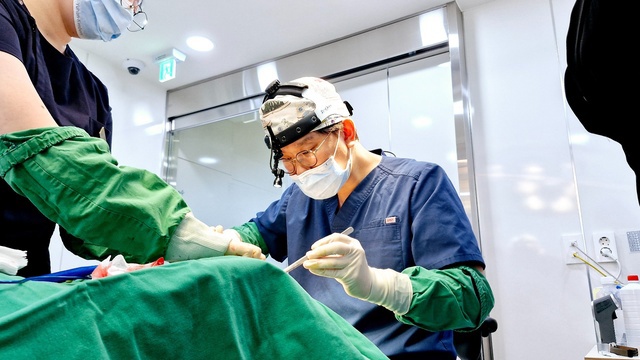
Procedure — performed under local or sleep (twilight) anesthesia, typically taking 1–2 hours. The existing eyelid line and adhered tissue are released, followed by broader, delicate dissection to prepare for the new crease.
Immediate aftercare — hospitalization is not required, allowing patients to return home the same day; initial swelling and bruising are expected in the days that follow.
Follow-up care — sutures are typically removed after about one week, with 1–2 follow-up visits, and an expected recovery period of approximately one week before initial swelling substantially subsides.
Recovery experiences vary between patients, and the timeline above may differ depending on individual healing and the specific surgical method used.
Results, safety & longevity
Because eye revision surgery works with tissue that has already healed from a prior operation, the eyelid area needs adequate time to settle before results can be properly evaluated. Scarring needs to heal, swelling needs to subside, and the eyelid crease needs to settle into its new position — a process that, depending on the individual patient's condition, generally takes around six months to a year.
Even once that period has passed, it's important to consult with the treating medical team beforehand if considering a further procedure. Undergoing revision surgery before the eye area has sufficiently healed can make it more difficult to achieve the intended result, and in more severe cases may lead to worsened scarring or additional side effects.
The surgical approach is built around minimizing further damage to tissue that has already been altered once — through delicate, targeted dissection rather than broad, non-specific tissue disruption. As with any surgical procedure, risks such as swelling, bruising, temporary asymmetry during healing, and scarring are possible, and individual outcomes cannot be guaranteed. Patients are encouraged to discuss their specific risk profile, expected healing course, and any concerns directly with their surgeon during consultation.
Why choose Merry Plastic Surgery for eye revision surgery?

Revision surgery asks more of a surgical team than a first-time procedure — it requires the judgment to recognize what went wrong previously and the technical restraint to correct it without compounding the damage. Merry Plastic Surgery's approach to eye revision surgery is built around exactly that distinction.
Rather than applying a standard double eyelid technique to every patient, the clinic's process begins with identifying the specific cause of the original surgery's shortfall — whether that's a poorly positioned line, an asymmetry, or scar-related complications — and building a plan around that diagnosis. Dr. Sungtaek Hong's membership in the Eye Plastic Surgery Study Group, together with Dr. Jimin Lee's ISAPS affiliation and facial plastic surgery credentials, reflects a team with a specific, ongoing focus on this area of aesthetic and reconstructive surgery.
Failure-cause analysis before any new plan is made — surgery is not scheduled until the team has a clear picture of why the first result did not meet expectations
Structural restoration, not just cosmetic adjustment — the eyelid's underlying structure is addressed, aiming to also resolve related functional concerns
Delicate adhesion-release technique — designed specifically to minimize additional tissue damage in an area that has already undergone one surgery
Same-day procedure with no required hospitalization — surgery is completed in 1–2 hours under local or sleep anesthesia, without an overnight stay
This combined focus on diagnostic care and tissue-conserving technique is intended to support patients — including those evaluating their options from outside the country — who are specifically seeking a more considered, individualized approach to correcting a previous eye surgery result.
Real patient experiences
Case A — Loosened, faded crease
A patient in her late twenties had undergone double eyelid surgery a few years earlier, but the crease had gradually loosened and become difficult to see in everyday makeup-free settings. After consultation and assessment of the original healing pattern, a new line was designed and the existing adhesion released. She described the result as a return to a defined, natural-looking fold rather than a dramatically different eye shape.
Suggested image: before-and-after comparison, close-up of the upper eyelid crease in neutral lighting, no identifying facial features shown.
Case B — Visible scarring and asymmetry
A patient in her early thirties was self-conscious about visible scar tissue and a noticeable difference in crease height between her two eyes following an earlier procedure elsewhere. The revision plan focused on delicately releasing the scarred adhesion on the more affected side and realigning both creases for better balance.
Suggested image: side-by-side close-up of both eyes post-recovery, softly lit, cropped above the brow and below the cheekbone.
Case C — Multiple creases and a smaller-looking eye
A patient in her mid-twenties found that, after her original surgery, a second faint crease had formed above the intended line and her eyes appeared smaller than before. Structural reassessment and delicate dissection were used to address the extra crease and support a more open, natural eye shape during her recovery.
Suggested image: healing-stage photo at approximately one week post-procedure with light eye covering, then a follow-up close-up several months later.
These examples are illustrative and based on the general categories of cases described for this service; individual results vary and are not guaranteed.
Take the next step toward correcting your eye surgery result
If a previous double eyelid surgery hasn't given you the outcome you expected — whether that's a fading crease, noticeable asymmetry, visible scarring, or eyes that feel smaller than before — a focused consultation can help clarify what happened and what a realistic path forward looks like. Merry Plastic Surgery's eye revision approach begins with genuinely understanding your specific case, not applying a one-size-fits-all correction, so you can make an informed decision about whether and when revision surgery is right for you.
Schedule a consultation to have your eye area assessed by a specialist experienced in revision cases, and to discuss a plan tailored to your healing history and goals.
For further questions before booking, you're welcome to reach out directly to the clinic's patient coordination team for guidance on next steps.
Other Services
Explore additional treatments offered by our specialists.
Eye Revision Surgery
Eye revision surgery is a corrective procedure for patients who have already undergone double eyelid surgery but are not satisfied with the outcome, or who have developed complications such as an irregular crease, asymmetry, or scarring.
Learn More

Breast Lift
A breast lift, known clinically as mastopexy, is a surgical procedure designed to correct breast sagging by repositioning breast tissue, removing excess skin where necessary, and restoring the nipple-areola complex to a more natural position on the breast.
Learn More

Double Eyelid Surgery
Double eyelid surgery is a procedure within eye plastic surgery designed to create or redefine the fold above the eye — the crease that separates the upper eyelid into two visible sections.
Learn More