Personalized Medical Care & Dedicated International Patient Concierge


Surgical Anti-Aging · Needs Clinic Confirmation
Eye Surgery For Middle-Aged Patients
Middle-age eye surgery is designed to address both the visible signs of aging around the eyes and these functional consequences at the same time.
Schedule a ConsultationWhat Is Middle-Age Eye Surgery in Plastic Surgery?

As we age, the eyelid skin gradually thins and the muscles that hold eyelid structures in place become looser. At the same time, the orbital septum — the membrane that normally keeps periorbital fat contained — weakens, allowing fat to bulge forward, particularly beneath the eyes. The combined result is eyelid sagging, fine wrinkling, and a heavier, more fatigued-looking eye area.
These changes are not purely cosmetic. Sagging upper eyelid skin can encroach on the visual field, sagging skin folds can trap moisture and cause irritation or maceration, and in some cases drooping eyelid margins can cause eyelashes to brush against the eye itself. Middle-age eye surgery is designed to address both the visible signs of aging around the eyes and these functional consequences at the same time.
Because the pattern and severity of aging changes differ significantly from person to person, Merry Plastic Surgery begins every case with a precision analysis system. Before any surgical plan is proposed, the specialist conducts a thorough consultation examining the eyelid and periorbital area from multiple angles, including:
Eyelid sagging and wrinkle severity
Eyelid symmetry between the two sides
Age-related ptosis (drooping of the eyelid margin due to weakened lifting muscles)
Under-eye fat volume and under-eye wrinkling
The position and degree of displaced periorbital fat
The condition of the muscles surrounding the eye
This multi-dimensional analysis allows the surgical plan to be built around the individual's actual anatomy rather than a single standardized technique, with the goal of a result that looks natural and integrates with the rest of the face rather than appearing abruptly altered.
Who Needs Middle-Age Eye Surgery?
This service is intended for adult patients who are noticing age-related changes in the eyelid and under-eye area rather than congenital eyelid concerns. You may be a suitable candidate if you experience any of the following:
You want a clearer, fresher, more youthful-looking eye expression
Your eyelids have begun sagging in a way that makes your eyes look dull or lacking in vitality
Sagging upper eyelid skin is beginning to interfere with your field of vision
Overhanging eyelid skin is causing skin irritation or maceration where folds of skin rest against each other
Drooping eyelid skin is causing your eyelashes to contact or irritate the eye itself
You are looking for a solution that addresses both the appearance of your eyes and any functional discomfort you may be experiencing
You want a surgical plan based on a detailed evaluation of your specific eyelid anatomy rather than a one-size-fits-all approach
A consultation with the specialist team will confirm whether your specific concerns are best addressed with upper blepharoplasty, a sub-brow lift, lower blepharoplasty, or a combination of these approaches.
Meet the Specialists in Eye Surgery
|
|
Dr. Sungtaek Hong | Dr. Jimin Lee |


Dr. Sungtaek Hong — Representative Director
Board-certified Plastic Surgeon (Korea University Medical Center) with surgical experience across eye surgery, rhinoplasty, facial contouring, and lifting procedures, bringing a broader facial-structure perspective to eyelid surgical planning. Dr. Hong is a member of the eye surgery-focused research group within the Korean Society of Plastic and Reconstructive Surgeons.
Dr. Jimin Lee — Director
Board-certified Plastic Surgeon (Kyung Hee University Medical Center) and full member of the Korean Society of Plastic and Reconstructive Surgeons, the Korean Society for Aesthetic Plastic Surgery, and the International Society of Aesthetic Plastic Surgery (ISAPS), among other professional societies.
Together, these specialists share a treatment philosophy centered on identifying the specific anatomical structure responsible for a patient's eyelid concern before proposing a surgical plan, aiming for results that appear natural and are appropriately matched to each patient's face.
Treatment Areas & Expected Improvements
- Upper Eyelid Skin and Fat: The upper eyelid is one of the first areas to show visible aging, as thinning skin and loosened muscle allow excess tissue to fold and droop over the lid crease. Over time this excess skin can restrict upward vision and give the eyes a heavier, sleepier appearance regardless of how rested a person actually feels. Addressing this area involves careful removal of redundant skin, fat, and tissue through an eyelid incision, with the option to create or refine a double-eyelid line where appropriate.
Expected improvement: A more open, alert upper eyelid appearance and, where visual field was affected, improved unobstructed vision. Results vary depending on individual skin elasticity, the degree of pre-existing sagging, and healing response.
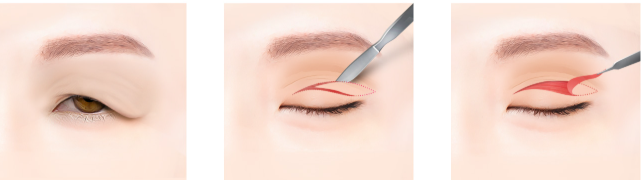
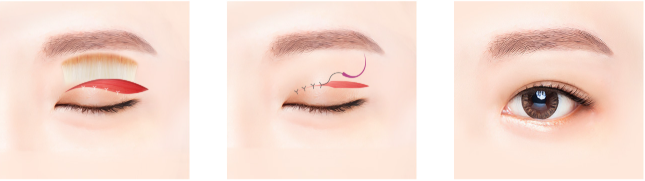
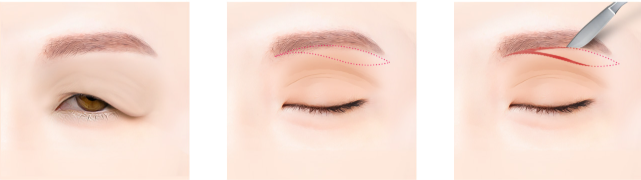
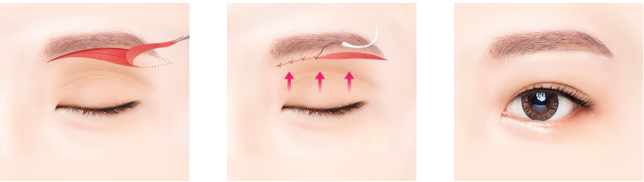
- Brow-to-Lid Complex (Sub-Brow Region): In some middle-aged patients, sagging extends from the brow down into the upper lid, making an isolated upper-lid incision insufficient on its own. A sub-brow lift removes excess skin through an incision along the lower border of the eyebrow, designed so that resulting scars settle along the natural brow line and become minimally visible during recovery.
Expected improvement: A lifted, refreshed upper eye region with scarring that is designed to blend into the eyebrow line. Individual scarring and recovery timelines vary.
- Under-Eye Fat and Tear Trough Area: Weakening of the orbital septum with age allows fat that once sat contained within the orbit to bulge forward beneath the eye, often accompanied by wrinkling of the lower lid skin and a hollowed tear trough appearance alongside the bulge. Lower blepharoplasty removes or repositions protruding fat and tightens loosened skin and muscle through a lower-lid incision.
Expected improvement: A smoother, less bulging under-eye contour and softened tear trough appearance. As with all periorbital surgery, the degree of visible improvement depends on the patient's baseline anatomy and skin quality, and no permanent or guaranteed outcome can be promised.
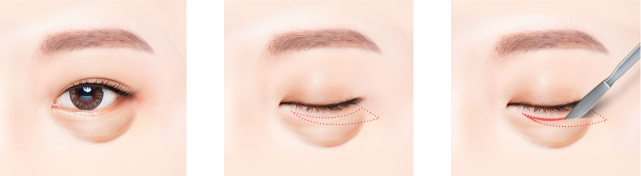
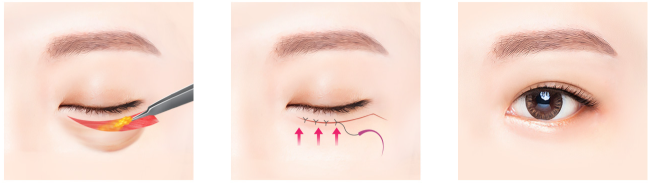
- Periorbital Muscle Function (in cases of significant ptosis): Where age-related ptosis is significant, muscle-level correction may be combined with skin and fat procedures during upper blepharoplasty to address the functional component of lid drooping, not just the excess skin.
Expected improvement: Improved lid position and function where ptosis was contributing to visual obstruction, in addition to aesthetic improvement. Outcomes depend on the severity of ptosis and individual muscle response.
Treatment Process & Timeline
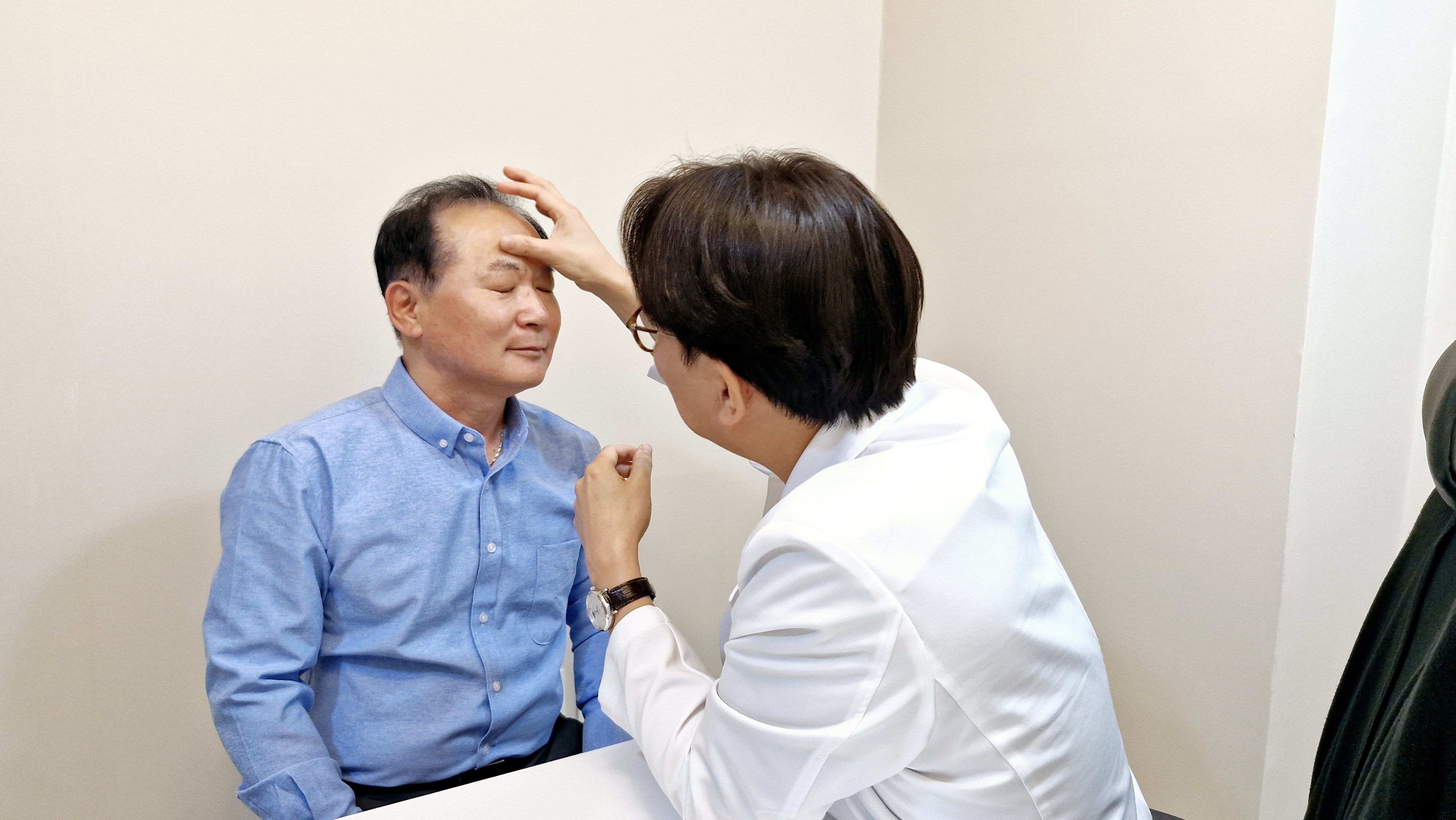
Consultation — A comprehensive discussion of your concerns, eyelid history, and goals with the specialist team.
Diagnostic Assessment — Multi-angle precision analysis of eyelid sagging, wrinkling, ptosis, under-eye fat, fat displacement, and periorbital muscle condition to determine which procedure or combination of procedures is appropriate.
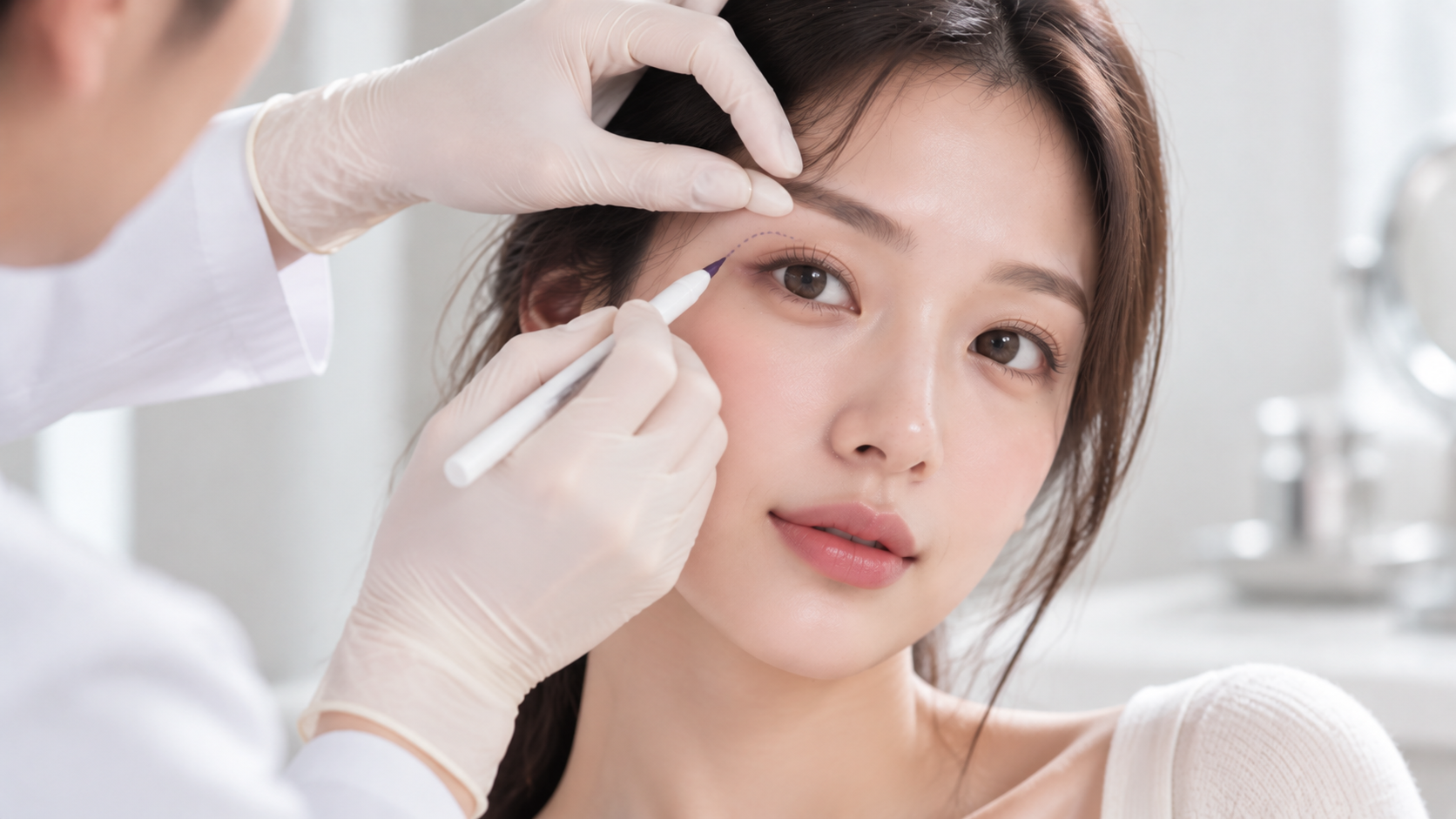
Surgical Design — The specialist marks and designs the incision lines according to your specific anatomy, whether for upper blepharoplasty, sub-brow lift, lower blepharoplasty, or a combined approach.
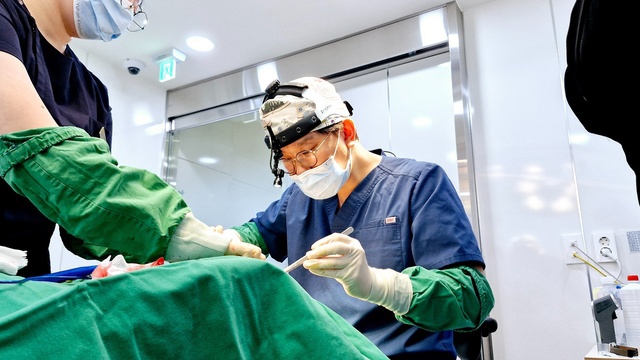
Procedure — Surgery is performed under local or sleep anesthesia. Depending on the technique, this involves excision of sagging skin and fat, optional double-eyelid line formation, or removal and repositioning of protruding under-eye fat, followed by fine suturing of the incision.
Immediate Aftercare — Hospitalization is not required for this procedure; patients typically return home the same day.
Follow-Up Timeline — Stitches are generally removed after approximately 5 to 7 days, with 1 to 2 follow-up visits scheduled during the recovery period. General recovery is expected within approximately 5 to 7 days, though this can vary based on the individual patient's condition and the specific surgical method used.
Surgery time for this procedure is approximately 1 hour, though this may vary depending on the complexity of the case and whether multiple procedures are combined.
Results, Safety & Longevity
Improvement in eyelid appearance following middle-age eye surgery is generally noticeable once post-surgical swelling resolves and the incision has fully healed, though the exact timeline and degree of visible change differ between individuals based on skin quality, the severity of pre-existing sagging, and personal healing response. No specific duration of results is guaranteed, as periorbital tissue continues to age naturally after surgery.
The surgical approach at Merry Plastic Surgery is built around individualized precision analysis rather than a standardized technique applied uniformly to every patient, with the stated aim of minimizing an abrupt or unnatural change in facial expression. As with any surgical procedure, risks such as swelling, bruising, temporary asymmetry during healing, and scarring at the incision site should be discussed directly with your surgeon during consultation. Patients with visual field obstruction from sagging eyelids, skin irritation from lid overhang, or eyelash-eye contact due to ptosis should seek a medical evaluation to determine whether surgical correction is appropriate for their specific condition.
Why Choose Merry Plastic Surgery for Eye Surgery?
Merry Plastic Surgery approaches middle-age eye surgery as more than a single standardized procedure. Because the underlying causes of aging around the eyes — thinning skin, loosened muscle, a weakened orbital septum, and shifting fat — can present in many different combinations, the clinic's process begins with a precision analysis system built on thorough, multi-angle consultation rather than a quick visual assessment. This allows the surgical team to distinguish, for example, between a patient whose primary concern is upper lid skin excess and one whose sagging originates higher at the brow, or between someone with isolated under-eye fat bulging and someone experiencing a functional ptosis component as well.
The specialist team's collective background spans plastic and reconstructive surgery, aesthetic surgery, facial plastic surgery, and family medicine, giving the clinic a broad clinical perspective when evaluating candidates for this procedure. Dr. Sungtaek Hong's specific involvement in the Eye Plastic Surgery Study Group and Minimally Invasive Plastic Surgery Study Group, alongside Dr. Jimin Lee's international affiliation with ISAPS, reflect a team oriented toward keeping current with evolving techniques in this area of surgery.
Precision, multi-angle diagnostic analysis before any surgical recommendation is made
Individualized selection between upper blepharoplasty, sub-brow lift, lower blepharoplasty, or combined approaches based on actual anatomy
Surgical technique designed to address functional issues (visual obstruction, skin irritation, lash-eye contact) alongside aesthetic concerns
A specialist team with affiliations spanning plastic and reconstructive surgery, aesthetic surgery, and international surgical societies
For patients traveling from abroad for this procedure, the same precision-analysis process and consultation structure applies, allowing the surgical plan to be built around your specific eyelid anatomy rather than a generic package.
Real Patient Experiences
Patient A — Upper Eyelid Concern
A patient in her late 40s sought treatment because sagging upper eyelid skin was beginning to fold over her lash line, making her eyes look consistently tired even after a full night's rest. Following upper blepharoplasty with fine suturing, her upper lid line appeared more open and defined during recovery.
Suggested image: before-and-after upper eyelid comparison, front-facing, neutral expression.
Patient B — Combined Brow and Lid Sagging
A patient in his early 50s had sagging that extended from his brow area down into the upper lid, affecting his side vision when reading. A sub-brow lift was performed, with the incision placed along his natural eyebrow line to minimize visible scarring during healing.
Suggested image: side-profile shot showing brow-to-lid contour before and after recovery.
Patient C — Under-Eye Fat and Tear Trough
A patient in her mid-50s was concerned about persistent puffiness and hollowing beneath her eyes that made her look fatigued regardless of sleep. Lower blepharoplasty addressed the protruding fat and loosened skin in this area.
Suggested image: close-up under-eye comparison, soft studio lighting, before and after healing period.
Ready to Discuss Your Eyelid Concerns?
If sagging, tired-looking eyes have started to affect not just how you look but how your eyes function day to day, a conversation with the specialist team at Merry Plastic Surgery is the appropriate next step. Rather than offering a single standard procedure, our precision analysis process is designed to identify exactly which combination of upper blepharoplasty, sub-brow lift, or lower blepharoplasty fits your specific eyelid anatomy, so that the surgical plan reflects your actual condition rather than a generic assumption about what "eye surgery" should involve. Whether your primary concern is visual obstruction from heavy upper lids, irritation from overhanging skin, or persistent under-eye bulging, our team can walk you through what realistic improvement may look like for your case, along with the recovery timeline and any risks specific to your anatomy.
Contact Merry Plastic Surgery to schedule your consultation and precision eyelid assessment.
For further questions before your visit, our team is available to discuss the consultation process and what to expect during your evaluation.
Other Services
Explore additional treatments offered by our specialists.

Eye Revision Surgery
Eye revision surgery is a corrective procedure for patients who have already undergone double eyelid surgery but are not satisfied with the outcome, or who have developed complications such as an irregular crease, asymmetry, or scarring.
Learn More

Breast Lift
A breast lift, known clinically as mastopexy, is a surgical procedure designed to correct breast sagging by repositioning breast tissue, removing excess skin where necessary, and restoring the nipple-areola complex to a more natural position on the breast.
Learn More
Double Eyelid Surgery
Double eyelid surgery is a procedure within eye plastic surgery designed to create or redefine the fold above the eye — the crease that separates the upper eyelid into two visible sections.
Learn More