Personalized Medical Care & Dedicated International Patient Concierge


Rhinoplasty · Needs Clinic Confirmation
Functional Rhinoplasty
Functional rhinoplasty refers to surgical correction of the internal structures of the nose that are responsible for airflow, most commonly the nasal septum, the inferior turbinates, and the nasal valve area, performed alongside or independently from aesthetic correction of the external.
Schedule a ConsultationWhat is functional rhinoplasty in rhinoplasty?

Functional rhinoplasty refers to surgical correction of the internal structures of the nose that are responsible for airflow, most commonly the nasal septum, the inferior turbinates, and the nasal valve area, performed alongside or independently from aesthetic correction of the external nose shape.
The nasal septum is the cartilage and bone partition that divides the two nasal passages. When it curves to one side, described clinically as a C-shaped or S-shaped septal deviation, airflow through one or both nostrils can become restricted. The inferior turbinates are structures inside the nose that can enlarge and further narrow the airway, particularly in patients with chronic rhinitis. The nasal valve is the narrowest part of the nasal airway; when this area is too narrow or collapses inward during breathing, it can create a sensation of being unable to get enough air even when the septum itself is not severely deviated.
Diagnosis begins with 3D CT imaging combined with nasal endoscopy, using ENT-grade equipment including a Full HD nasal endoscope, so that both the cartilage and bony structures of the nose and the surrounding sinus anatomy can be assessed in detail before any treatment plan is proposed. Because the internal nasal cavity could previously only be assessed visually from the front, endoscopic examination allows deeper structures and the fine anatomy of the sinuses to be observed directly, helping to identify the underlying cause of a patient's symptoms and plan the most effective surgical approach. During surgery itself, the same Full HD endoscopic system is used to visualize deep areas of the nasal cavity precisely.
Where a patient's septal deviation, turbinate hypertrophy, or valve narrowing is significant enough to meet diagnostic criteria for a qualifying nasal disease, treatment may be eligible for private health insurance reimbursement following formal diagnosis, which can help reduce the overall cost burden for the patient.
Who needs functional rhinoplasty treatment?
Functional rhinoplasty may be appropriate if you experience any of the following:
Ongoing difficulty breathing through one or both nostrils, particularly noticeable during exercise or sleep
A visibly crooked or asymmetric nose, whether present from birth or resulting from prior trauma
Frequent nasal congestion, sneezing, or rhinitis symptoms that do not resolve with medication
A sensation that the nostrils narrow or collapse when breathing in deeply
A prior diagnosis of septal deviation, turbinate hypertrophy, or nasal valve stenosis from an ENT evaluation
Interest in correcting both breathing difficulty and an external nasal deformity such as a hump or crooked dorsum in the same treatment plan
Discomfort after a previous purely cosmetic rhinoplasty that did not account for internal nasal function
A desire for a nasal correction that considers both structural health and appearance rather than shape alone
Meet the specialists in rhinoplasty

Dr. Sungtaek Hong
Board-certified Plastic Surgeon
Dr. Sungtaek Hong — Representative Director
Board-certified Plastic Surgeon (Korea University Medical Center) with surgical experience across rhinoplasty, eye surgery, facial contouring, and lifting procedures, with particular focus on functional rhinoplasty and revision surgery for contracted noses. Dr. Hong is a member of multiple specialty research societies within the Korean Society of Plastic and Reconstructive Surgeons, including its rhinoplasty-focused research group, and has pursued additional clinical training internationally.
Dr. Hong's treatment philosophy centers on carefully reassessing the changes caused by a prior surgery before proposing a corrective plan, aiming to restore both structural integrity and natural appearance in cases involving previous nasal surgery, whether the concern involves a contracted nose, retained foreign material, or general dissatisfaction with a previous result.
Treatment areas & expected improvements
- Deviated nasal septum: When the septal cartilage and bone are misaligned, described as C-shaped or S-shaped deviation depending on the pattern of the curve, one or both nasal passages can become obstructed. Surgical correction involves partially resecting the deviated portion of the cartilage, straightening it, and reinforcing the corrected segment with cartilage grafting where the correction requires additional structural support. This is typically addressed together with any external crookedness of the nose, since a deviated septum and a visibly crooked nose commonly share the same underlying cause.
Expected improvement: straighter internal alignment intended to improve airflow through both nostrils, along with a more balanced external nasal line. Individual results vary depending on the severity and pattern of the original deviation.
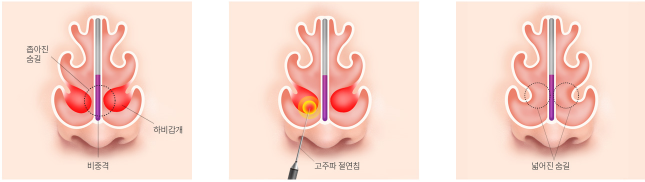
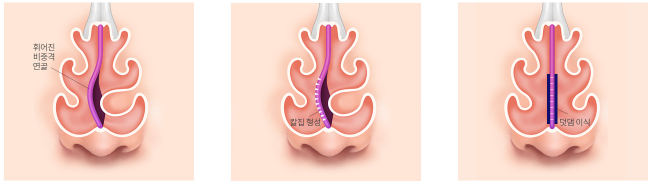
- Nasal bone deviation (crooked nose): Where the nasal bones themselves have shifted to one side, whether from congenital growth, prior trauma, illness, or long-term habits affecting the nose, both sides of the bone are carefully repositioned into symmetrical alignment. If the bone surface remains uneven after initial repositioning, additional shaving can smooth the contour further.
Expected improvement: a straighter nasal bridge viewed from the front, alongside functional benefits when bony deviation has been contributing to airway narrowing.
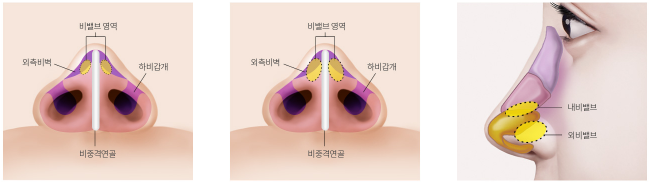
Nasal valve stenosis: The nasal valve is the narrowest section of the airway; when it is structurally narrow or prone to collapsing inward with each breath, it can create a persistent sensation of restricted airflow. Correction focuses on reinforcing and widening this area using cartilage support techniques appropriate to the individual anatomy.
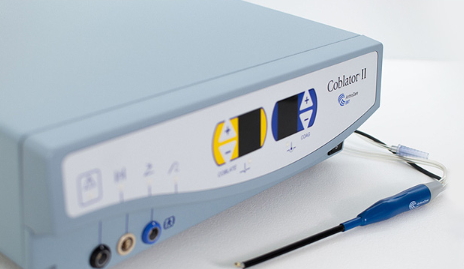
Expected improvement: reduced sensation of nasal collapse during breathing, with continued monitoring recommended during recovery as swelling resolves.Turbinate hypertrophy and rhinitis-related obstruction: Enlarged inferior turbinates, often associated with chronic rhinitis, can be reduced using a radiofrequency-based coblation device (Cobrator II), which targets and reduces turbinate tissue with a controlled, minimally invasive approach.
Expected improvement: reduced turbinate volume intended to ease airflow; outcomes depend on the severity of pre-existing rhinitis and individual healing response.
- Combined structural and aesthetic correction: For patients whose functional issue and external deformity share the same tissue, such as a hump nose or crooked nose with an underlying septal or bony deviation, surgery is planned to correct both simultaneously, considering the nose's structure across all three anatomical axes.
Expected improvement: an integrated outcome addressing both breathing comfort and external nasal symmetry, always assessed individually since the surgical plan depends on the specific pattern of deformity present.
Treatment process & timeline
Consultation. An in-depth discussion of your breathing symptoms, prior nasal history (including any previous trauma or surgery), and aesthetic goals, along with a physical examination.
Diagnostic assessment. 3D CT imaging and nasal endoscopy using Full HD endoscopic equipment are used to evaluate the septum, turbinates, valve area, and surrounding sinus anatomy in detail. This step is essential to distinguish functional causes of breathing difficulty from purely cosmetic concerns and to determine whether diagnostic criteria for insurance coverage may apply.
Surgical planning. Based on imaging findings, the surgical team designs a combined plan addressing the specific structural cause of the patient's symptoms, alongside any external correction the patient wishes to pursue.
Procedure. Surgery is generally performed under sleep or general anesthesia depending on the scope of correction, using ENT station equipment and Full HD Stryker endoscopic visualization to allow precise work deep within the nasal cavity. Depending on the areas involved, this may include septoplasty, turbinate reduction, nasal valve reinforcement, and external bone or cartilage correction.
Immediate aftercare. Hospitalization is generally not required. Post-operative monitoring focuses on airway comfort and swelling management, with the clinic's emergency response systems and sterile management protocols in place throughout recovery.
Follow-up. Two to three in-person follow-up visits are typically scheduled to monitor healing. Recovery timelines vary depending on the extent of correction performed and individual healing response.
Results, safety & longevity
Functional rhinoplasty is intended to improve nasal airflow by addressing the specific structural cause identified during diagnostic imaging, whether that is a deviated septum, an enlarged turbinate, or a narrowed nasal valve. Because these three structures can each contribute independently or together to breathing difficulty, the surgical plan is built around what the 3D CT and endoscopic evaluation actually show, rather than a standardized approach.
Results and recovery vary by patient and by the combination of structures corrected. Swelling and internal healing continue to settle over the weeks following surgery, and the full functional and aesthetic result becomes clearer as this process completes. As with any nasal surgery, individual anatomy, healing capacity, and the severity of the original condition all affect the outcome, and no specific breathing improvement or aesthetic result can be guaranteed in advance.
Safety measures include the use of verified surgical materials and equipment, thorough sterilization protocols, dedicated anesthesia safety management, and emergency response systems prepared for the surgical setting. Merry Plastic Surgery also operates a surgical responsibility guarantee program, under which the clinic maintains accountability for surgical outcomes as part of its patient-centered care principles.
Patients considering functional rhinoplasty should discuss their full medical history, including any prior nasal trauma, surgery, or chronic sinus conditions, during consultation, as these factors influence both surgical planning and expected recovery.
Why choose Merry Plastic Surgery for functional rhinoplasty?
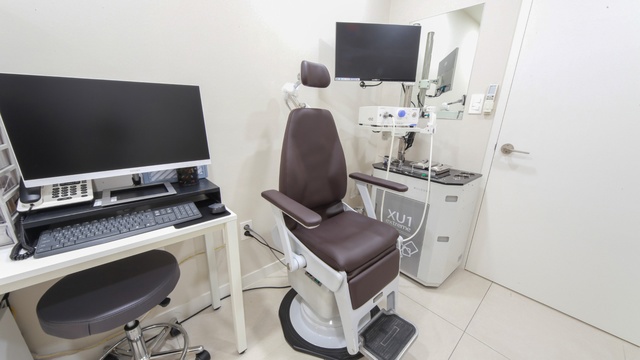
Merry Plastic Surgery approaches every case of nasal breathing difficulty as a structural question first. Rather than treating shape and function as separate concerns, the surgical team led by Dr. Sungtaek Hong and Dr. Jimin Lee begins with precise imaging, using 3D CT and Full HD endoscopic equipment, most notably the ChamMed ENT station and Full HD Stryker endoscope commonly used in ENT practice, to identify exactly which structure is contributing to a patient's symptoms before any surgical plan is proposed.
This diagnostic-first approach means that patients whose crooked nose or hump nose has coexisted for years with unexplained breathing difficulty can have both issues addressed within a single, coordinated surgical plan, rather than treating the external deformity while leaving the underlying structural cause unresolved.
Dedicated ENT-grade diagnostic equipment for internal nasal assessment, used both before and during surgery
A surgical team combining plastic surgery specialists with rhinoplasty-specific training and study group membership
Surgical responsibility guarantee program reflecting the clinic's ongoing accountability for outcomes
Insurance-eligible functional correction available where diagnostic criteria for a qualifying nasal condition are met, helping to manage cost for appropriate cases
Merry Plastic Surgery's positioning as a destination for international patients means that consultation, surgery, and post-operative care are structured to support patients through the full recovery period, however far they may be traveling for treatment.
Real patient experiences
Case A
A patient in their late twenties sought consultation after years of chronic nasal congestion and a visibly crooked nasal bridge following a childhood injury. Diagnostic imaging identified a C-shaped septal deviation contributing to both the external asymmetry and the breathing difficulty. Combined septoplasty and external bone correction were performed in a single procedure.
Suggested image: side-by-side illustration of pre-operative nasal bridge with visible curve and post-operative straightened profile, alongside a simple diagram of septal correction.
Case B
A patient with long-standing rhinitis and a sensation of nasal collapse during exercise was found on endoscopic evaluation to have both turbinate hypertrophy and mild nasal valve narrowing. Turbinate reduction using radiofrequency coblation was combined with nasal valve reinforcement.
Suggested image: close-up illustration comparing normal turbinate anatomy to enlarged turbinate tissue, alongside the coblation device used in treatment.
Case C
A patient who had undergone a previous cosmetic-only rhinoplasty elsewhere returned with persistent breathing difficulty that had not been addressed in the earlier surgery. Follow-up imaging revealed an underlying nasal valve stenosis that had been present but untreated. Revision surgery focused on reinforcing the valve area while preserving the external result from the prior procedure as closely as possible.
Suggested image: illustration of the nasal valve area with the narrowed and corrected states shown side by side.
Ready to breathe easier and see your nose more clearly?
If you have been living with nasal congestion, breathing difficulty, or a nasal shape that has never quite matched how your face should look, a precise diagnosis is the first step toward understanding what is actually happening inside your nose. Merry Plastic Surgery's functional rhinoplasty program begins with 3D CT and endoscopic imaging, so that any treatment plan you receive is based on your specific anatomy rather than assumptions about your symptoms. Whether your concern is primarily about breathing, primarily about appearance, or both at once, schedule a consultation with Dr. Sungtaek Hong, Dr. Jimin Lee, or Dr. Gayoung Park to discuss whether functional rhinoplasty is the right next step for you.
To schedule a consultation or ask a question before booking, please contact Merry Plastic Surgery directly through the clinic's patient inquiry channel.
Other Services
Explore additional treatments offered by our specialists.

Eye Revision Surgery
Eye revision surgery is a corrective procedure for patients who have already undergone double eyelid surgery but are not satisfied with the outcome, or who have developed complications such as an irregular crease, asymmetry, or scarring.
Learn More

Breast Lift
A breast lift, known clinically as mastopexy, is a surgical procedure designed to correct breast sagging by repositioning breast tissue, removing excess skin where necessary, and restoring the nipple-areola complex to a more natural position on the breast.
Learn More

Double Eyelid Surgery
Double eyelid surgery is a procedure within eye plastic surgery designed to create or redefine the fold above the eye — the crease that separates the upper eyelid into two visible sections.
Learn More