Personalized Medical Care & Dedicated International Patient Concierge


Jawline & Neck Surgery · Needs Clinic Confirmation
Lower Face Liposuction
Lower Face Liposuction is a surgical contouring procedure designed to remove localized fat from selected areas of the lower face, jawline, and beneath the chin.
Schedule a ConsultationWhat Is Lower Face Liposuction?

Lower Face Liposuction is a surgical contouring procedure designed to remove localized fat from selected areas of the lower face, jawline, and beneath the chin. It may be considered when excess fat contributes to lower-face heaviness, reduced jawline definition, or an imbalance between the cheeks, chin, and neck.
The procedure uses a small cannula to remove a planned amount of fat through limited incisions. Unlike Cheekbone Reduction, Lower Face Liposuction does not cut, reposition, or reshape the facial bones. Its primary purpose is soft-tissue contouring.
Because lower-face fullness may result from fat, skin laxity, muscle condition, bone structure, or a combination of factors, treatment planning should begin with an individualized anatomical assessment. Liposuction is most appropriate when localized fat is a significant contributor and the skin has enough elasticity to adapt to the new contour.
Who May Consider Lower Face Liposuction?
Lower Face Liposuction may be considered by patients who are concerned about:
Localized fat around the lower cheeks.
Heaviness along the lower face.
Reduced jawline definition caused primarily by superficial fat.
Fullness beneath the chin.
An uneven transition between the face and neck.
Lower-face asymmetry related partly to fat distribution.
Fat that remains despite maintaining a relatively stable weight.
A desire for surgical fat reduction without facial bone surgery.
Patients should understand that Lower Face Liposuction primarily addresses localized fat. It does not directly correct prominent facial bones, significant loose skin, advanced jowling, or substantial platysma muscle laxity.
When skin or muscle laxity is also present, Merry Plastic Surgery may discuss whether another procedure, such as Merry ZERO, a Mini Neck Lift, or a Neck Lift, would better match the patient’s needs.
Candidacy also depends on overall health, skin elasticity, facial anatomy, medical history, and realistic expectations. These factors should be assessed through an individual consultation.
Treatment Areas & Expected Improvements
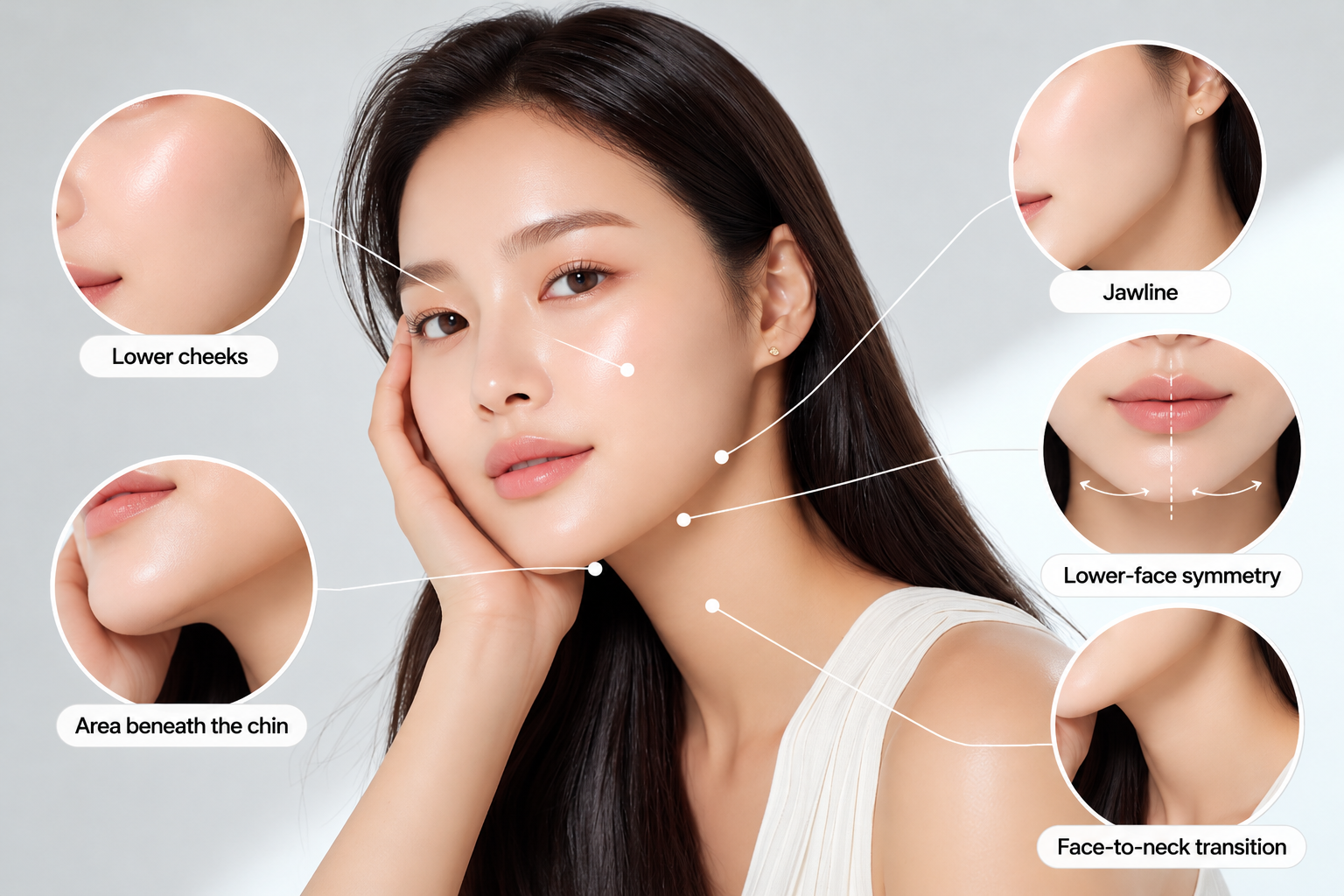
Lower cheeks: Selected fat may be removed when excess soft-tissue fullness contributes to a heavy or rounded appearance in the lower face.
Jawline: Liposuction may help improve the visibility of the jawline when localized superficial fat is obscuring the underlying contour.
Area beneath the chin: Submental fat may be treated to create a clearer transition between the chin, jawline, and neck.
Lower-face symmetry: Treatment may be adjusted between the two sides when differences in fat distribution contribute to visible asymmetry.
Face-to-neck transition: Carefully planned fat removal may help create a smoother contour between the lower face and upper neck.
Expected improvements may include reduced lower-face fullness, clearer jawline definition, and a more balanced transition between the face and neck. The degree of change depends on the amount and location of fat, skin elasticity, muscle condition, facial structure, and individual healing.
Lower Face Liposuction does not guarantee a specific face shape, and excessive fat removal may create contour irregularities or an overly hollow appearance. The treatment should therefore focus on proportionate fat reduction rather than maximum removal.
Treatment Process & Timeline
Consultation: The surgical team discusses the patient’s concerns, medical history, previous procedures, facial proportions, and desired outcome.
Anatomical assessment: The surgeon evaluates lower-face fat distribution, skin thickness and elasticity, jawline definition, facial symmetry, chin projection, muscle condition, and the relationship between the face and neck.
Surgical planning: The treatment areas, amount of fat removal, incision placement, anesthesia method, and aftercare plan are individualized. The surgeon also determines whether liposuction alone is likely to address the concern.
Procedure: A small cannula is inserted through limited incisions to remove selected fat from the planned lower-face areas. The precise technique, anesthesia, and procedure duration depend on the treatment scope and patient’s condition.
Immediate aftercare: Patients receive individualized instructions regarding compression, wound care, sleeping position, medications, facial pressure, exercise, and other activity restrictions.
Follow-up: The clinic monitors incision healing, swelling, symmetry, and contour development. The number of visits and overall recovery schedule vary according to the procedure and individual healing response.
Results, Safety & Longevity
Initial contour changes may be obscured by swelling after Lower Face Liposuction. The treated area generally becomes more defined gradually as swelling decreases and the tissues settle.
Fat cells removed through liposuction do not regenerate in the same way, but the remaining fat cells can still enlarge if the patient gains weight. Maintaining a relatively stable weight may therefore help preserve the result. Natural aging, changes in skin elasticity, and future weight fluctuations can continue to affect the lower face.
Possible effects and risks may include:
Swelling.
Bruising.
Tenderness or discomfort.
Temporary numbness or altered sensation.
Firmness beneath the skin.
Asymmetry.
Contour irregularities.
Fluid accumulation.
Infection.
Scarring.
Skin laxity becoming more visible after fat removal.
A need for additional treatment in selected cases.
Liposuction should be planned conservatively in the lower face because the area contains important nerves, blood vessels, and other anatomical structures. Patients should discuss their individual risks, anesthesia, recovery, and warning symptoms directly with the surgeon.
Why Choose Merry Plastic Surgery for Lower Face Liposuction?

Merry Plastic Surgery approaches Lower Face Liposuction by identifying whether the patient’s concern is caused primarily by fat or whether skin laxity, muscle condition, chin projection, or deeper structural factors also contribute.
Key features include:
Soft-tissue assessment: The surgical team evaluates fat distribution, skin elasticity, muscle condition, and facial proportions.
Individualized treatment areas: Fat removal is planned according to each patient’s anatomy rather than using one standardized pattern.
Conservative contouring: The goal is to reduce appropriate localized fullness while avoiding excessive hollowing or an unnatural lower-face appearance.
Clear treatment differentiation: Patients receive guidance about whether their concern is better addressed through Lower Face Liposuction, Merry ZERO, a Mini Neck Lift, a Neck Lift, or another procedure.
Attention to symmetry and balance: Both sides of the lower face are evaluated in relation to the cheeks, chin, jawline, and neck.
Plastic surgeon-led planning: Treatment suitability and surgical scope are evaluated by board-certified Plastic Surgeons.
Structured follow-up: Postoperative monitoring focuses on healing, swelling, symmetry, and the gradual development of the facial contour.
No procedure guarantees a particular jawline or face shape. Results depend on the patient’s anatomy, skin elasticity, fat distribution, healing response, weight stability, and postoperative care.
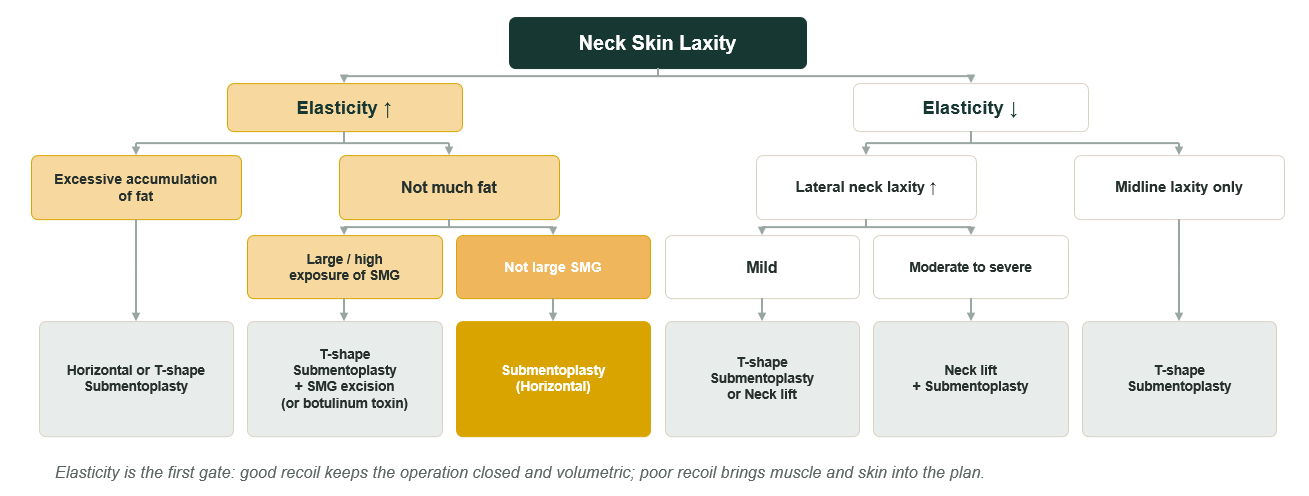
Treatment Algorithm
Branch order: skin elasticity → fat volume / gland exposure or laxity distribution → procedure.
What I Look For on Ultrasound
The goal is not only measurement — it is surgical decision-making.
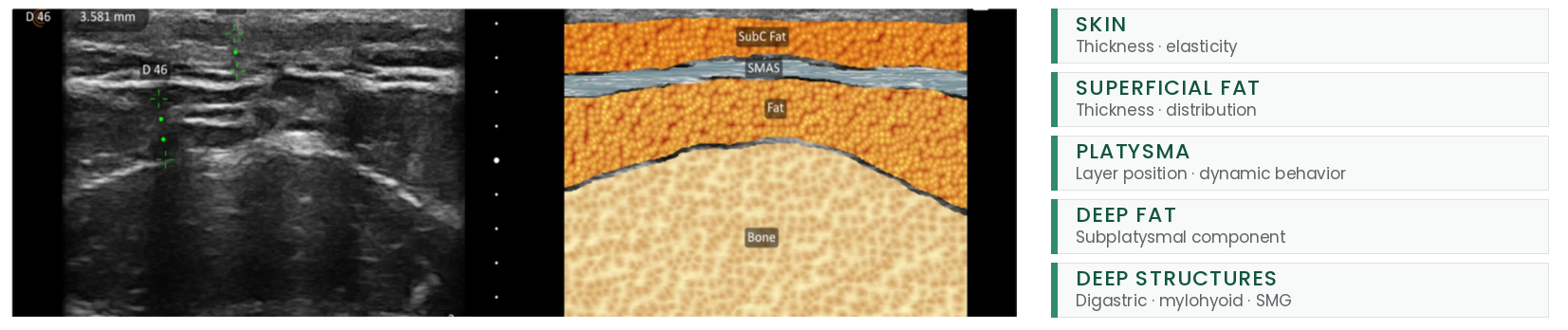
Ultrasound tells me which layer is responsible.
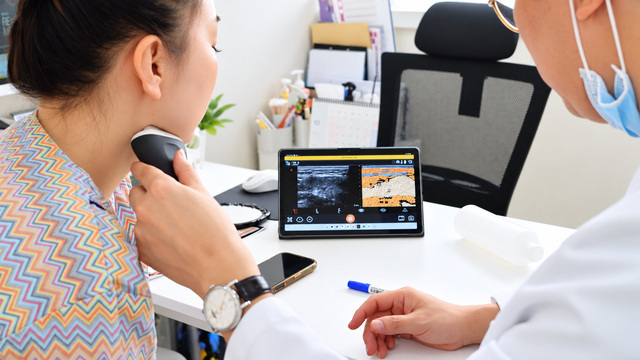
AI-Assisted Ultrasound Assessment
Combining real-time ultrasound imaging with AI-assisted anatomical visualization to support personalized surgical planning.
Real patient experiences
Patient A — “My lower face looked heavier than the rest of my face.”
A patient is concerned about persistent fullness around the lower cheeks despite maintaining a stable weight. Examination shows that localized superficial fat is a significant contributor and that the skin has adequate elasticity. Lower Face Liposuction may be discussed as a targeted contouring option.
Patient B — “My jawline was difficult to see in photographs.”
A patient notices that localized fat along the jawline reduces facial definition. The surgeon evaluates the chin, jawline, skin condition, and neck before determining whether liposuction alone can provide an appropriate improvement.
Patient C — “I thought I needed liposuction, but my concern also involved loose skin.”
A patient presents with lower-face fullness together with noticeable skin and muscle laxity. After examination, the surgeon explains that fat removal alone may not adequately address the concern and discusses whether Merry ZERO or a neck-lifting procedure would be more appropriate.
Ready to Discuss Your Lower-Face Contouring Goals?
If localized fat is making the lower face appear heavy or reducing jawline definition, an individualized consultation can help determine whether Lower Face Liposuction is appropriate.
Merry Plastic Surgery evaluates fat distribution, skin elasticity, muscle condition, chin projection, facial symmetry, and the face-to-neck transition before recommending treatment.
Schedule a consultation to discuss whether Lower Face Liposuction or another individualized jawline and neck procedure may be appropriate for you.
Other Services
Explore additional treatments offered by our specialists.

Eye Revision Surgery
Eye revision surgery is a corrective procedure for patients who have already undergone double eyelid surgery but are not satisfied with the outcome, or who have developed complications such as an irregular crease, asymmetry, or scarring.
Learn More

Breast Lift
A breast lift, known clinically as mastopexy, is a surgical procedure designed to correct breast sagging by repositioning breast tissue, removing excess skin where necessary, and restoring the nipple-areola complex to a more natural position on the breast.
Learn More

Double Eyelid Surgery
Double eyelid surgery is a procedure within eye plastic surgery designed to create or redefine the fold above the eye — the crease that separates the upper eyelid into two visible sections.
Learn More