Personalized Medical Care & Dedicated International Patient Concierge


Rhinoplasty · Needs Clinic Confirmation
Primary Rhinoplasty
Primary Rhinoplasty is nasal surgery performed on a patient who has not previously undergone rhinoplasty.
Schedule a ConsultationWhat Is Primary Rhinoplasty?

Primary Rhinoplasty is nasal surgery performed on a patient who has not previously undergone rhinoplasty. The procedure may address the height, width, length, angle, tip position, columella, or internal structure of the nose.
Merry Plastic Surgery’s Primary Rhinoplasty program includes three main treatment areas:
Merry Signature Design
Arrow Nose Correction
Columella Reduction
These treatments may be performed separately or combined within one surgical plan. The appropriate approach is determined by the patient’s facial proportions, nasal structure, breathing function, tissue characteristics, and aesthetic preferences.
1. Merry Signature Design
Merry Signature Design is Merry Plastic Surgery’s individualized approach to planning a nasal line that complements the patient’s entire face.
The nose is positioned between the forehead, eyes, cheekbones, philtrum, and lips. For this reason, the clinic does not evaluate nasal height or shape in isolation. The surgeon considers how changes to the nose may affect the overall balance and impression of the face.
A fixed “ideal nose” is not applied to every patient. Instead, the following four elements are assessed individually:
Nasal height: Planned to create appropriate facial dimension without making the bridge unnecessarily high.
Nasal angle: Adjusted according to the relationship between the nose, forehead, and upper lip.
Nasal length: Designed in relation to the patient’s midface and overall facial proportions.
Nasal width: Evaluated against the horizontal proportions of the eyes, cheekbones, and lower face.
Personalized Nasal Lines
Depending on the patient’s anatomy and desired image, the design may follow one of several nasal lines:
Straight line: A relatively straight bridge-to-tip line that can create a clean and refined impression.
Straight-curved line: A mostly straight profile with subtle curvature for a balanced and natural appearance.
Semi-curved line: A gently curved bridge-to-tip line that may create a softer facial impression.
The surgeon selects and adjusts the nasal line according to the patient’s face rather than applying the same profile to every person.
Facial-Proportion Planning
Patients with a relatively long midface may not benefit from an overly long or prominent nose. In such cases, the design may focus on avoiding excessive nasal length and creating a balanced tip angle.
For patients with a shorter midface, an excessively short or upturned nose may make the face appear even shorter. The plan may therefore support a more appropriate nasal length and straighter profile.
These are planning principles rather than fixed rules. The final design depends on physical examination, diagnostic findings, and the patient’s goals.
Form and Function Together
Merry Signature Design also considers nasal breathing. The clinic uses internal examination and structural imaging to evaluate whether concerns such as septal deviation or other internal conditions should be considered during surgical planning.
Aesthetic changes should be designed without unnecessarily compromising the nose’s functional role. When a functional concern is identified, the surgeon explains whether it can be addressed within the Primary Rhinoplasty plan.
2. Arrow Nose Correction
An arrow nose generally describes a long or drooping nasal appearance in which the tip points downward. The concern may become more noticeable from the side or when smiling, and the nose may appear disproportionately long compared with the rest of the face.
A drooping tip can be influenced by several anatomical factors, including:
An elongated or overdeveloped septal structure.
The shape or position of the lower lateral cartilage.
Insufficient nasal-tip support.
Downward pull from the depressor septi muscle.
The relationship between the nasal tip and columella.
Overall nasal length and facial proportions.
Because different structures can contribute to a drooping tip, Arrow Nose Correction requires an individualized diagnosis. Published surgical literature also emphasizes that drooping-tip correction depends on identifying the involved anatomical structures and rebuilding stable tip support rather than simply rotating the tip upward. Review of drooping-tip correction
How Is an Arrow Nose Corrected?
Depending on the cause, the surgical plan may include:
Conservative removal or modification of excess cartilage.
Repositioning of the nasal-tip cartilage.
Adjustment of an overdeveloped caudal septum.
Modification of the depressor septi muscle when clinically indicated.
Cartilage suturing to refine and reposition the tip.
Autologous cartilage grafting to strengthen tip support.
Adjustment of the columella and the angle between the nose and upper lip.
The goal is not to create an excessively upturned nose. Correction is planned to achieve a tip position and nasal length that complement the patient’s forehead, midface, lips, and chin.
Expected Improvements
Arrow Nose Correction may support:
A less drooping nasal tip.
A more balanced nasal length.
An improved angle between the nose and upper lip.
Better visibility and balance of the nostrils from the front.
A more proportionate side profile.
Improved structural support for the corrected tip position.
Individual results depend on cartilage strength, skin thickness, facial proportions, muscle activity, and healing response.
3. Columella Reduction
The columella is the central strip of tissue between the nostrils. A columella may appear excessively prominent or “hanging” when it extends too far below the nostril margins, creating an unbalanced appearance from the front or side.
Columella Reduction is intended to reduce excessive columellar show and improve the relationship between the nasal tip, nostrils, and upper lip.
A prominent columella may be related to:
Excess length of the caudal septum.
The shape or position of the medial crura of the lower lateral cartilage.
Excess or redundant soft tissue.
A drooping nasal tip.
The relationship between the nostril margins and columella.
A combination of several structural factors.
Surgical literature describes hanging-columella correction as a cause-based procedure that may involve conservative caudal septal trimming, repositioning or reshaping the medial crura, or removing redundant soft tissue.
How Is Columella Reduction Performed?
The technique is selected according to the structure causing the excessive columellar show. It may involve:
Conservative adjustment of the lower septal cartilage.
Repositioning or reshaping the medial crura.
Removal of a limited amount of redundant soft tissue.
Adjustment of nasal-tip support.
Coordination with Arrow Nose Correction when a drooping tip is also present.
Because the columella contributes to nasal-tip support, the procedure must be carefully planned. Removing too much tissue could affect support, symmetry, or the natural relationship between the tip and nostrils.
Expected Improvements
Columella Reduction may support:
Reduced visibility of an excessively hanging columella.
A more balanced relationship between the nostrils and central nasal base.
Improved nasal-tip and upper-lip proportions.
A smoother side-profile transition.
Better balance when viewed from the front and below.
The amount of correction must be individualized according to the patient’s nostril shape, septum, cartilage position, and facial proportions.
Who May Consider Primary Rhinoplasty?
Primary Rhinoplasty may be considered by adults who:
Have not previously undergone rhinoplasty.
Want a nasal design personalized to their facial proportions.
Have a low or under-projected nasal bridge.
Feel that their nasal height, length, angle, or width is unbalanced.
Have a long or drooping arrow nose.
Notice that the nasal tip points further downward when smiling.
Have excessive columellar show between the nostrils.
Have both a drooping tip and prominent columella.
Want a straight, straight-curved, or semi-curved nasal line.
Have breathing concerns that require internal nasal evaluation.
Understand that results depend on individual anatomy and healing.
Candidacy must be confirmed through consultation, physical examination, and any recommended diagnostic evaluation.
Meet the Primary Rhinoplasty Specialist

Dr. Sungtaek Hong
Board-certified Plastic Surgeon
Dr. Sungtaek Hong — Representative Director
Dr. Sungtaek Hong is a board-certified Plastic Surgeon trained at Korea University Medical Center. His surgical experience includes primary and revision rhinoplasty, functional rhinoplasty, eye surgery, facial contouring, and facial lifting procedures.
Dr. Hong participates in rhinoplasty-related professional research activities within the Korean Society of Plastic and Reconstructive Surgeons. His approach focuses on designing a nose that complements the patient’s facial structure while considering nasal function and long-term structural support.
Primary Rhinoplasty Process
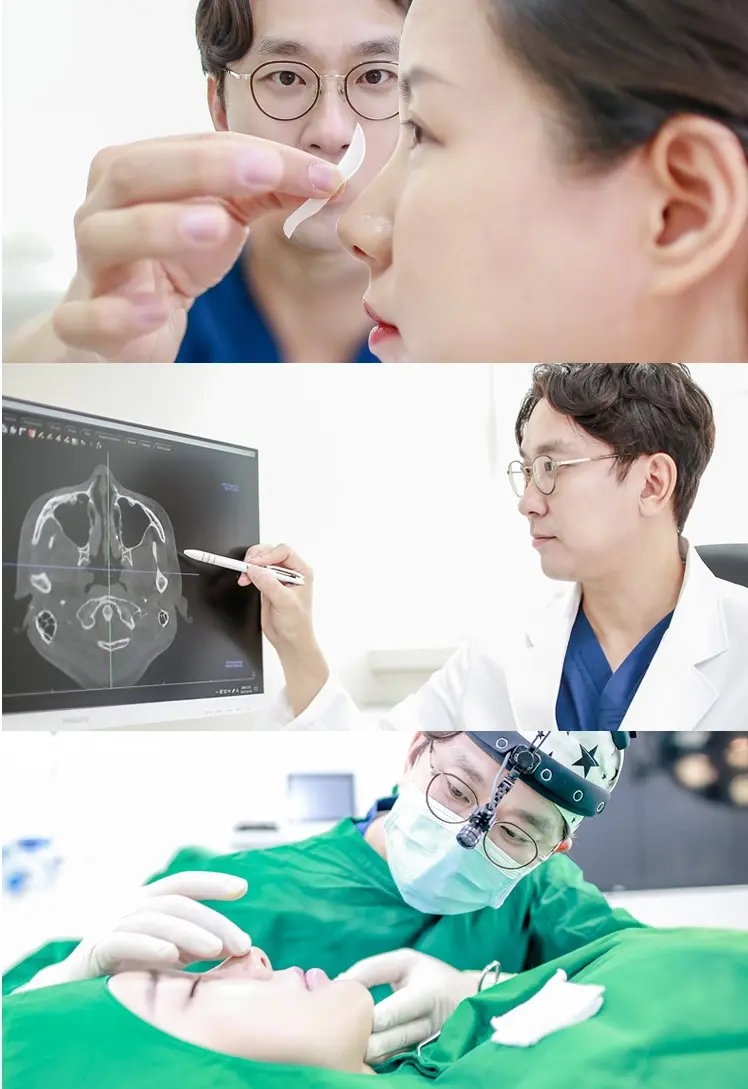
1. Consultation and Facial Analysis
The surgeon evaluates the patient’s nasal concerns, desired image, facial proportions, skin thickness, tip position, nostril shape, and breathing function.
The relationship between the nose and the forehead, eyes, cheekbones, philtrum, lips, and chin is also reviewed.
2. Internal and Structural Assessment
Merry Plastic Surgery states that it may use:
An ENT station.
A Full HD nasal endoscope.
3D-CT imaging.
Invivo three-dimensional imaging analysis.
These systems help the surgical team evaluate the nasal bone, septum, cartilage, internal nasal cavity, degree of deviation, and other structural factors before finalizing the plan.
3. Signature Design Planning
The surgeon determines the most appropriate nasal height, width, length, angle, and line. The patient’s preference for a straight, straight-curved, or semi-curved profile is considered alongside the anatomical findings.
4. Technique and Material Selection
Depending on the structural requirements, the surgeon may consider:
Septal cartilage.
Ear cartilage.
Rib cartilage.
Autologous dermis.
A medically appropriate nasal implant.
Cartilage suturing or repositioning.
Septal, tip, columellar, or muscle correction.
The final material and technique should be selected after discussing the benefits, limitations, and possible risks.
5. Surgery
The combined surgical plan may include Merry Signature Design, Arrow Nose Correction, Columella Reduction, or a combination of these procedures.
The anesthesia method and surgical duration depend on the extent of correction. The supplied clinic content describes more comprehensive rhinoplasty procedures as generally being performed under sleep anesthesia.
6. Recovery and Follow-Up
Hospitalization is generally not required for the procedures described in the clinic’s supplied content. Sutures are typically removed approximately five to seven days after surgery.
Patients may require approximately two to three follow-up visits, with an initial recovery period of around one to two weeks. Swelling may continue beyond this period, and the final nasal contour develops gradually as the tissues heal.
The exact schedule must be confirmed according to the surgical plan and individual recovery.
Results, Safety and Longevity
Primary Rhinoplasty is intended to create long-term structural changes, but no result can be described as guaranteed or permanently unchanged. Natural aging, tissue response, cartilage behavior, implant condition, injury, and individual healing may influence the nasal shape over time.
Temporary swelling, bruising, tenderness, congestion, tightness, or asymmetry may occur during recovery. Surgical and anesthesia-related risks should be discussed with the medical team before treatment.
Material selection is individualized. Autologous cartilage may be used for structural support, while an artificial implant may be considered for selected bridge corrections. Each option has different benefits and limitations that should be explained during consultation.
Patients should contact the clinic if they experience unexpected pain, prolonged swelling, signs of infection, breathing difficulty, or another concerning symptom after surgery.
Why Choose Merry Plastic Surgery for Primary Rhinoplasty?
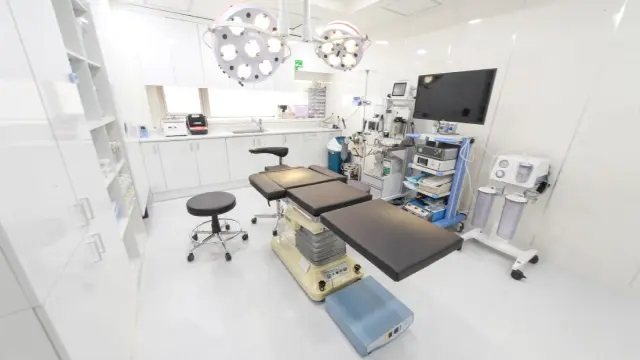
Merry Plastic Surgery plans Primary Rhinoplasty according to the patient’s facial proportions, nasal anatomy, and functional condition rather than using one fixed nose shape.
Key features include:
Merry Signature Design based on nasal height, angle, length, and width.
Choice of straight, straight-curved, or semi-curved nasal lines.
Arrow Nose Correction based on the anatomical cause of tip drooping.
Cause-based Columella Reduction for excessive columellar show.
Coordinated correction when arrow nose and columellar concerns occur together.
Internal evaluation using an ENT station and Full HD endoscope.
3D-CT and Invivo imaging for structural analysis.
Individualized selection of cartilage, implant materials, and surgical techniques.
Consideration of nasal breathing during aesthetic planning.
Monitored anesthesia and postoperative follow-up.
These features support an individualized treatment plan, but they do not guarantee a specific result. Final recommendations depend on examination and consultation.
Discover a Primary Rhinoplasty Plan Designed for Your Face
Primary Rhinoplasty should begin with understanding how the nose relates to the rest of the face—not with selecting a standardized shape.
Merry Plastic Surgery combines Merry Signature Design, Arrow Nose Correction, and Columella Reduction within an individualized surgical pathway. Depending on your anatomy, treatment may focus on overall nasal proportions, a drooping tip, excessive columellar show, or a combination of these concerns.
Contact Merry Plastic Surgery to arrange a Primary Rhinoplasty consultation and discuss a nasal design based on your facial proportions, internal structure, functional needs, and aesthetic preferences.
Treatment suitability, techniques, recovery, and results vary by patient. An individual consultation with a qualified plastic surgeon is required.
Other Services
Explore additional treatments offered by our specialists.

Eye Revision Surgery
Eye revision surgery is a corrective procedure for patients who have already undergone double eyelid surgery but are not satisfied with the outcome, or who have developed complications such as an irregular crease, asymmetry, or scarring.
Learn More

Breast Lift
A breast lift, known clinically as mastopexy, is a surgical procedure designed to correct breast sagging by repositioning breast tissue, removing excess skin where necessary, and restoring the nipple-areola complex to a more natural position on the breast.
Learn More

Double Eyelid Surgery
Double eyelid surgery is a procedure within eye plastic surgery designed to create or redefine the fold above the eye — the crease that separates the upper eyelid into two visible sections.
Learn More