Personalized Medical Care & Dedicated International Patient Concierge


Rhinoplasty · Needs Clinic Confirmation
Revision Rhinoplasty
Revision Rhinoplasty is corrective nose surgery for patients who have experienced complications or unsatisfactory changes following a previous rhinoplasty, nasal implant, or injectable treatment.
Schedule a ConsultationWhat Is Revision Rhinoplasty?

Revision Rhinoplasty is corrective nose surgery for patients who have experienced complications or unsatisfactory changes following a previous rhinoplasty, nasal implant, or injectable treatment. Unlike primary rhinoplasty, revision surgery must account for existing scar tissue, altered cartilage, changes in the skin envelope, and any remaining implant or foreign material.
Merry Plastic Surgery’s Revision Rhinoplasty program includes three main treatment pathways:
Contracted Nose Revision
Implant and Foreign Material Removal
Merry Soft Protocol
These options may be used separately or as part of a staged treatment plan. The appropriate approach depends on the patient’s previous procedures, current nasal condition, degree of inflammation, skin flexibility, and remaining structural support.
1. Contracted Nose Revision
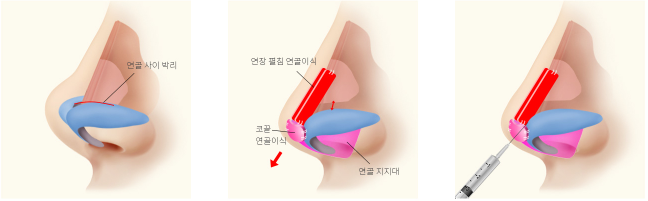
A contracted nose is a secondary deformity that may develop after chronic inflammation, scarring, or an adverse reaction involving a previous nasal implant. As scar tissue tightens, the nasal skin and internal structures may become firm and shortened, causing the nasal tip to turn upward and the nostrils to become more visible or asymmetrical.
Contracted Nose Revision is not simply another cosmetic reshaping procedure. It may require the surgeon to:
Control active inflammation.
Remove the implant or foreign material contributing to the problem.
Release internal scar tissue.
Improve the flexibility of hardened nasal skin.
Reposition a retracted or upturned nasal tip.
Reconstruct weakened structures with autologous tissue.
Restore a more balanced nasal length and tip angle.
For selected contracted nose cases, Merry Plastic Surgery emphasizes rebuilding the nasal framework with the patient’s own tissue rather than automatically inserting another synthetic implant. The specific graft material and surgical method depend on the available donor tissue and the condition of the nose.
The goal is to create a nasal length, tip position, and overall contour that appear balanced with the patient’s facial proportions. Results depend on the severity of contracture, previous operations, skin condition, and individual healing response.
2. Implant and Foreign Material Removal
Implant Removal is performed when a previous nasal implant or another inserted substance is contributing to inflammation, hardness, calcification, discomfort, or visible deformity.
Materials requiring evaluation may include:
A surgical nasal implant.
Previously injected filler.
Unidentified or unregulated injectable substances.
Material that has spread into surrounding nasal tissues.
Hardened or calcified deposits.
Residual material remaining after a previous removal attempt.
Foreign material can affect the nasal bridge, tip, glabella, skin, and surrounding soft tissue. It may create a broad, uneven, firm, swollen, or distorted appearance.
Merry Plastic Surgery states that 3D-CT imaging may be used to identify the location of the material and assess the surrounding tissue and nasal structure. During surgery, Full HD endoscopic equipment allows the surgeon to examine the treatment area under direct visualization.
Material that can be accessed directly is carefully removed. A specialized cannula may be used for micro-suction when residual material is distributed through areas that are difficult to reach through direct removal.
Complete removal may not always be possible without causing unnecessary damage to healthy tissue. The extent of removal and the need for reconstruction must therefore be determined individually.
Depending on the condition of the nose after removal, reconstruction may be:
Performed during the same operation.
Delayed until inflammation has resolved.
Planned as a staged revision procedure.
Completed using autologous tissue or another medically appropriate material.
3. Merry Soft Protocol
The Merry Soft Protocol is Merry Plastic Surgery’s injection-based tissue-conditioning approach for selected patients with firm, hardened, or contracted nasal skin following previous surgery.
When the nasal skin has lost flexibility, immediately attempting to lengthen or reshape the nose may place additional tension on already compromised tissue. The Merry Soft Protocol is intended to improve the condition and flexibility of the tissue before structural Revision Rhinoplasty.
The protocol may be considered when:
The nasal skin feels hard or tight.
Scar tissue has reduced tissue flexibility.
The nasal tip has become retracted or upturned.
The skin cannot safely accommodate the planned structural correction.
The surgeon recommends tissue conditioning before another operation.
Revision surgery needs to be performed in stages.
The supplied clinic content describes this as a regenerative, skin-softening approach used before selected contracted nose revisions. The number of injections, treatment interval, exact formulation, and timing of surgery should be determined by the clinic after examining the patient.
Merry Soft Protocol does not replace surgery when implant removal, scar release, or structural reconstruction is necessary. Instead, it may be incorporated into a staged plan to prepare the tissue for a safer and more controlled revision.
Who May Need Revision Rhinoplasty?
Revision Rhinoplasty may be considered if you experience:
Recurrent inflammation after a previous rhinoplasty.
A nasal tip that has gradually become shorter or more upturned.
Hard, tight, or contracted nasal skin.
Twisted, pinched, or asymmetrical nostrils.
A visible implant edge or implant displacement.
Persistent swelling, tenderness, or firmness.
A broad or uneven nasal bridge caused by migrated material.
Calcification or hardening around a previous implant.
Complications after nasal filler injections.
An unidentified substance previously inserted into the nose.
Functional or aesthetic concerns following earlier surgery.
A result that has changed over time rather than remaining stable.
Some patients may require urgent evaluation when inflammation, skin thinning, implant exposure, or progressive deformity is present. The appropriate timing of treatment should be determined by a qualified surgeon.
Meet the Revision Rhinoplasty Specialist
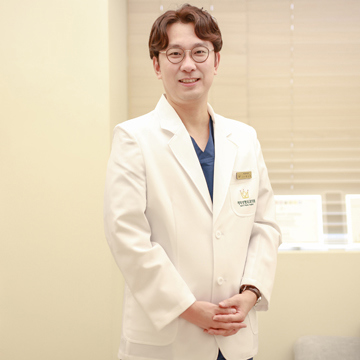
Dr. Sungtaek Hong
Board-certified Plastic Surgeon
Dr. Sungtaek Hong — Representative Director
Dr. Sungtaek Hong is a board-certified Plastic Surgeon trained at Korea University Medical Center. His surgical experience includes primary and revision rhinoplasty, functional rhinoplasty, facial contouring, eye surgery, and facial lifting procedures.
Dr. Hong is involved in rhinoplasty-focused professional research activities within the Korean Society of Plastic and Reconstructive Surgeons. His approach to Revision Rhinoplasty begins with identifying the changes caused by the previous procedure before planning another operation.
For contracted noses and implant-related complications, the goal is to address the underlying cause of inflammation or deformity while rebuilding an appropriate nasal structure and natural-looking contour.
Revision Rhinoplasty Treatment Areas
Nasal Skin and Soft Tissue
Previous surgery and inflammation can cause the skin and surrounding soft tissue to become thick, firm, or contracted. Tissue flexibility must be evaluated before further lengthening or reconstruction is planned.
Nasal Tip
Implant pressure, scar contraction, or weakened cartilage can cause the tip to become upturned, pinched, asymmetrical, or overly firm. Treatment may include implant removal, scar release, structural support, and tip repositioning.
Nasal Bridge
A displaced implant, migrated filler, calcification, or irregular scar tissue can create a broad, uneven, or visibly artificial bridge. The area is evaluated to determine what can be removed and whether reconstruction is necessary.
Nostrils
Contracture can pull the nostrils upward or create asymmetry. Improvement depends on releasing the contracted structures and restoring support to the nasal tip and surrounding framework.
Glabella
Foreign material may spread toward the area between the eyebrows, creating unwanted fullness or an unnatural transition between the forehead and nasal bridge. Removal must be carefully planned according to the material’s location.
Internal Nasal Structure
Revision planning may also include an examination of the internal nasal anatomy and functional condition. Cosmetic correction should be coordinated with any identified structural or breathing-related concerns.
Revision Rhinoplasty Process

1. Consultation and Medical History
The surgeon reviews the patient’s previous rhinoplasty, implant or filler history, symptoms, changes in nasal shape, and any episodes of inflammation.
Patients should provide previous surgical records, implant information, photographs, and imaging when available.
2. Diagnostic Assessment
The nose is examined to evaluate:
Implant or foreign material location.
Active or previous inflammation.
Degree of scar tissue and contracture.
Nasal skin thickness and flexibility.
Condition of the tip and bridge.
Remaining cartilage and structural support.
Internal nasal anatomy and function.
The clinic may use 3D-CT, an ENT station, and Full HD endoscopic equipment as part of this assessment.
3. Inflammation Control
If active inflammation is present, the underlying cause must be evaluated before structural revision. Implant or foreign material removal may be recommended first.
Immediate reconstruction may not be appropriate when the tissue requires time to recover.
4. Merry Soft Protocol
Patients with hard or contracted nasal skin may undergo the Merry Soft Protocol before revision surgery. The treatment schedule depends on the condition of the tissue and the surgeon’s assessment.
5. Implant or Foreign Material Removal
The implant or other foreign material is removed using the method considered most appropriate for its location and condition. Full HD endoscopic visualization and specialized micro-suction may be used when indicated.
6. Scar Release and Reconstruction
Contracted scar tissue is carefully released. The nasal framework may then be reconstructed to improve length, tip position, symmetry, and support.
For contracted nose cases, autologous tissue may be used to reduce reliance on another synthetic implant. The exact reconstruction method must be selected individually.
7. Recovery and Follow-Up
The supplied clinic information lists an approximate surgical time of two hours under sleep anesthesia, with hospitalization generally not required.
Sutures are typically removed after five to seven days. Approximately two to three follow-up visits and an initial recovery period of seven to ten days may be expected. These timelines vary according to the complexity of surgery, tissue condition, and individual healing.
A staged plan involving inflammation control or Merry Soft Protocol may require a longer total treatment period.
Results, Safety and Longevity
Revision Rhinoplasty may improve nasal length, tip position, symmetry, contour, and structural support while addressing complications related to previous implants or foreign material.
However, revision surgery is generally more complex than primary rhinoplasty because the anatomy has already been altered. Scar tissue, reduced blood supply, weakened cartilage, thin skin, infection history, and previous grafts can affect what can be safely achieved.
The clinic’s staged approach is intended to avoid performing structural revision before inflammation and tissue condition have been appropriately addressed. Implant removal, tissue conditioning, and reconstruction may therefore occur at different times.
Temporary swelling, bruising, tenderness, tightness, and changes in sensation may occur after surgery. Other risks and limitations should be discussed directly with the surgeon based on the patient’s previous procedures and current nasal condition.
No specific result or permanent outcome can be guaranteed. Results vary according to the number of previous surgeries, severity of tissue damage, type of foreign material, skin flexibility, reconstruction method, and healing response.
Why Choose Merry Plastic Surgery for Revision Rhinoplasty?

Merry Plastic Surgery approaches Revision Rhinoplasty as a cause-based treatment rather than a simple correction of the visible shape.
Key features of the clinic’s approach include:
Evaluation of previous surgery and implant history.
Contracted Nose Revision for hardened and shortened nasal tissue.
Implant and foreign material removal.
3D-CT-based diagnostic planning.
Full HD endoscopic visualization during evaluation and removal.
Specialized cannula micro-suction for selected residual materials.
Merry Soft Protocol for selected patients with firm or contracted tissue.
Inflammation control before structural reconstruction.
Autologous tissue reconstruction when medically appropriate.
Individualized decisions regarding immediate or staged revision.
This approach allows the treatment plan to be adjusted according to the condition of the implant, skin, scar tissue, cartilage, and internal nasal structure rather than applying the same revision method to every patient.
Begin With a Careful Revision Rhinoplasty Assessment
If a previous rhinoplasty, nasal implant, or filler procedure has caused inflammation, hardness, contracture, asymmetry, or an unwanted change in shape, the first step is a detailed clinical assessment.
Merry Plastic Surgery’s Revision Rhinoplasty program brings Contracted Nose Revision, Implant Removal, and the Merry Soft Protocol into one individualized treatment pathway. Depending on your condition, treatment may involve implant removal, inflammation control, tissue conditioning, scar release, autologous reconstruction, or a staged combination of these approaches.
Contact Merry Plastic Surgery to arrange a Revision Rhinoplasty consultation and discuss a treatment plan based on your surgical history, current nasal condition, and realistic goals.
Treatment suitability, methods, timing, recovery, and results vary between patients. An individual consultation with a qualified plastic surgeon is required.
Other Services
Explore additional treatments offered by our specialists.

Eye Revision Surgery
Eye revision surgery is a corrective procedure for patients who have already undergone double eyelid surgery but are not satisfied with the outcome, or who have developed complications such as an irregular crease, asymmetry, or scarring.
Learn More

Breast Lift
A breast lift, known clinically as mastopexy, is a surgical procedure designed to correct breast sagging by repositioning breast tissue, removing excess skin where necessary, and restoring the nipple-areola complex to a more natural position on the breast.
Learn More

Double Eyelid Surgery
Double eyelid surgery is a procedure within eye plastic surgery designed to create or redefine the fold above the eye — the crease that separates the upper eyelid into two visible sections.
Learn More